A clear set of procedures and consistent
adherence to them ensured that INTERREG IVC’s €302 million
budget from ERDF was put to the best possible use in every
step of the process.

Strict selection
A solid financial policy begins with a thorough
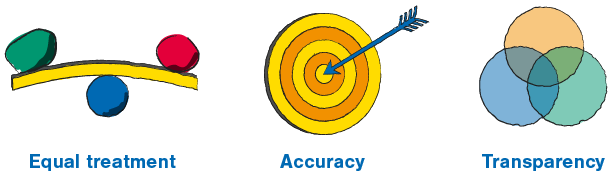
assessment of applications. Proposals were assessed on
the basis of three fundamental principles:
Monitoring progress
All approved projects were carefully monitored using a
fixed set of programme indicators. Lead Partners gave
updates on these in their six-monthly progress reports.
This streamlined the monitoring process and kept
projects firmly on track.
INTERREG IVC performed very well on key programme
indicators.
As improving regional policies was one of the main
targets of the INTERREG IVC programme, this was one of
the main indicators. The number of policies
improved exceeded the target by far. 432
policies benefitted from INTERREG IVC, as opposed to the
target number of 150.
Number of policies improved
A second objective of the programme was the
successful transfer of good practices.
Here, too, INTERREG IVC made excellent progress: the
number of good practices successfully transferred (519)
was over twice the amount targeted (200).
Number of good practices transferred
It was also a key aim to enable more experienced regions
learn from those with less experience. The goal was to
enhance the capacities of staff
involved in the project. As the indicator ‘staff members
with increased capacity’ shows, INTERREG IVC succeeded
in increasing the capacities of 7,442 staff members,
which was more than double the initial target of 2,800.
Staff members with increased capacity
The results at programme level are given from 2009
onwards when the first projects financed by INTERREG IVC
became operational. Formally the measuring ends in 2015
but INTERREG IVC projects continue to make an impact and
therefore, results are still taking shape.
Accuracy of expenditure
Of course, progress reports were not only dedicated to
the content of the project. They also provided the
opportunity for projects to report their expenditure to
the programme and, once the progress report was
approved, to receive the corresponding reimbursement.
This was not only important for the projects but also
for the programme’s spending plan. Funds had to be spent
by the programme within a given time otherwise they
would be lost (decommitment). The programme
successfully managed to spend as planned and no
funds were lost.
INTERREG IVC also successfully explained the
financial rules of the EU and the programme to its
projects. Before projects could report
their expenditure it had to verified by a local or
national controller. Some of those controls were, in a
second step, also chosen for an additional check by
another independent controller to ensure a high level of
accuracy.
EnercitEE
European
networks, experience and recommendations
helping cities and citizens to become Energy
Efficient
EnercitEE
project
European
networks, experience and recommendations
helping cities and citizens to become Energy
Efficient
http://enercitee.eu
Priority:
Environment and risk
prevention
Click on the map to see
the institutions involved in the project.

Lead partner

Project
partner
Towards a low-carbon, energy-efficient
Europe
Europe has set ambitious targets in terms of
energy saving and emissions reductions. Many
programmes have started, aimed at encouraging
local bodies to save energy. Real and
lasting results can, however, only be
achieved when its citizens are also on
board.
In the EnercitEE project
regions joined forces to transfer knowledge on
energy efficiency and transport and involve
citizens in energy-saving too. They identified
and analysed good practices, supported the
exchange of experience and carried out small
pilot projects.
Awareness leads to action
The small pilot projects were aimed at either
communities or citizens. The good practices and
strategies were then transferred to regions with
less experience. A broad range of sub-projects
was undertaken, ranging from creating
awareness of the importance of saving energy
at European schools, for instance,
to promoting sustainable transport and
mobility solutions among commuters.
Energy ambassadors
A sub-project in Haute-Savoie, France, addressed
the issue of ‘energy poverty’:
increasing numbers of families had difficulties
paying their energy bills and were living in
cold homes or having to make difficult choices
between household expenses.
Reaching consumers is difficult but reaching
consumers with poverty issues is even harder.
The Haute Savoie Energy Advice Centre (EAC)
therefore decided to team up with social
services to reach this specific group of people.
The aim was to help them to save energy and thus
lower their bill.
EAC created a number of consumer-friendly
communication tools to help social workers
provide energy saving tips and advice in an
easy and fun-to-use way. One of
these was a ‘bill mask’, a folder with windows
cut out in strategic places. By putting the mask
over their energy bill, consumers’ attention was
immediately drawn to the most important
information. This helped them to become more
energy savvy.
Both social workers and consumers were
enthusiastic about the programme and activities.
The success of this sub-project led to a project
proposal by eight regions in the EU
programme Intelligent Energy, thus
continuing energy-saving efforts after EnercitEE
was concluded.

“For Europe and its regions climate change is
a significant factor in the transformation
of nature and society. INTERREG IVC offered
the opportunity to achieve and to enhance
the knowledge exchange between partner
regions. This in turn helped to test, to
disseminate and to consolidate instruments
and experiences of local climate mitigation.
The positive reactions of all partners
illustrate the progress we made with the
project EnercitEE. Now it is important for
us to put the knowledge generated by
INTERREG IVC into use, for example in the
field of local climate adaptation, too.”
Andreas Völlings, Saxon State Agency for
Environment, Agriculture and Geology