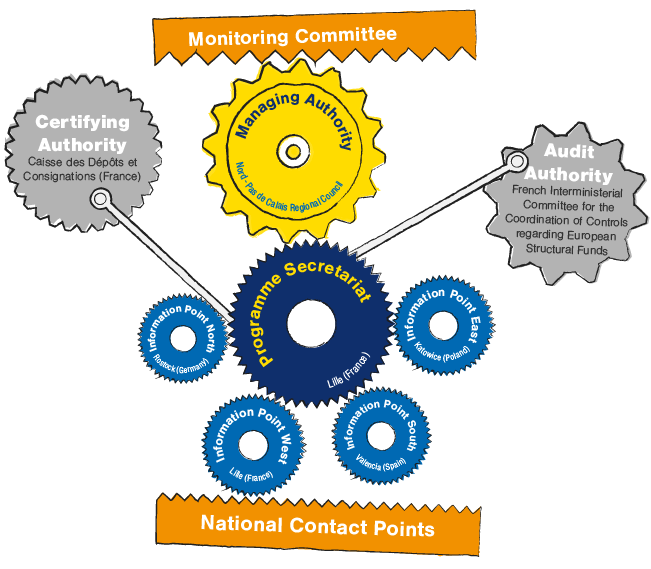
INTERREG IVC’s programme organisation was carefully constructed to ensure effective, efficient and transparent operations. Each cog in the machine performed its specific task in the best possible way and contributed to the overall success of the programme.

work directly with applicants & projects representatives.
The Monitoring Committee – made up of representatives from
the 27 EU countries, Norway and Switzerland, programme authorities and the
European Commission – was the central decision-making body and had the final
say on awarding funds.
“In 2007-2014 INTERREG IVC Programme performed important intermediary role between regional policy makers and a wide range of regional and local stakeholders, looking for pragmatic tools to help them solve a problem or address an issue. Thanks to a clear organisational structure and firm roots in both worlds, INTERREG IVC succeeded in bringing regions together not only for temporary benefits but to create long-lasting conditions for cooperation, competitiveness and sustainable growth in Europe as a whole.”
The Managing Authority was responsible for managing and implementing the programme, as well as the pre-selection of applications.
“In the context of interregional cooperation, the joys but also the challenges come from working in a multicultural environment of languages, cultures and systems of control. Complexity is fine if it’s well organised and, until now, the results of the programme audits are indeed among the best in Europe!”
The daily management of the programme was the responsibility of its Secretariat. The international team at the Programme Secretariat ensured the programme became known and was implemented, monitoring activities and spending while assisting the other programme bodies with their tasks. In order to cater well for all countries and regions, it was supported by four Information Points in France (West), Germany (North), Poland (East) and Spain (South). The Information Points provided (potential) applicants with information and technical advice.

“Processes, procedures and people are all equally important elements in ensuring that the EU funds are not only well-spent and tracked, but also that they have been invested in a worthwhile activities. The professional team of the Programme Secretariat managed to keep a good balance between financial rigour and monitoring project activities, ensuring good results at project, and therefore programme level.”
National Contact Points in each participating country
played an important role in promoting the programme and provided
applicants with specific local information.
“As a National Contact Point, our most important role is to assist and advise project partners and help them to understand the nuances and challenges of the programme. This helps projects to produce stronger project proposals and also to ensure more robust delivery.”
The Certifying Authority and Audit Authority checked and monitored the day-to-day management and implementation of INTERREG IVC to ensure that procedures were followed correctly and funds awarded accordingly.
“The role of the Certifying Authority is to ensure and certify that 100% of the expenses declared by a programme are eligible according to the laws and regulations in force. In order to fulfil this task, we developed two separate and complementary processes: consistency controls and sample audits.”
“The particularity of INTERREG IVC is to adapt the European regulation to a programme with 29 member countries. This is a huge task when you think of each national audit system, never mind the 22 or so different languages involved.”
To know more on how INTERREG IVC was managed, read “Behind the scenes: Monitoring interregional projects“.
http://zen-project.eu

 Lead partner
 Project partner
A ZEN approach to cultural heritage
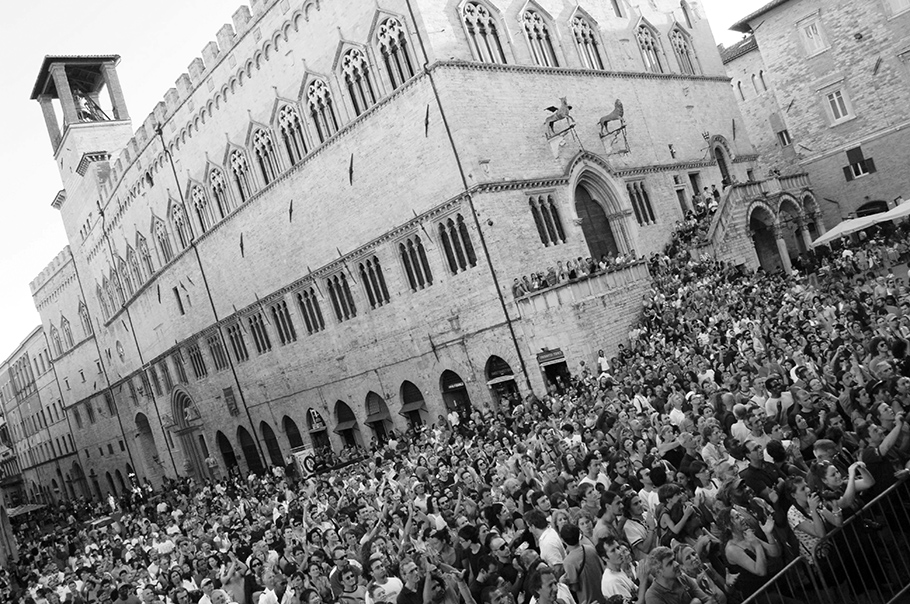
All over Europe cultural heritage events and festivals are organised in historical towns and centres to attract tourism, promote cultural diversity and boost the local economy.
However, these events also have an impact on the surroundings in which they are organised and on the environment in general. Moreover, environmental awareness among festival goers is growing and many are concerned about their potential impact on waste, water and land damage and noise.
The ZEN project was set up to develop a shared methodology to reduce the impact of seasonal events and festivals by exchanging experiences and lessons learned.
Making festivals and events sustainable
All partners had hands-on experience as hosts of seasonal events. They sought to retain the positive effects that such events have but at the same time protect, manage and preserve cultural heritage and assets, as well as the environment in their region. In this way, they aimed to ensure the sustainability of events and festivals in the long term. Focal points were mobility, transport, waste and resources.
Sharing knowledge and advice
The Hay Festival of Literature and the Arts is one of the festivals that takes managing and mitigating its environmental impact very seriously. The festival started in the village of Hay on Wye in Wales some 27 years ago and has since grown in both terms of visitors (from 1,000 to 250,000) and locations (one to 15 on five continents).
The festival has collaborated with public bodies such as Powys County Council, a ZEN project partner, and other organisations to create its own environmental programme, Hay on Earth. This focuses on the direct impacts of the festival and the impacts of festival goers, but also on programming events that stimulate debate and discussion about key environmental issues. The Hay Festival shares its experience with others via the Hay Greenprint toolkit, an online platform packed with hands-on tips and recommendations for organisers and the visiting public. In this way, it hopes to inspire others to follow suit.

“Civil servants and staff from institutions, agencies and local bodies do not usually have access to first-hand experiences from other European Countries. INTERREG IVC has proved a formidable means to fill this gap, enabling a fruitful exchange of experiences, know-how, working methods and enthusiasm among people from different countries and settings. In addition to the wealth of knowledge that could be gained in building the skills of the personnel involved, the ability to develop a common strategy and objective stemming from this continuous exchange was the real added-value of interregional cooperation.”
Chiara Dall’Aglio, Regional Development Agency for Economic Promotion, Italy (lead partner)