Tag Archives: technology

More than four hours a day on the internet

Young people are attached to their mobile phones… But do they still use landlines? Is online television as popular as ‘regular’ television? What is the most popular games console among today’s young people across Europe? And what are the biggest differences between European countries in terms of how they use media today?

The answers to these questions – and more – can be found in the first European-wide Youth Media Trend Report (2011-2011), which was commissioned by the Youth & Media Programme of the European Cultural Foundation (ECF).

The extensive research was carried out by the Belgian research centre Trendwolves, which looked at media use among young people aged between 15 and 25 in five European countries: Norway, the Netherlands, Spain, the United Kingdom and Croatia.

Researchers mapped how young people use media in each of these five countries, focusing specifically on social networks, internet, telephone, television, radio, newspapers, magazines and games.

The first Youth Media Trend Report of its kind identifies different media landscapes across Europe and represents an important step in measuring, observing and revealing changes in the way young people use their media.
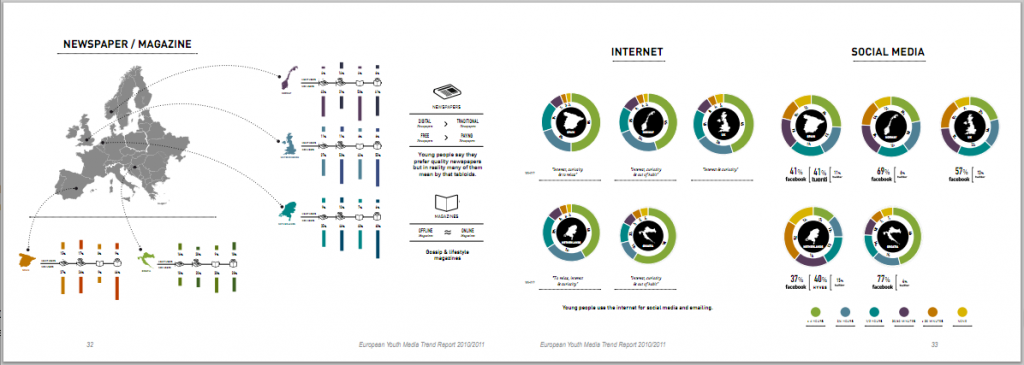
Page from: European-wide Youth Media Trend Report (2011-2011)

With this research, ECF aims to provide broad access to exclusive data to cultural, political and media organisations and professionals working on youth and media policies and programmes. The research is designed to fill a gap for the cultural sector, which is often deprived from mere facts and figures, unlike the business sector, in which such research data are used for designing successful marketing strategies and forecasting trends.

Interested in finding out more? Download the report in infographics here.

For inquiries on how to access the full report, please contact mweijs@eurocult.org

Doc Next examines copylaw alternatives

On 21 and 22 February, Doc Next Network attended a workshop on intellectual property related to media and culture. This two-day workshop in London gave a comprehensive view of copyright law, so that we are able to understand why copyright exists and how it works.

Central issue how can copyright law serve the purposes, goals and needs of the participants and the Doc Next media collection.

Given the existing legal framework, we analysed the law to see what licences would be the best fit for our media collection. We focused on open licences like Creative Commons, to see why they were created and how they work. As a conclusion and practical outcome the workshop ended proposing, with the contribution of all the participants, we chose the legal tool that can best serve our goals.

During the workshop we encountered a void within the legal system considering copylaw: no legal tool fits so-called mashups or other derivative works. Workshop moderators Eva Sòria (historian) and Abel Garriga (attorney) took the challenge and will stay involved in Doc Next Networks quest for an alternative copyright / -left.


DNN@European Culture Congress

Next Doc Network presented its activities to the public in Poland for the first time. The opportunity to meet and people and talk about the DNN was one of a kind: the European Culture Congress saw over 200 thousand participants over 4 days. The program was filled with  over 100 interdisciplinary projects prepared by 550 artists and curators.


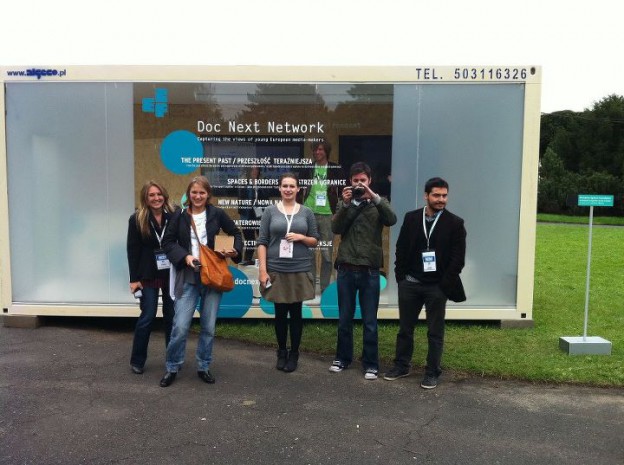
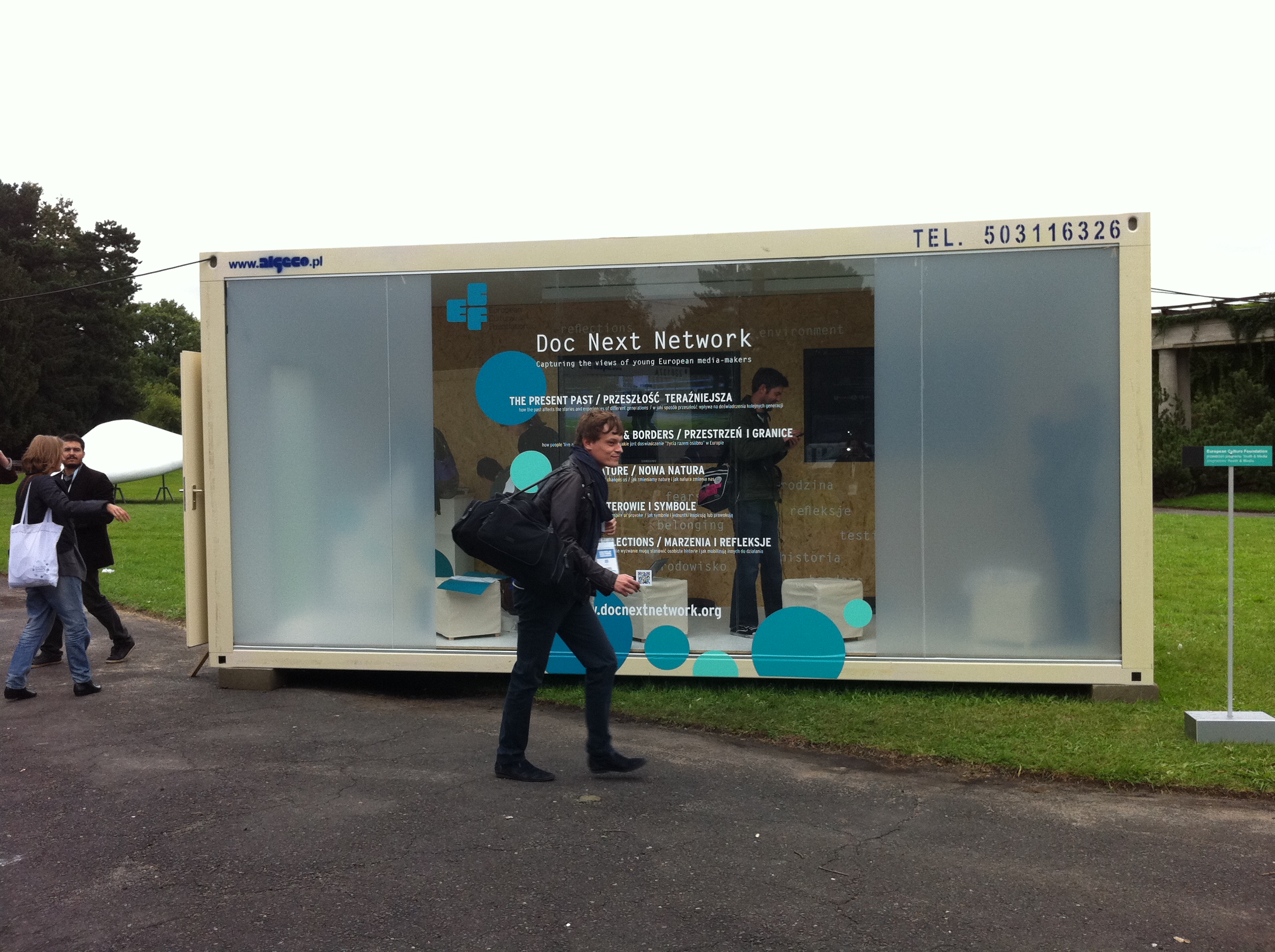
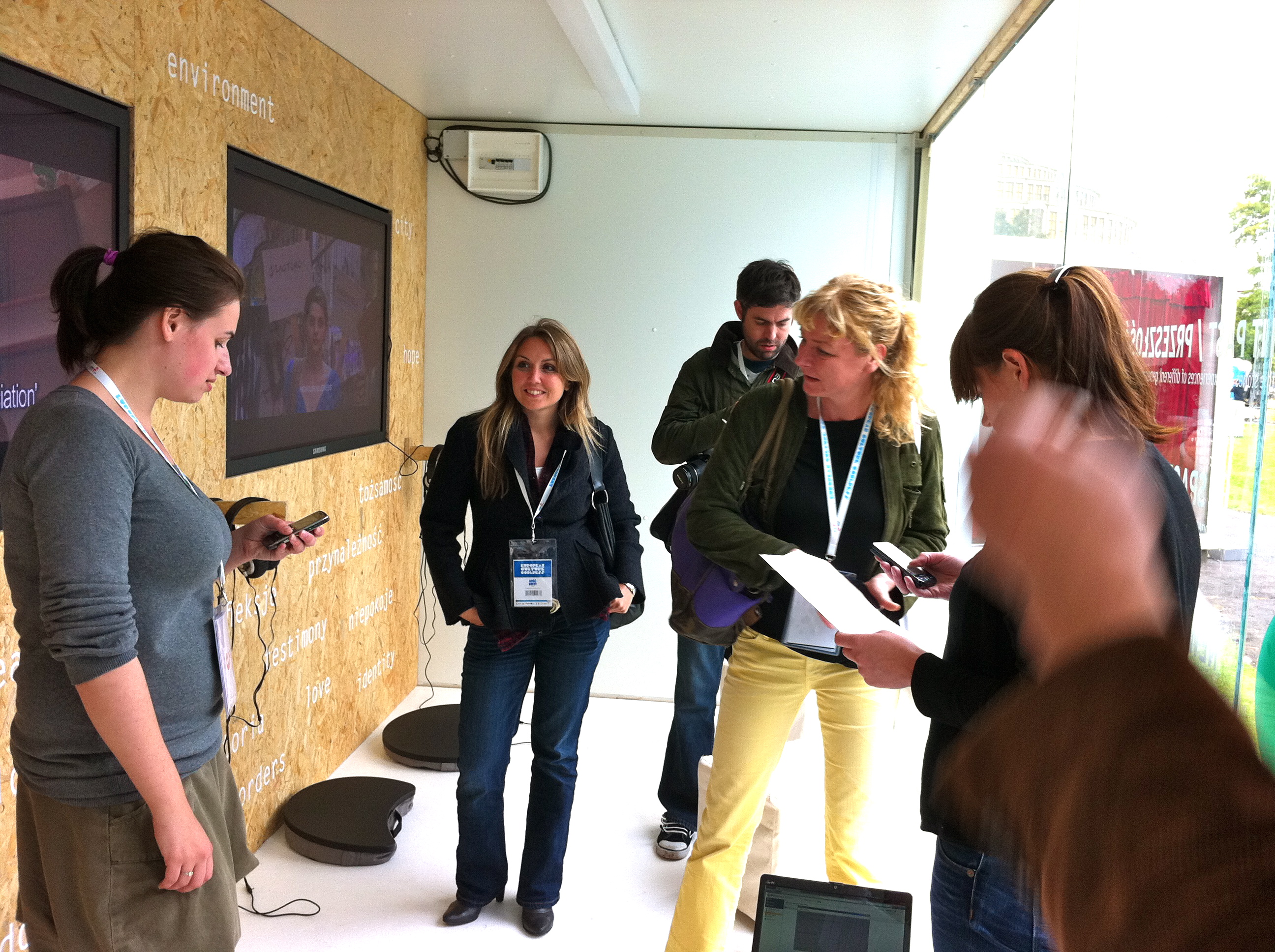
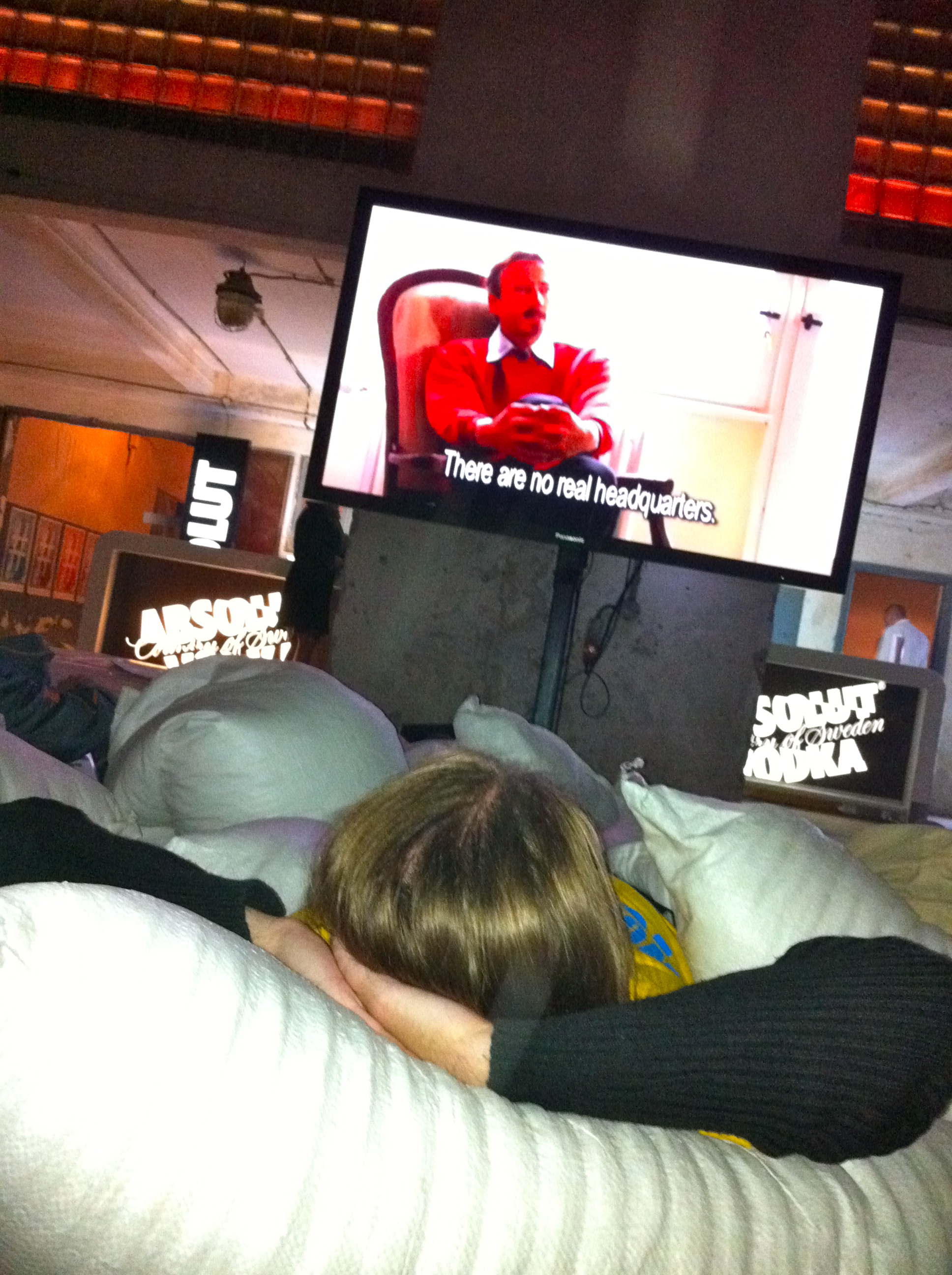
Among them the Doc Next Network screenings of films made by young artists from across Europe and a purpose built container, where films were were watched at all times (including on special projections during night time), information was obtained and many interesting conversations were held. We issued special publications in Polish and English, and produced a video to promote our activities.


Visitors at the Doc Next Network container watched films and talked to hubs representatives, acquired DVDs with the special Congress pick of 11 films from the DNN collection, our t-shirts and bags (which proved hugely popular among the Congress audience).  Our guests had their photos taken with a polaroid camera and kept a DNN branded portrait. If you didn’t get a chance to visit or follow the (almost) real time commentary on Association’s “ę” facebook page.


The Congress was also an opportunity to meet the network’s partners. We exchanged experiences gained while working on our projects. We looked for similarities and further opportunities for exchange and cooperation. We examined how we differ from each other and how this diversity can provide inspiration for further work. Hubs tirelessly debated the events of the IDFA 2011 – the next meeting of the network in November. See you in Amsterdam!

Further reading: the DNN materials at the European Culture Congress.

Association of Creative Initiatives “ę” is the Polish partner the Doc Next Network.

Film Producing 101

Discover and explore the role of the film producer at this month’s Future Film event. Find out if you’ve got the skills required to get a film made. Our workshops and screenings will give you tips and techniques to help you secure funding, manage a production, and get your film seen by the right people. We’ve teamed up with BAFTA to bring in producers from the film and TV industry who’ll share their knowledge and expertise with you. Don’t miss this chance to learn from the best.

Tickets are just £3, or bring a mate and you both get in for a fiver! Please call the Box Office on 020 7928 3232 (11:30-20:30 daily) to book. And download a networking info form here to make the most of this unique opportunity.

This event is for 15 – 25 year olds.

Follow BFI Future Film on Facebook

Lab Sweet Lab

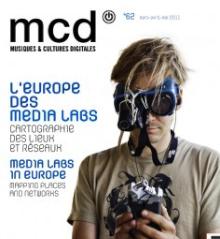
Whether you were born into the networks or simply are interested in digital creation, nowadays there are places and communities where you can learn, create and share knowledge. These laboratories (labs) are mediation spaces dedicated to practice, expression and creation as much as critical commitment on the role of technology in art and society. Individual users, artists, engineers, researchers and designers go there to research and produce in the free culture spirit. In a “lab”, the future is not merely imagined, it is lived!

What if our planet had become laboratory? From Do it Yourself (DIY) to Do It Together, whether linked to a lab or “lab-less”, these keen new media creators and explorers might well enable us to change our home into a “lab sweet lab”…

To give some reference points regarding the digital society, MCD and PiNG (new media culture resources space in Nantes), have drawn up a cartography of media labs in Europe, which reveals their specificities, questions their present and future roles and reports on these new learning, creation and co-operation dynamics.

Avec la participation de nos voisins les labs / With contributions from : aaaanet, Access Space, Ars Electronica Futurelab, Audiência Zero/AZ labs, Baltan Laboratories, Citilab, Constant, CRAS, Crealab, Culture Lab, DigiLab, Dorkbot Paris, Drugo more, EngageLab, ESC, Freaknet, Geek Physical, Hangar, Illutron, Kawenga, Kibla, Kitchen Budapest, Kuda, labIII, Labomedia, Le Cube, MAD, MaMa, Martu, MediaArtLab, Medialab Chrzelice, Medialab-Prado, Napon, NK, Pixelache, PNEK, PVA MediaLab, V2, Zemos 98, ZKM.

Read more…

13 Festival Internacional ZEMOS98

Dicen que no hay tiempo que perder. Lo dicen las noticias y los fanzines, las canciones de siempre y las películas en versión original del cine al que vamos de vez en cuando. Se cuela por las rendijas subliminales de la publicidad, por las caras B y por la letra pequeña. Vivimos al día: hiperconectados, hipermotivados, hiperenlazados. Seguimos viajando de átomos a bits a la velocidad de la luz. La cultura converge y se vuelve transmediática e híbrida. Educación, comunicación, arte, ciencia y tecnología copulan amigablemente. Somos expertos de nada y amateursde todo. En este punto nos hemos quedado pensando, muy quietos, tratando de saber qué es lo que se pierde cuando el tiempo se va.

¿Es el overbooking cultural un nuevo problema de las ciudades contemporáneas? ¿Estamos reflexionando o estamos generando artificios reflexivos? ¿Debe el pensamiento crítico hacer marketing de sí mismo? ¿Por qué nos atrae lo nuevo? ¿Qué necesidad hay de generar noticias continuamente? ¿Escribimos nuestra propia historia o generamos consumibles comunicativos? ¿Queremos llegar antes o ir más deprisa? ¿Cuesta cada vez más pensar?

En estos últimos años hemos hablado de control y videovigilancia, de televisión, de inteligencia colectiva. Hemos puesto sobre la mesa conceptos como MicrobiosEducación ExpandidaRegreso al Futuro. Nos hemos dibujado y borrado en infinidad de ocasiones sin temor a salirnos de la línea. Nos hemos hecho preguntas y las hemos respondido. Hemos buscado respuestas y no las hemos encontrado. Nos seguimos haciendo preguntas.

Un festival tras otro, hemos sentido la responsabilidad de proponer un tema que abriera un nuevo surco de reflexión, que ayudara a definir un poco más el camino por el que transitan nuestros anhelos e intuiciones, creyendo que, conectando cada uno de los puntos neurálgicos de ese sistema nervioso, aportaríamos algo a este ecosistema cultural en el que nos movemos. Esta vez no, no queremos recurrir a la urgencia de lo nuevo, no queremos generar un trending topic o una keyword de moda. Lo que queremos es tomarnos el tiempo necesario para seguir pensando sobre aquello que consideramos define y redefine el contexto cultural de quienes entrelazamos espacios analógicos y digitales.

Queremos hacer un alto en el camino para reforzar la idea de que, aún siendo pequeños microbios, formamos parte de una masa multiforme que vive en la sociedad red, generando dinámicas de lo micro que abren espacios para la cultura libre y el procomún. El Festival Internacional ZEMOS98 funciona como hub cultural, por eso somos mediadores tecnológicos y por eso experimentamos con contenidos y formatos. En 2011, el año de la crisis incesante, nuestros intereses siguen su curso mientras mantenemos el anclaje en tres líneas de investigación:

  • Educación expandida: porque aprendemos en cualquier momento y en cualquier lugar; porque para nosotros en la genealogía de festival encontramos un laboratorio educativo.
  • Audiovisual integrado: porque vivimos inmersos en una cultura audiovisual cuyos sistemas de representación y narración están mutando gracias a conceptos como interfaz, hipervínculo, código embed, etc.
  • Comunicación en Beta: porque no hay comunicación sin educación y viceversa, porque la red nos exige conversar, multiplicar nuestra identidad, ser honestos y transparentes.

Por todo lo anterior, señoras y señores periodistas, afiliados a festivales y público en general…lo sentimos: DESAPARECE EL FESTIVAL INTERNACIONAL ZEMOS98.

Es broma.

En realidad simplemente no tenemos tema nuevo. O sí.

El sitio webPrograma de mano en PDF