Tag Archives: media

Doc Next Media Collection

This film was made by Pavlos Stamatis (born 1989) from Greece. “This particular film has been influenced by the current situation in my country..”

Doc Next Network is collecting videos, stories, photos and other media art productions of all sorts of young people. With our focus on young, emerging European documentary-makers and opinion-formers, we are building up a broad collection of (alternative) documentaries.

Continue reading

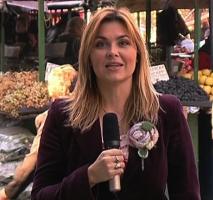
Metropolis TV kicks off in Bulgaria!

After The Netherlands, Belgium and Nicaragua, the Metropolis TV shows is now aired in Bulgaria as well.  Bulgaria’s biggest commercial TV broadcaster Nova TV will air the Metropolis shows every Tuesday at 8pm. Metropolis Bulgaria is produced by Milena Boudinova. She has been our correspondent in Bulgaria’s capital Sofia since two years. The first episode features the theme ‘real men’, for which Milena produced a report last year that created heated debate on our website amongst Bulgarian visitors. Read more…

Lab Sweet Lab

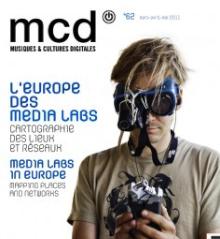
Whether you were born into the networks or simply are interested in digital creation, nowadays there are places and communities where you can learn, create and share knowledge. These laboratories (labs) are mediation spaces dedicated to practice, expression and creation as much as critical commitment on the role of technology in art and society. Individual users, artists, engineers, researchers and designers go there to research and produce in the free culture spirit. In a “lab”, the future is not merely imagined, it is lived!

What if our planet had become laboratory? From Do it Yourself (DIY) to Do It Together, whether linked to a lab or “lab-less”, these keen new media creators and explorers might well enable us to change our home into a “lab sweet lab”…

To give some reference points regarding the digital society, MCD and PiNG (new media culture resources space in Nantes), have drawn up a cartography of media labs in Europe, which reveals their specificities, questions their present and future roles and reports on these new learning, creation and co-operation dynamics.

Avec la participation de nos voisins les labs / With contributions from : aaaanet, Access Space, Ars Electronica Futurelab, Audiência Zero/AZ labs, Baltan Laboratories, Citilab, Constant, CRAS, Crealab, Culture Lab, DigiLab, Dorkbot Paris, Drugo more, EngageLab, ESC, Freaknet, Geek Physical, Hangar, Illutron, Kawenga, Kibla, Kitchen Budapest, Kuda, labIII, Labomedia, Le Cube, MAD, MaMa, Martu, MediaArtLab, Medialab Chrzelice, Medialab-Prado, Napon, NK, Pixelache, PNEK, PVA MediaLab, V2, Zemos 98, ZKM.

Read more…
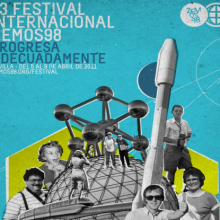
13 Festival Internacional ZEMOS98

Dicen que no hay tiempo que perder. Lo dicen las noticias y los fanzines, las canciones de siempre y las películas en versión original del cine al que vamos de vez en cuando. Se cuela por las rendijas subliminales de la publicidad, por las caras B y por la letra pequeña. Vivimos al día: hiperconectados, hipermotivados, hiperenlazados. Seguimos viajando de átomos a bits a la velocidad de la luz. La cultura converge y se vuelve transmediática e híbrida. Educación, comunicación, arte, ciencia y tecnología copulan amigablemente. Somos expertos de nada y amateursde todo. En este punto nos hemos quedado pensando, muy quietos, tratando de saber qué es lo que se pierde cuando el tiempo se va.

¿Es el overbooking cultural un nuevo problema de las ciudades contemporáneas? ¿Estamos reflexionando o estamos generando artificios reflexivos? ¿Debe el pensamiento crítico hacer marketing de sí mismo? ¿Por qué nos atrae lo nuevo? ¿Qué necesidad hay de generar noticias continuamente? ¿Escribimos nuestra propia historia o generamos consumibles comunicativos? ¿Queremos llegar antes o ir más deprisa? ¿Cuesta cada vez más pensar?

En estos últimos años hemos hablado de control y videovigilancia, de televisión, de inteligencia colectiva. Hemos puesto sobre la mesa conceptos como MicrobiosEducación ExpandidaRegreso al Futuro. Nos hemos dibujado y borrado en infinidad de ocasiones sin temor a salirnos de la línea. Nos hemos hecho preguntas y las hemos respondido. Hemos buscado respuestas y no las hemos encontrado. Nos seguimos haciendo preguntas.

Un festival tras otro, hemos sentido la responsabilidad de proponer un tema que abriera un nuevo surco de reflexión, que ayudara a definir un poco más el camino por el que transitan nuestros anhelos e intuiciones, creyendo que, conectando cada uno de los puntos neurálgicos de ese sistema nervioso, aportaríamos algo a este ecosistema cultural en el que nos movemos. Esta vez no, no queremos recurrir a la urgencia de lo nuevo, no queremos generar un trending topic o una keyword de moda. Lo que queremos es tomarnos el tiempo necesario para seguir pensando sobre aquello que consideramos define y redefine el contexto cultural de quienes entrelazamos espacios analógicos y digitales.

Queremos hacer un alto en el camino para reforzar la idea de que, aún siendo pequeños microbios, formamos parte de una masa multiforme que vive en la sociedad red, generando dinámicas de lo micro que abren espacios para la cultura libre y el procomún. El Festival Internacional ZEMOS98 funciona como hub cultural, por eso somos mediadores tecnológicos y por eso experimentamos con contenidos y formatos. En 2011, el año de la crisis incesante, nuestros intereses siguen su curso mientras mantenemos el anclaje en tres líneas de investigación:

  • Educación expandida: porque aprendemos en cualquier momento y en cualquier lugar; porque para nosotros en la genealogía de festival encontramos un laboratorio educativo.
  • Audiovisual integrado: porque vivimos inmersos en una cultura audiovisual cuyos sistemas de representación y narración están mutando gracias a conceptos como interfaz, hipervínculo, código embed, etc.
  • Comunicación en Beta: porque no hay comunicación sin educación y viceversa, porque la red nos exige conversar, multiplicar nuestra identidad, ser honestos y transparentes.

Por todo lo anterior, señoras y señores periodistas, afiliados a festivales y público en general…lo sentimos: DESAPARECE EL FESTIVAL INTERNACIONAL ZEMOS98.

Es broma.

En realidad simplemente no tenemos tema nuevo. O sí.

El sitio webPrograma de mano en PDF


Technology hero myth?

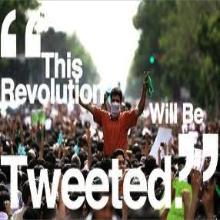
Nathan Goldberg reminds us that the driving force behind the current popular freedom movements is brave men and women, not the technology hero myth. There was a time when all you had to do to make a revolution revolve was throw yourself in front of a tank or set yourself alight.

Not now. You need to bring a mobile phone at least to the barricades before storming. Smartphone is even better. Then you wave it at the non new media savvy media and before you can say Mark Zuckerberg, be praised, the head of this revolution is Fidel Facebook.

The story now goes that the Arab uprisings unseating the tyrants are successful because of the power of Facebook and its comrade Che Twitter. This is disrespectful, hero myth nonsense, the driving force of the revolution is anger and in many cases tremendous courage of people who are being slain and face death for the sake of a better future, one that many of us take for granted.
Any of the techie journalists and others who are now salivating at the thought of being part of the revolution, thanks to the social networks, albeit from behind a computer scene, are simply having a good old fashioned, vicarious wank.

However, as in all good stories, there is also a truth. It is that the ghastly regimes around the world are on notice. The social media has you covered. Your crimes will never again go unnoticed. There is a new truth out there and it will find you out. And as much as China bans the social media, even its day will come when it has to account for its wrongs against its own people.

Fact, most young people rely on Facebook, Twitter to get their voice heard, the western media is fast becoming surplus to demands. That way their message gets out unvarnished, it’s what they want.
It will not save some of those people from perishing. Yes the truth will out, but as it does the lights will go out in the lives of so many young people, killed by weapons ironically supplied by the arms dealers such as UK premier David Cameron to tyrants around the globe.
If it is important we know who the real heroes of the revolution are, we must also be aware of the villains. All of them.

By Nathan Goldberg, originally published on wowdewow.co.uk.

Burka, bimbo, weblog

Het WK Voetbal van afgelopen zomer deed wat sport dient te doen: verbroederen. Heel Nederland kleurde oranje (en half Zuid-Afrika ook). Ook was er de winst van Wilders en zijn PVV, die Nederland in meerdere kampen verdeelde. De Antillen werden als land opgeheven en voor het eerst vond het Nationale Suikerfeest plaats. Het is maar een greep uit het Nederlandse nieuws over en van multicultureel Nederland in 2010./strongMira Media presenteert de meest spraakmakende gebeurtenissen rond media en culturele diversiteit uit het afgelopen jaar in haar jaaroverzicht Media en Culturele Diversiteit 2010. Enerzijds gebeurtenissen die specifiek betrekkinghebben op het terrein van diversiteit in de media. Van de andere kant ook nationale en internationale gebeurtenissen waarin media een belangrijke rol spelen en die hun weerslag hebben op de multiculturele verhoudingen in Nederland. Dit jaar worden voor het eerst een paar thema’s uitgelicht. Thema’s die gedurende het hele jaar spelen en waarvan het verloop in de maand overzichten niet tot hun recht zou komen. Uitgelicht worden: Religiekritiek en botsende grondrechten, WK-zomer, Pakistan versus Haïti en Roma.Het jaaroverzicht is a href=http://miramedia.nl/publicaties/detail.asp?nodeid=54amp;id=6841amp;start=0amp;offset=6 target=_blankhier/a beschikbaar als download.

Call For Evens Media Prize Foundation

With the second Evens Prize for Media Education, to be awarded in 2011, the Evens Foundation continues to highlight the importance of Media Education and to support sustainable projects in this field in Europe. The aim of this prize is to stimulate efforts to increase media literacy by raising critical awareness, which implies comprehension and cultural awareness, and by encouraging media creativity. Both of these contribute to the development of highly aware, active and responsible citizens.

The call for nominations is aimed at projects in the field of Media Education that focus on improving intercultural communication competences. Existing Media Education projects that can clearly demonstrate an attempt to use media production as a communication tool for young people to enter other cultural systems can apply through the application form on our website.

The Prize money of 20.000 € will be dedicated and divided by the external Jury Members and the Evens Foundation and will be used to create a new dimension to the winning project(s). Only projects that fulfill all criteria can submit. Deadline is 15th April 2011.

More info…