Tag Archives: media

BFI’s Doc Next Media Lab open for entries.

3b2efb2f-76a2-4df7-b347-6c310f6380bdt2_940_226_ScaleAged 21 to 25? Have experience making films? Read on…

BFI is looking for 10 filmmakers to become a part of our Doc Next Media Lab. As part of the Lab you’ll receive a £750 bursary, technical film training from professionals, tutoring on different documentary styles, methods and ideas, and the chance to develop and hone your art into something special. Continue reading

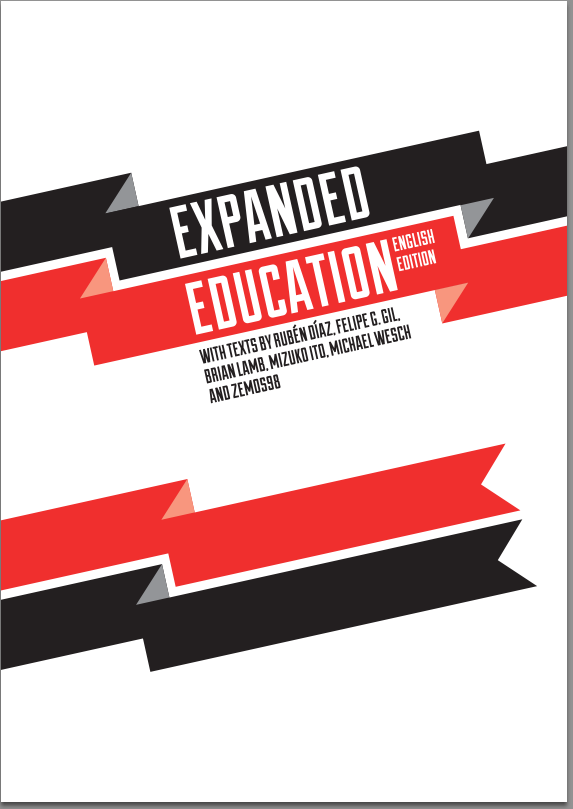
Expanded Education – The English Edition

Somewhere between a fork and a spin-off, the notebook Expanded Education – The English Edition compiles a series of materials that revolve around the notion of expanded education and are related to the book that Doc Next Network hub partner ZEMOS98 published on the subject.

Click to download

Click to download

Education has always been one of the core themes of the ZEMOS98 project. Not just any old education, but the kind of education that is inseparably bound up with communication and that connects to and networks with other concepts such as audio-visuals, art and experimentation. Education as an element of on-going personal growth, that is not limited to one particular stage of life. Education as play, a way of unravelling the media theatre. Education as an open source operating system that turns us into critical citizens. Education as a game played by all individuals, from all eras. Education as a utopia for a culture-sharing society. When we talk about expanded education, we are not talking about a new concept or something that has just popped out of the blue. Continue reading

Upload Cinema: taking webvideo out of the domestic realm.

sfeerbeeld-publiek.jpgThe web is changing film. Not only the way film content is being distributed, but also the way film is being produced and watched. The whole interactive process of making, mixing, choosing, uploading, commenting, recommending and reacting is what is truly revolutionizing the industry.

Film is becoming more and more a collaborative, social activity. But unfortunately this activity is taking place behind the computer at home or at work. Which is, let’s face it, not the best possible place to enjoy movies. Film is becoming more and more a collaborative, social activity.

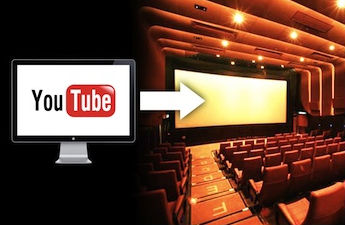
Upload Cinema wants to take this exciting new way of making and sharing film out of the domestic realm, away from the internet and the tiny computer screen and into a space that’s designed for a collective experience: the cinema. Upload Cinema brings the best internet videos to the big screen. Every two months they present a fresh, thematic program of captivating web films, linked to a special theme. The audience submits web films; a team of editors picks the best ones and compiles a programme of around 90 minutes from the bunch, which is screened in cinemas and on special locations.

Win 2 tickets for The Best Webvideos (Amsterdam, 29 January) 2012 on Facebook.

Upload Cinema celebrates the new year at the Stadschouwburg in Amsterdam (Tue 29 January). Lean back and enjoy the most shocking, funniest and best online videos of 2012 on the big screen.
Doc Next Network’s partner Metropolis TV is this years guest editor! You can win 2 tickets for the event on our Facebook Page.

Buy your ticket here.
More about Upload Cinema here.

YouTube-Screen.jpg

Insights Into the “Interactive Documentary” Realm: An Introduction

I’m Paulina Tervo. I have been invited to write for the blog in the next few weeks around the topic of Interactive Documentary. Firstly, I would like to introduce myself and tell you a bit about my background. I work as a documentary filmmaker and interactive producer at Write This Down Productions. I was based in London until recently but in April 2012 I relocated to Istanbul with my husband and business partner Serdar Ferit (who I co-own Write This Down with). Not long after we arrived, we met Gokce Su Yogurtcuoglu, and got acquainted with MODE Istanbul and with Doc Next Network. Fast-forward 8 months and we are sharing an office and planning many interesting collaborations together. Su asked me to contribute to this blog, knowing that I am very passionate about this subject matter.

I was introduced to interactive documentaries in 2009 while I was a participant on EsoDoc. The idea of combining the power of the internet with documentary storytelling really excited me. I have always been more of a short documentary maker and I find that short stories can be very powerful. I wanted to experiment and see if I could take storytelling a step further and engage the audience in contributing to the story, giving them tools to make their own decisions about how they experience the story as well as build in ways in which they can get involved in making change.

As a result, in 2010 I started to develop a film idea into an interactive documentary (The Awra Amba Experience). Through this project, I have been exposed to a new world and learned a lot of things about gaming, web design, coding, interactivity and social media. Starting an interactive documentary project has been nothing less of enriching both professionally and personally. But more about my project later!

In this post, I want to briefly introduce interactive docs, including what’s currently going, and what some of the challenges are. Next week I will review a few of the web tools that are being developed for filmmakers wishing to make interactive documentaries. In my third and final post, I will go into the project I mention above in more detail.

In preparation for this post, I have been talking to my colleague Matthieu Lietart, from Not So Crazy! Productions in Belgium, whose book ‘Web Docs – A survival guide for online filmmakers’ is essential for anyone wishing to navigate their way around the web doc jungle. Matthieu says: “What is fascinating is that our audience can interact with our content and with one another creating communities or even social movements. The tools are there, so let’s see what we can produce to make social change happen!”

I highly recommend the book both as an entry point for beginners as well as a important reference tool to more seasoned media makers.

The genre of interactive documentary is very young. The first mention of it was in 2002 in France. It has since taken off particularly in France, where public institutions, such as the CNC award grants to interactive documentaries and where broadcasters and publishers including Arte, France 24 and lemonde.fr commission web documentaries.

Canada is another country where many innovative projects take flight. The National Film Board of Canada stands out as an early innovator in the genre, with projects such as Highrise, Waterlife and Bear 71 to their name.
In the UK, some broadcasters like Channel 4 and the BBC have been experimenting with interactive programming for a while, whilst organisations such as Power to the Pixel and Crossover have led the revolution on training and project development. Sheffield Doc Fest and the Pixel Market offer some of the best international pitching opportunities for interactive projects, attracting some of the biggest names in the industry. On the academic side, iDocs has been forging links between academia and practitioners, with their annual symposium in Bristol.

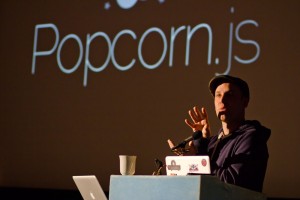
Over in America, technological innovation has emerged through organisations such as the Mozilla Foundation, who have for instance developed an open source web tool ‘Popcorn maker’, which I will review in my next post. On the funding front, Tribeca Film Institute is currently one of the only financiers of international interactive documentary productions (where no broadcast film is needed alongside the web component) through their annual New Media Fund.
On the festival circuit IDFA Doc Lab has been the pioneer of showcasing interactive documentaries ever since 2007. Next year, Tribeca Storyscapes begins a new transmedia program to showcase work that explores new forms of storytelling, highlighting innovation across a variety of platforms.

Workshops, labs and hackathons where filmmakers meet coders, web designers, game designers, app designers etc. are getting increasingly popular around the world. Labs and hackathons are great not only for networking but in fostering a culture of creative collaboration. If you are interested in this, I advise you to check out for example what POV and the Mozilla Foundation are doing: POV Hackathon and Living Docs.

There are many fantastic interactive projects out there and not enough space to mention them all. But here is a small selection of my favourites:

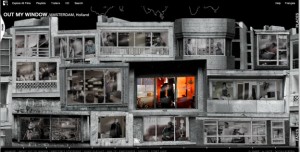
Out My Window by director Kat Cizek, NFB

The Johnny Cash Project by Chris Milk

At Home by the NFB

Gaza Sderot by Upian

We Feel Fine by Jonathan Harris and Sep Kamvar
It is an exciting time to be a media maker. We have access to data and stories like never before. Yet, all of this presents a challenge for us. Suddenly, we are expected to take on a host of new roles. You can no longer just be a director but you have to constantly develop yourself to move with the times. You may also have to become a story architect, a web producer, and a community manager – all of these require a whole set of new skills.

Matthieu talks about another challenge filmmakers face:

“One of the biggest problems for many filmmakers is that there is no clear business model in the webdoc industry. Large experiments have so far only been possible thanks to help from film funds like the CNC in France or NFB in Canada, or broadcasters like Arte, France5 and VPRO. Yet, there are also many smaller webdocs that have been created using very innovative financial strategies. Today’s webdockers have to be open-minded and look for new partners and create new funding strategies. But remember that others made it and there are lessons to be learned from that…”

Some people say that web docs are a passing phase. Whatever the future may be, it is clear that the documentary genre is being reinvented. The internet offers us a chance to take the documentary out of its box and gives us new tools to tell stories. I think it’s time to put our egos aside, and put the user first. It’s time to open our minds to new kinds of collaboration across industries, and across continents. The revolution has started and there is no stopping it.

What to pay attention to when developing projects

1. Cross-over! Talk to and learn from people in other industries. It is important to forge partnerships and build a good team of experts in their respective fields.

2. Story is always the most important, technology should come second.

3. Use what the web has to offer and then you can create a truly interactive project – also think outside the box on how to engage the audience in offline events.

4. Find partnerships for distribution – link your story with existing stories, build relationships with online publishers and brands to get your story out there to a wide audience.

5. Small is beautiful – vast complex projects just confuse the audience. Sometimes it is the simplest projects that are most effective.

6. Put the user first – always think from a user’s perspective; how is their experience and what will they do when they first come to your site? Create different entry points to your story.

7. You will need to be multi-skilled and a great manager – you need to stay on top of the entire project all the time (this is not an easy task!)

8. Have fun! Experiment, try new things, don’t be afraid. Nobody has a formula as to what interactive documentaries are – be part of inventing it!
 

New Doc Next Theme: Interactive Storytelling.

Introducing a new Doc Next Network featured Theme for December and January: INTERACTIVE STORYTELLING.

At a time when interactivity is redefining the documentary landscape, Doc Next Network, as a movement committed to reimagining the notion of “documentary”, tackles the link between digital interactive technologies and documentary making by zooming in on interactive storytelling practices.

Promoting documentary as tool for communication as well as documentation, and forming a link between traditional media and the constantly developing world of free culture, Doc Next Network investigates interactive storytelling as a new model of exchange between young creators, providing them an alternative space to be inter-active, inter-participatory, and inter-dependent. 

Essentially, the interactive multimedia capability of the Internet provides documentarians with a unique medium to create non-linear and multi-linear forms of narrative that combine photography, text, audio, video, animation and infographics. Beyond that, with the development of new authoring tools, with HTML5 and open video possibilities, media makers are getting enabled to create a wider range of experiences and personal ways for the networked audience to tap into the narrative sphere of a documentary, giving them an active role in the negotiation of ‘reality’.

With the Do-it-with-Others (DiwO) approach deeply ingrained in our network, we believe these practices help the new generation of media makers create meaningful, socially engaged stories in a participatory framework by introducing new ways of interaction, conversation and sharing of ideas between and among their different communities, allowing them to compare the realities of different worlds and ultimately to present in novice ways alternative perspectives on contemporary Europe and beyond.

Social justice through free culture and expanded (media) education.” This is what we seek to promote and accomplish through our work as Doc Next Network. We welcome, investigate and help construct new approaches, methods and tools of storytelling to do just that.

The theme of Interactive Storytelling will run until mid January 2013.

Doc Next @ IDFA 2012

Doc Next @ IDFA 2012 brings fresh short documentaries by young European D-I-Y media-makers to the big screen. Their portrayals of everyday heroes reveal small, sympathetic, local actions that have a big impact. About the love for storytelling, dancing, coffee, birds, personal belongings, memories and gardens… What are the images of Europe that they reveal? Doc Next @ IDFA mixes patient-eye documentaries with critical and political remix videos.

View the play lists here.

Doc Next @ IDFA is an initiative of International Documentary Film Festival (IDFA) and the European Cultural Foundation (ECF), based on a mutual desire to make sure the voices of young D-I-Y media talent are included in public opinion.


Institutions changing for the better.

This post Innovation and institutional change for the reinvention of democratic practices (Imagining Europe) is written by Juan Freire and was originally posted on nomada.blogs.com.

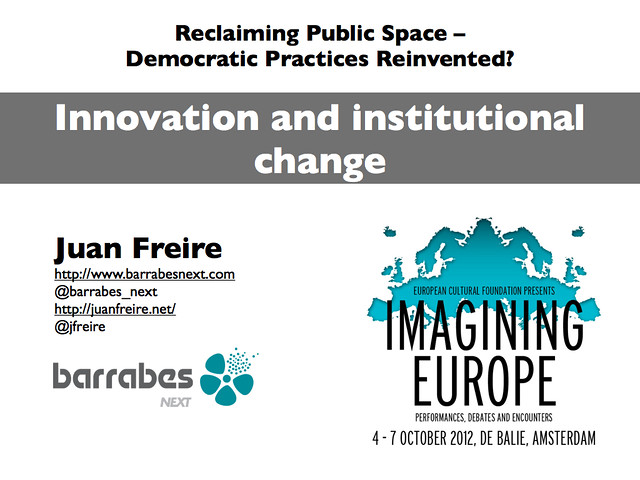
imagining_europe_jfreire_1I participated recently in the event Imagining Europe organized by the European Cultural Foundation in Amsterdam. Specifically I was part of the roundtable and debate Reclaiming Public Space – Democratic Practices Reinvented? where we tried to put “[d]emocracy in Europe under the microscope” (here a resume of the activities of the day).
Farid Tabarki (founder and director of Studio Zeitgeist in Amsterdam)  was the moderator of the debate involving Peter Vermeersch (lecturer, poet, G1000 Belgium), Tiffany Jenkins (sociologist and cultural commentator, UK) and myself to explore alternative models for democratic practice in Europe. My intervention was focused in “Innovation and institutional change” trying to present ideas about these two questions:

  • How do the alternative models [organizations and processes based in bottom-up and networked dynamics] connect and / or collide with traditional political and cultural expression?
  • How can new initiatives develop sustainable and long-term ways of participation without losing their innovating character?

The following images (the set in Flickr; see credits below) and notes is a mostly visual resume of my ideas, that I prepared after a conversation with Farid Tabarki (that inspired and provided me with clever ideas):

imagining_europe_jfreire_2

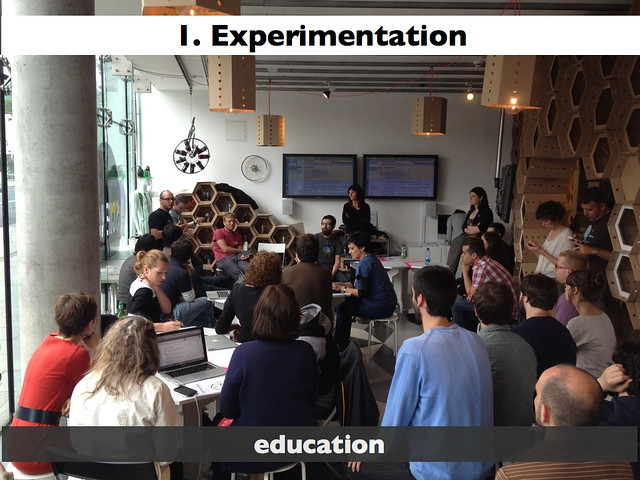
The new models of organizations and processes based in bottom-up and networked dynamics should be consideredexperimental. The only way to innovate and learn how to make effective the new practices and structures is to make them real and explore their possibilities. This means also that we need to allow failures as the only way to get real innovation. From my point of view, we should look especially to experiments occurring in two fields. Traditionaleducation is suffering a long-lasting crisis but many alternative models based in learning by doing and collaboration are emerging. Also, education is overpassing its traditional limits to be part of the agenda of culture, science or business; thelab is the new concept of space for experimentation, prototyping and learning.

imagining_europe_jfreire_3

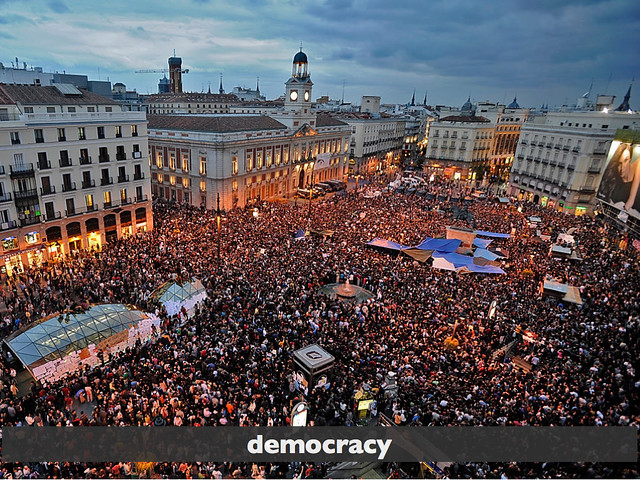
Political activism is other area of intense experimentation. Citizens are using technology and public spaces to organize themselves to discuss and make politics, sometimes in conflict with the traditional politics (represented by institutions and political parties), sometimes opening new opportunities for dialogue. The novelty here is the large scale and diversity of the citizen-driven actions taking place from 2010 worldwide (from Arab revolutions to #15M or the Occupy movements or to activism occurring in Israel or Chile to put only a few examples). These civic movements need spaces for communication, deliberation and collaboration and in this sense are reclaiming the re-appropiation of the public space by citizens.

imagining_europe_jfreire_4

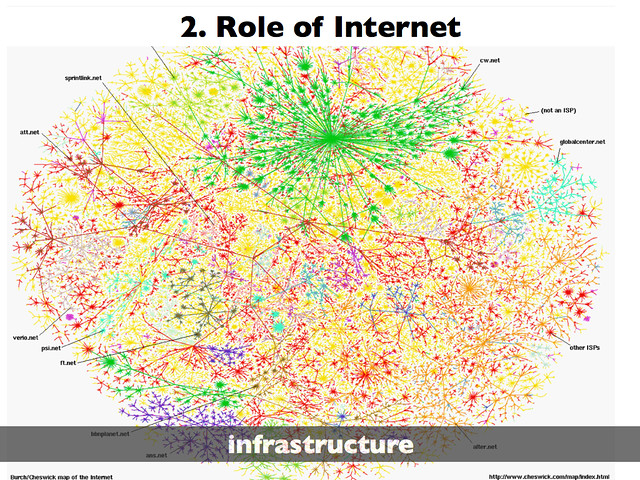
Alternative models could be not understood without the role of the Internet. They are not only digital phenomena; most of them are eminently analogical processes. However the Internet is a key element at least from 3 points of view. First as an infrastructure that allows the new network organizations and processes to be effective at a large scale.

imagining_europe_jfreire_5

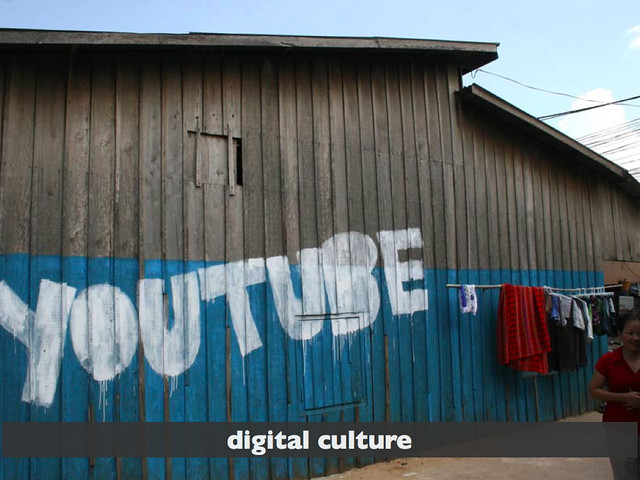
Second, the Internet has been the driver of the re-emergence of new practices and values, a new digital culture based in ideas as openness, peers, commons or collaboration and the rethinking of intellectual property.

imagining_europe_jfreire_6

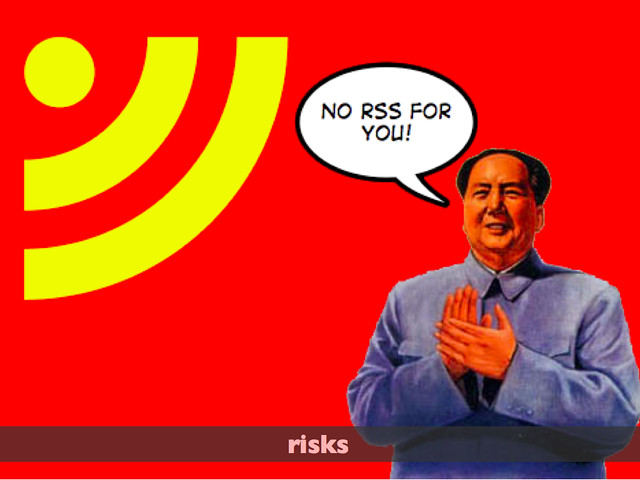
However the Internet is also a risk for these emerging phenomena because it is also a powerful tool for the power to try to control citizens, especially, but not only, in non-democratic countries. This is the other side of the impact of the digital; the balance between the pros and cons is not decided and will depend of the active roles of the different stakeholders.

imagining_europe_jfreire_7

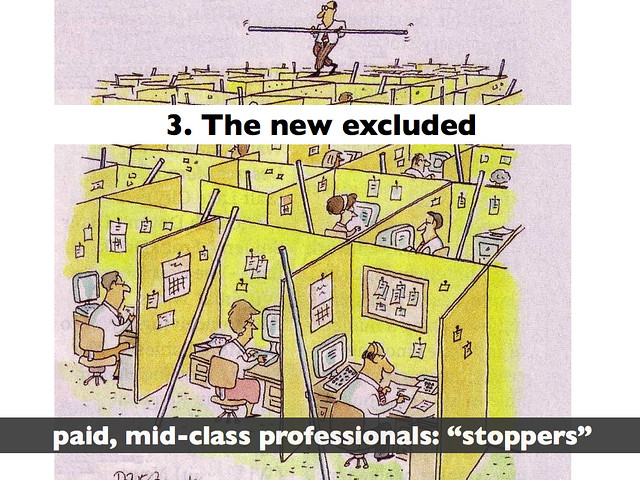
The new scenario changes the roles and outcomes of the different social collectives. In one side, probably a new class of excluded is emerging that it is very different from the traditional ones. The mid-class professionals usually working for big corporations and institutions are in many cases unable to understand and participate in the new models and as a consequence act as “stoppers” trying to keep their world as usual.

imagining_europe_jfreire_8

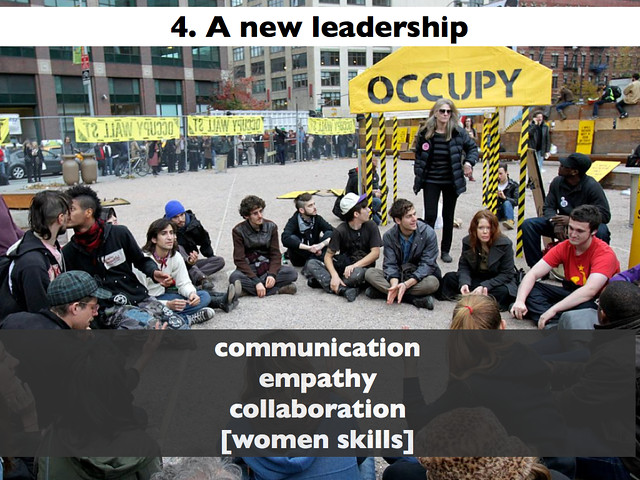
Networked organizations are open and flexible but leadership continues to be necessary. A new kind of leaders emerge with skills different to the leaders of the past. They need to communicate using new media and empowering social networks. They have to develop empathy with the different stakeholders. Finally most of their work is behind the scenes making things happen and, in this sense, promoting collaboration and team work. New leaders are obviously women and men but in many aspects their skills and values are much more close to those that traditionally were assigned to women.

imagining_europe_jfreire_9

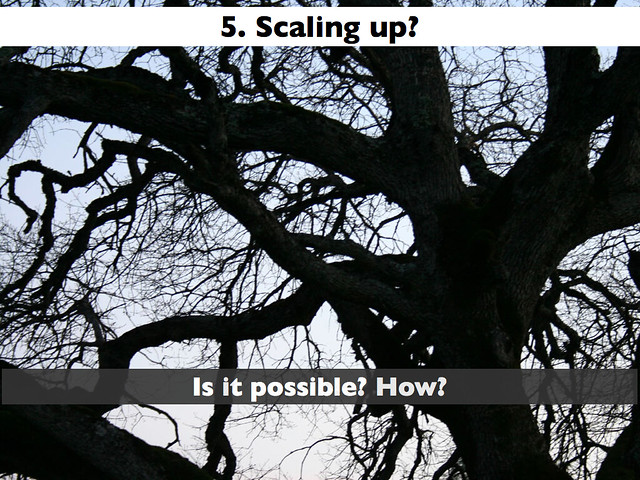
New models are working well at the small scale in the sense that we are getting many learnings and insights from these political experiences. However they attained large scale only during short periods as reactions to extreme situations (as dictatorships in the Arab revolutions) or as sophisticated demonstrations in democracies; but they have no transformed the political system. In contrast in the last decades digital processes have been able to attain large scales (i.e. Wikipedia or the free software communities) transforming for example the production and distribution of knowledge. The main question for the future is how to scale up political processes and organizations. We need dialogue between the traditional representative democracy and the new deliberative and participatory politics. Now in most cases they are operating in different channels and the conflicts continue to be manageable because of the scale, but with increasing complexity new consensus, organizations and institutions are needed and they could only emerge as hybrids of the remix of the old and new ones.

imagining_europe_jfreire_10

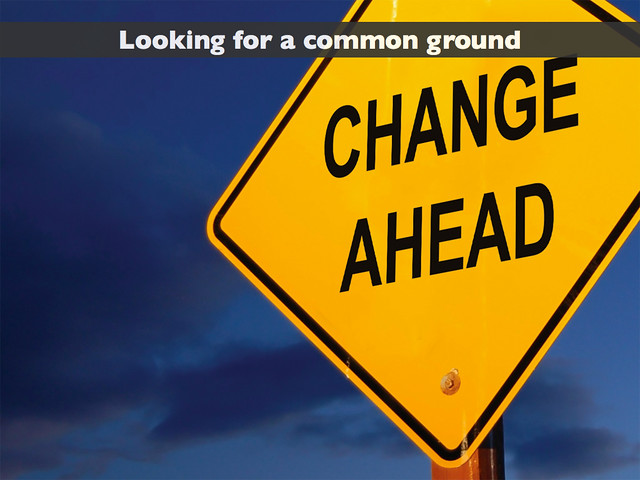
An agenda for transformation needs to identify why, how and what is changing for the better, and to look for a common ground where the new and old processes and institutions could collaborate.

Credits of the images:

  1. Science Gallery (Dublin), workshop in collaboration with Medialab Prado (June 2012)
  2. http://nosoloilustracion.wordpress.com/2011/10/16/cronica-de-un-cambio-anunciado-15m-15o-spanishrevolution/
  3. http://www.cheswick.com/ches/map/gallery/index.html
  4. http://www.psfk.com/2008/12/digital-culture-snub.html
  5. http://censorshipinamerica.com/2011/10/20/china-defends-internet-censorship-against-us-trade-query/
  6. http://vlb.typepad.com/commentary/2006/03/realtime_produc_1.html
  7. http://cryptome.org/info/ows-19/ows-19.htm
  8. http://flowerwatch.net/2010/02/08/how-natures-complexity-is-simple-and-natures-simplicity-is-complex/
  9. http://www.masshumanists.org/changing-for-the-better.htm

Doc Next Network develops method for involving immigrant media-makers.

Doc Next Network initiated a training course “Working with Immigrant Media-makers” in London, taking place on September 12, 13 and 14. The goal of this cross-sectorial training is to develop shared methodologies to involve young D-I-Y creative media-makers with (im)migrant backgrounds in the creation of new remixed media works. The training is part of the ‘Remapping Europe – A Remix’ project.

‘Remapping Europe – a Remix’ is an investigative artistic project that aims to contribute to an inclusive cultural practice and public imagery in and of Europe by connecting young creative media-makers who have (im)migrant perspectives from Spain, Poland, Turkey, and the UK to wider European intergenerational audiences.

The project’s activities stem from one underlying principle: re-mixing of media as a method to re- view, re-investigate and re-consider prevailing imagery of (im)migrants in European societies and to ultimately, ‘re-map’ Europe visually, geographically and mentally.

The activities include transnational, cross-sectorial learning platforms, investigating the immigrant’s perspective in the public debate and imagery; creative remix ateliers in Spain, Poland, Turkey, and the UK, involving 48 young digital storytellers with (im)migrant backgrounds and perspectives; international showcases of their remix works at significant cultural festivals in each of these countries and in an on- line media collection; major remix-performance and installation in Amsterdam and Seville, with a wider participatory, digital component involving European citizens across the continent and a research publication and catalogue documenting the processes and outcomes of the project.

The Goal of this cross-sectorial training is to develop shared methodologies to involve young DIY creative media-makers with (im)migrant backgrounds in the creation of new remixed media works. Cultural experts of the partner organisations (The Doc Next Network ‘hubs’) will bring a community worker of a local immigrant organisation from their country to present and discuss practices on how to reach and include young immigrants in their creative media making ateliers.

What are the challenges and opportunities that can be used for a shared methodology to reach ‘hard-to- get’ target groups? The training is a stepping stone for the inclusion of young immigrants in the remix ateliers.

  • To develop a ‘target group’ to understand who it is we aim to work with;
  • To develop a recruitment methodology for finding participants;
  • To understand existing methods of practice when working with young (im)migrants;
  • To gain an understanding of the tools at our disposal for the Remix Ateliers;
  • To develop local and joint Remix Atelier methodologies;
  • To create a common language with mutual understandings and agreements;
  • To understand how we can avoid stereotyping and pre-assumptions that may hinder the project.

Keep posted about this project , the outcomes of the London training and more Remapping Europe: Like us on Facebook or become a member of our Linkedin group.

Metropolis TV for Spanish speakers.

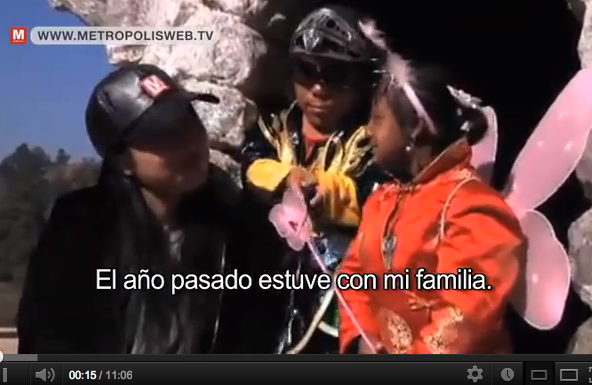
Hola Amigos!! Do yo have Spanish friends who love our partner’s Metropolis TV’s films, but do not speak Dutch or English? Problem solved! From now on you watch a selection of the best Metropolis reports with Spanish subtitles!

Atención todos los Hispanohablantes! Metropolis esta conquistando el mundo. En nuestra nueva página española encontrarás algunos de nuestros informes favoritos subtítulados al español.

El Reino de los Enanos en China

El Reino de los Enanos es una atracción popular entre los turistas chinos que quieren inaugurar el nuevo año con buen ánimo. Comenzó como una realización de Blancanieves y los siete enanitos, pero se ha convertido en un parque de atracciones, donde viven y trabajan más que cién enanos.

La guardia del puente de Nanjing

El señor Chen en Nanjing da un significado diferente al término “guardián del puente”. Con su moto conduce para arriba y para abajo sobre el puente, para parar a las personas que quieren suicidarse y quieren saltar del puente. Y los hace voluntariamente.

http://metropolistv.nl/en/content/metropolis-spanje

Why we do it?

The key of our thinking about modern media education is parallel activity for the professionalisation of cultural workers and investing in young artists who can combine their artistic potential with social mission, who can share their skills with younger generations. Film and photography are currently two of the most popular media used by young people to learn and describe the world. Cell phones are used as photographic cameras, and cameras provide video and voice recording functions. The recorded images can be published right away on Vimeo, YouTube or on social networking platforms and thus shared with millions of viewers.

Every year organisations, community centres and common rooms invite us to conduct workshops. Each of our film and photography projects has several hundred applications a year. The application and evaluation forms show us that young people need and look for modern media education. In the 9 years of our work we have observed that this kind of education is created and realised by community centres, common rooms, libraries or independent artists and animators. At the same time our experience shows that Poland still lacks animators and educators who consciously work with film and photography.

That is why we have created the Polska.doc programme in which young DIY artists get the opportunity to develop their skills trained by professionals. They go through the project process (form the idea to the finished project) and realise their own (often their first) documentary projects (film, photocasts, photographic series) with the support of experienced tutors. The first year of the programme gave us 13 finished productions. All are accessible on our website (www.polska.doc.e.org.pl). They can also be seen during shows and events initiated by the international Doc Next Network in which we partner.

Within Polska.doc we have also conducted a very important educational path called „Animate on your own!”. Our participants could not only master their talent and make their imagination roam freely but also try to work as a cultural animator. With theoretical and practical knowledge they went to places all around Poland to voluntarily assist experienced tutors and co-conduct multimedia workshops for less experienced friends. Good practices gathered throughout the project are presented on our website in the Inspiration section.

We believe that visual media prove useful in unravelling history and the local identity, in engaging young people in actions for the local community or in integrating neighbours. We want the world to be described by grassroots initiatives, by the members of local communities and with the assumption that the artists want to dig into reality, not slide on its surface.

Association “ę”

www.polska.doc.e.org.pl