Doc Next @ IDFA 2012

Doc Next @ IDFA 2012 brings fresh short documentaries by young European D-I-Y media-makers to the big screen. Their portrayals of everyday heroes reveal small, sympathetic, local actions that have a big impact. About the love for storytelling, dancing, coffee, birds, personal belongings, memories and gardens… What are the images of Europe that they reveal? Doc Next @ IDFA mixes patient-eye documentaries with critical and political remix videos.

View the play lists here.

Doc Next @ IDFA is an initiative of International Documentary Film Festival (IDFA) and the European Cultural Foundation (ECF), based on a mutual desire to make sure the voices of young D-I-Y media talent are included in public opinion.


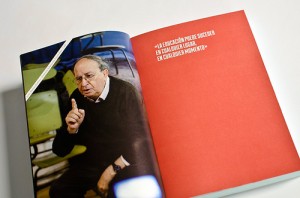
ZEMOS98 PUBLICATION ABOUT EXPANDED EDUCATION.

In 2009 the ZEMOS98 Festival (partner in Doc Next Network) investigated the alternatives for formal education and other ways of expressing knowledge. 

This process, in which activists, educators and people from the cultural and social innovation sector participated, took place in the context of the international workshop ‘Educación Expandida’ (Expanded Education). That results were collected and documented on www.educacionexpandida.org, and have served as a starting point for a publication.


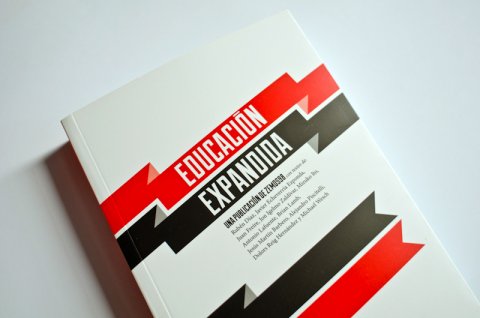
The book ‘Expanded Education’ –subtitle: education can happen anytime and anywhere- holds proposals for informal education, social activism and research in participatory processes. Expanded education is a concept that has been aknowledged by institutions and groups from various fields. To ZEMOS98, the greatest achievement isn’t the publication of the book itself, but continuation of the investigative process that began in 2009: ZEMOS98 wants to contribute to the development of expanded education by investing in anti-authoritarian and non-directional projects and methodologies.


Read more about the book here: http://publicaciones.zemos98.org/educacion-expandida-el-libro (download in PDF available)

Re-imagining Europe (on tour).

How do we imagine Europe? How do non-Europeans imagine Europe? What does it mean to be European, indeed? What is Europe really about? How do we imagine ourselves and the otherness? What does it mean to stay together? How are cliches, stereotypes, etc. being built in our societies? What happens when we ask these questions, when we ask ourselves our deepest fears, certainties and assumptions?

European Souvenirs (Crossing Shifting Borders) live cinema and remix performance was staged for the first time on Saturday, 6th October in Amsterdam. The event it was framed in, Imagining Europe, was «questioning what (…) means to be part of Europe and whether (Europeans) want to continue to be part of it, while people around the world are talking about Europe’s economic and cultural future».

[youtube http://www.youtube.com/watch?v=Z9-pAGmo9F4&w=560&h=315]

The combination of live cinema (rooted in the origins of cinema) and remix (sampling from pre-existing footage to combine them into new forms according to personal taste) can truly contribute to deconstruct our social and cultural European imaginaries: all the symbolic dimension in which our values, norms, traditions, identities or borders are represented. Or being more precise: the ways of togetherness we all can imagine. If we can really live together or not is a question the show brings up to the audience again and again.

European Souvenirs is a collective exploration by five young media artists featuring media found at archives in their countries and existing imagery of Europe and its travellers. This expedition is deeply influenced by the hegemonic media landscape we silently consume in our daily life: music videos, commercials, tv news, pop culture ultimately.

However, Europeans (and this project is an investigation about what being European really means) are much more told what they are than telling the stories about what they feel they are. That’s the reason why the show uses home video archives, found footage and audiovisual material from different institutions in Europe, in charge of the common memories.

Karol Rakowski (PL), Barış Gürsel (TR), Farah Rahman (NL), Malaventura (ES) and Noriko Okaku (JP/UK) draw a new picture departing from these images but uncovering the veil of them. what the audience will find during the show is an exploration of new narratives searching for a much more inclusive Europe. images are accompanied by data unveiling, for instance, a map of European colonization.

European Souvenirs is in that sense a provocation to the Europe we are accustomed to represent and find represented. Shake up minds, provoke reactions, debates, discussions about what Europe and being European is. All of them are objectives of this audiovisual and process-oriented investigative project.

Pop culture hacker Jonathan McIntosh has recently found connections between documentary filming and remix techniques: «the source media reveal the narrative», «countless hours gathering available audiovisual source material trying to construct a narrative plot from all the pieces», «we have a previous idea in our head for the topics we want to cover, the points we want to hit and the general direction we want to take the project but we’re never completely sure what we will find along the way or exactly how it will all fit together in the end».

These are definitely common features with European Souvenirs we invite new audiences to explore together with the artists.

European Souvenirs is now on tour

Next stop: Bilbao, 23rd November at Hondakin, a festival on creative reuse at AlhóndigaBilbao.

Going beyond education habits.

The Visual Seminar was organized 27-30 September 2012, within the Polska.doc program of  The Association of Creative Initiatives “ę”.

We met to work on the changing forms of educations and the sense of the use of visual tools; to reflect on the circulation of images in contemporary culture and the role of seeing as a way of bringing the marginalised subjects to the state of visibility.

One of the aims of the Visual Seminar was going beyond our habits related to the daily work of animators/educators/coordinators. We are often so deep in realising our activities that we cannot find time to ask questions outside of the grant application forms. We have decided to stop for a moment and to critically reflect on the work and methods that we use, the sense of which seems so obvious to us.
We invited 17 practitioners – people who educate, animate and coordinate projects with the use of photography, film, art and the Internet. The participants represented big institutions, small NGOs and freelancers. What brings them all together are the same tools and practices related to visual issues and the readiness to think about the concept and meaning of “visual education”.

We invited 16 guests – visual culture anthropologists, sociologists, new media researchers, education theoreticians, artists and curators. We spent 4 days on intensive important work full of challenges and questions. In the beautiful surrounding of the Oczyszczalnia we listened to demanding lectures, led lively discussions, criticised “good practices” during workshops, analysed images found online and YouTube videos, worked out conceptual experiments with the use of the camera and the Internet, summed up our experiences asking new questions and drawing unexpected conclusions.
Łukasz Zaremba and Magda Szcześniak, visual culture researchers working for their doctorates at the Warsaw University, opened the seminar with their workshop that presented seeing as an activity that seems transparent, yet there is nothing obvious in it; as an area of social conflict. Dr Iwona Kurz from the Film and Visual Culture Institute gave a lecture during which she presented issues related to researching visual culture. She focused on the consequences of the non-existence of this idea in the educational system. Ruben Diaz of the Spanish Organisation Zemos98 and the Seville University presented a speech about the ideas and practises related to the remix culture. The next day he presented his concept of “widened education” that can work anyplace and anytime breaking the system and the hierarchy of the school education. Edwin Bendyk of the Collegium Civitas presented scenarios of the future related to the development of the new media and technologies and their relationship with social and political change. Dominika Widłak-Mańka from the educational department of the British Film Institute described its goals and the operating model. She gave examples of specific activities and programmes aimed at diverse groups and societies. A sociologist team – Agata Nowotny, Michał Danielewicz and Agnieszka Strzemińska – moderated the ongoing process of generating knowledge. In the workshop blocks they initiated group work and discussions aimed at summarising and drawing conclusions as well as questions arising thanks to the different perspectives presented by the guests. They worked non-stop – there was no end to conversations during the brakes. We continued debates, exchanged stories about our experiences and working methods. Only sometimes did we find time to lie on the hammock, go for a short walk or lie at the pond.

Summarising the 4 days’ work opened a new stage – we divided subjects that we will work on with the collective publication in mind. In the cooperative work and the on-line consultations we will create texts, interviews, recordings and podcasts on the most interesting subject matters. We will analyse, among other topics, visual education as the tool for teaching critical thinking, the changing role and meaning of an “educator”, seeing as a bodily and space-related activity, the value of education as arousing doubt – not standardising knowledge, the notion of “effectiveness” of images in social projects, ethics and politics related to the valuation of aesthetics, the visuality of the public space and the role of photography in projects related to human rights and diversity. 2 months of intensive work await us. The publication will be out this winter!

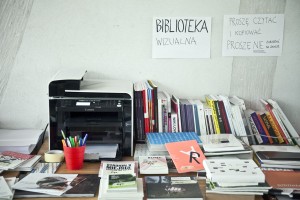
We would like to thank all the guests for inspiration, knowledge and support. We thank the participants for their involvement and openness and we congratulate on your courage to reflect and on your persistence in work. We would also like to thank the National Centre for Culture, The Foundation for Visual Arts, Political Critique, the Archeology of Photography Foundation, the Center for Citizenship Education) for books and materials for the newly initiated “visual library”.

The Visual Seminar is part of the Polska.doc programme run by The Association of Creative Initiatives “ę” executed within the Doc Next Network with the financial support of the European Cultural Foundation.

The Visual Seminar is supported by the Polish Film Institute.

Institutions changing for the better.

This post Innovation and institutional change for the reinvention of democratic practices (Imagining Europe) is written by Juan Freire and was originally posted on nomada.blogs.com.
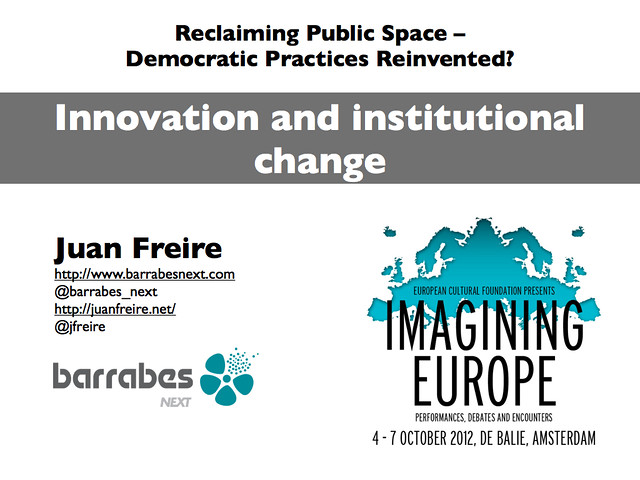
imagining_europe_jfreire_1I participated recently in the event Imagining Europe organized by the European Cultural Foundation in Amsterdam. Specifically I was part of the roundtable and debate Reclaiming Public Space – Democratic Practices Reinvented? where we tried to put “[d]emocracy in Europe under the microscope” (here a resume of the activities of the day).

Farid Tabarki (founder and director of Studio Zeitgeist in Amsterdam)  was the moderator of the debate involving Peter Vermeersch (lecturer, poet, G1000 Belgium), Tiffany Jenkins (sociologist and cultural commentator, UK) and myself to explore alternative models for democratic practice in Europe. My intervention was focused in “Innovation and institutional change” trying to present ideas about these two questions:

  • How do the alternative models [organizations and processes based in bottom-up and networked dynamics] connect and / or collide with traditional political and cultural expression?
  • How can new initiatives develop sustainable and long-term ways of participation without losing their innovating character?

The following images (the set in Flickr; see credits below) and notes is a mostly visual resume of my ideas, that I prepared after a conversation with Farid Tabarki (that inspired and provided me with clever ideas):
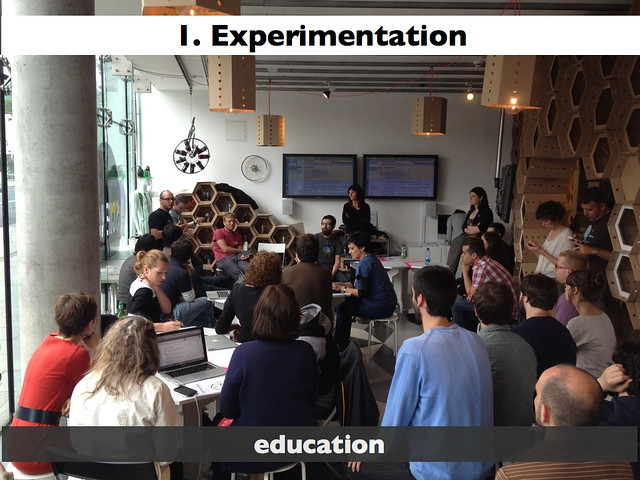
imagining_europe_jfreire_2

The new models of organizations and processes based in bottom-up and networked dynamics should be consideredexperimental. The only way to innovate and learn how to make effective the new practices and structures is to make them real and explore their possibilities. This means also that we need to allow failures as the only way to get real innovation. From my point of view, we should look especially to experiments occurring in two fields. Traditionaleducation is suffering a long-lasting crisis but many alternative models based in learning by doing and collaboration are emerging. Also, education is overpassing its traditional limits to be part of the agenda of culture, science or business; thelab is the new concept of space for experimentation, prototyping and learning.
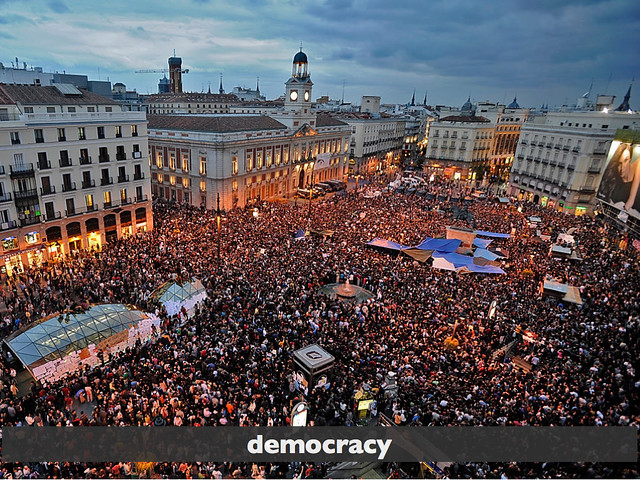
imagining_europe_jfreire_3

Political activism is other area of intense experimentation. Citizens are using technology and public spaces to organize themselves to discuss and make politics, sometimes in conflict with the traditional politics (represented by institutions and political parties), sometimes opening new opportunities for dialogue. The novelty here is the large scale and diversity of the citizen-driven actions taking place from 2010 worldwide (from Arab revolutions to #15M or the Occupy movements or to activism occurring in Israel or Chile to put only a few examples). These civic movements need spaces for communication, deliberation and collaboration and in this sense are reclaiming the re-appropiation of the public space by citizens.
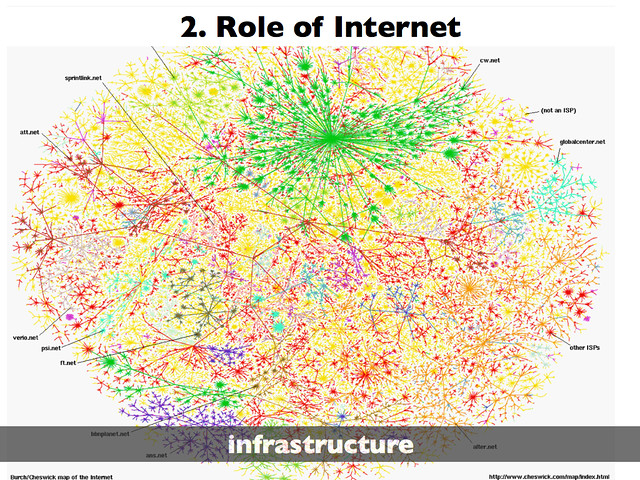
imagining_europe_jfreire_4

Alternative models could be not understood without the role of the Internet. They are not only digital phenomena; most of them are eminently analogical processes. However the Internet is a key element at least from 3 points of view. First as an infrastructure that allows the new network organizations and processes to be effective at a large scale.
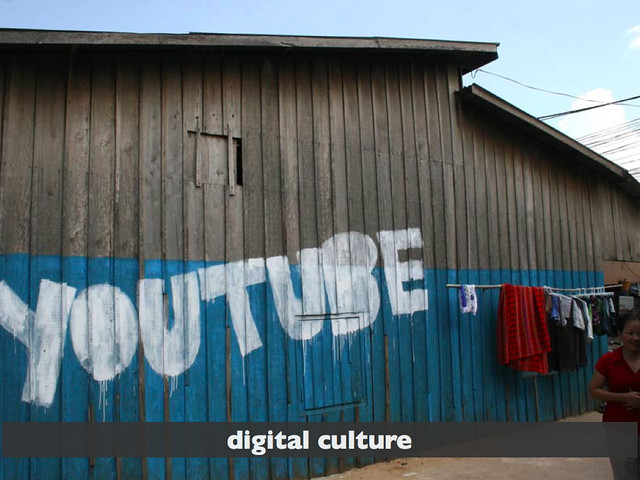
imagining_europe_jfreire_5

Second, the Internet has been the driver of the re-emergence of new practices and values, a new digital culture based in ideas as openness, peers, commons or collaboration and the rethinking of intellectual property.
imagining_europe_jfreire_6

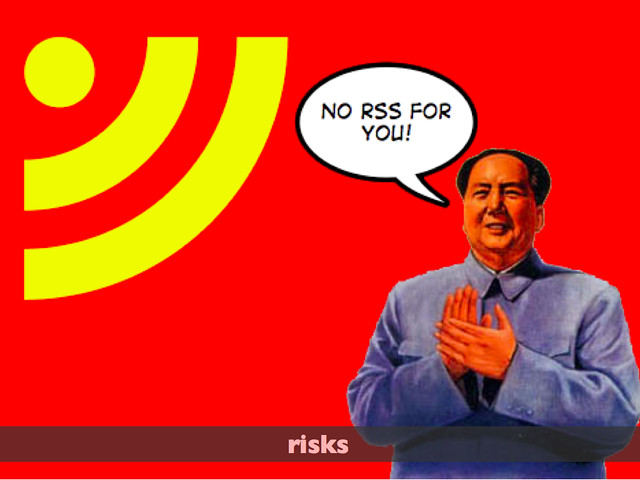
However the Internet is also a risk for these emerging phenomena because it is also a powerful tool for the power to try to control citizens, especially, but not only, in non-democratic countries. This is the other side of the impact of the digital; the balance between the pros and cons is not decided and will depend of the active roles of the different stakeholders.
imagining_europe_jfreire_7

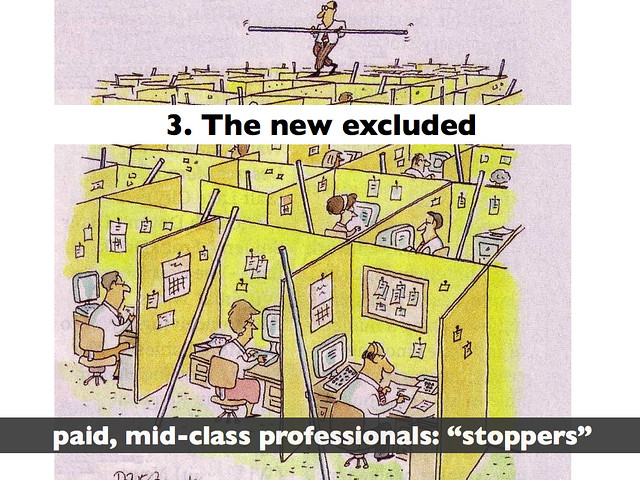
The new scenario changes the roles and outcomes of the different social collectives. In one side, probably a new class of excluded is emerging that it is very different from the traditional ones. The mid-class professionals usually working for big corporations and institutions are in many cases unable to understand and participate in the new models and as a consequence act as “stoppers” trying to keep their world as usual.
imagining_europe_jfreire_8

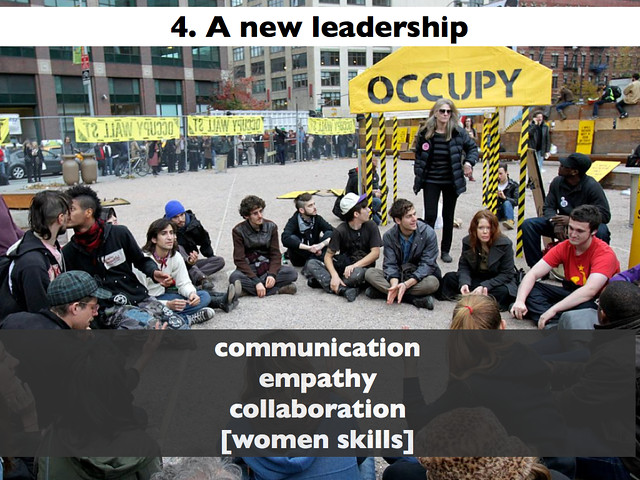
Networked organizations are open and flexible but leadership continues to be necessary. A new kind of leaders emerge with skills different to the leaders of the past. They need to communicate using new media and empowering social networks. They have to develop empathy with the different stakeholders. Finally most of their work is behind the scenes making things happen and, in this sense, promoting collaboration and team work. New leaders are obviously women and men but in many aspects their skills and values are much more close to those that traditionally were assigned to women.
imagining_europe_jfreire_9

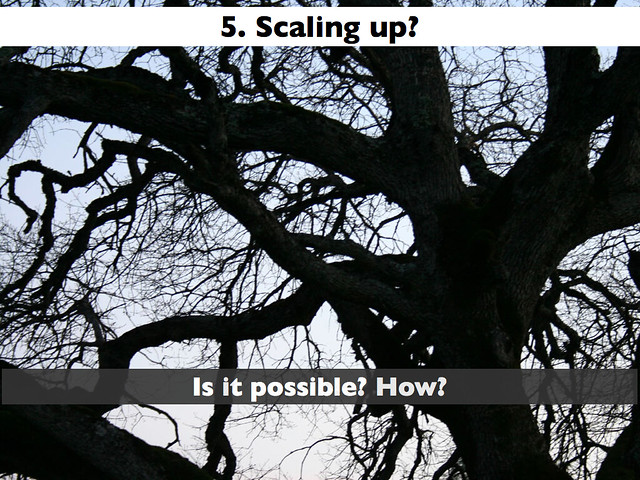
New models are working well at the small scale in the sense that we are getting many learnings and insights from these political experiences. However they attained large scale only during short periods as reactions to extreme situations (as dictatorships in the Arab revolutions) or as sophisticated demonstrations in democracies; but they have no transformed the political system. In contrast in the last decades digital processes have been able to attain large scales (i.e. Wikipedia or the free software communities) transforming for example the production and distribution of knowledge. The main question for the future is how to scale up political processes and organizations. We need dialogue between the traditional representative democracy and the new deliberative and participatory politics. Now in most cases they are operating in different channels and the conflicts continue to be manageable because of the scale, but with increasing complexity new consensus, organizations and institutions are needed and they could only emerge as hybrids of the remix of the old and new ones.
imagining_europe_jfreire_10

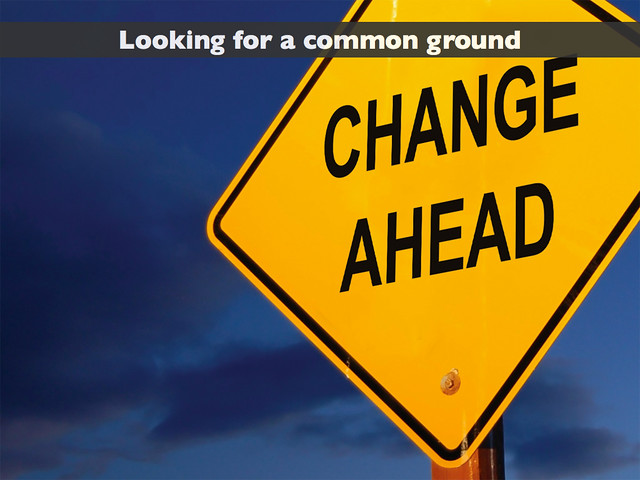
An agenda for transformation needs to identify why, how and what is changing for the better, and to look for a common ground where the new and old processes and institutions could collaborate.

Credits of the images:

  1. Science Gallery (Dublin), workshop in collaboration with Medialab Prado (June 2012)
  2. http://nosoloilustracion.wordpress.com/2011/10/16/cronica-de-un-cambio-anunciado-15m-15o-spanishrevolution/
  3. http://www.cheswick.com/ches/map/gallery/index.html
  4. http://www.psfk.com/2008/12/digital-culture-snub.html
  5. http://censorshipinamerica.com/2011/10/20/china-defends-internet-censorship-against-us-trade-query/
  6. http://vlb.typepad.com/commentary/2006/03/realtime_produc_1.html
  7. http://cryptome.org/info/ows-19/ows-19.htm
  8. http://flowerwatch.net/2010/02/08/how-natures-complexity-is-simple-and-natures-simplicity-is-complex/
  9. http://www.masshumanists.org/changing-for-the-better.htm
Imagining Europe: Is A New Europe Possible?

Between the dates of October 4-7, 2012, the European Cultural Foundation (ECF) presented Imagining Europe at the renowned cultural space De Balie in Amsterdam. Live performances, debates and encounters to imagine a new Europe were held during the four-day event.

 De Balie in Amsterdam hosted a series of activities under the title Imagining Europe, presented by the ECF, between the dates of October 4-7, 2012. During the events, talks and discussions, participants tried to find out what the contemporary problems in our societies are, and imagined the future of Europe; artists from different countries and backgrounds displayed their live performances. One of the most memorable events was the live cinema performance of European Souvenirs, a Doc Next Network project commissioned by the ECF, curated and designed by Zemos98 (Seville) in collaboration with other Doc Next partners, the British Film Institute-Future Film (London), the Association of the Creative Initiatives “ę” (Warsaw) and MODE Istanbul (Istanbul). All the artists and participants of Imaging Europe tried to find an answer to the question of how to re-imagine and re-map a new Europe.

October 4 – Imagining Europe started with the opening speech of the ECF’s President Princess Laurentien of the Netherlands at De Balie. After the Princess’s speech, Dutch TV presenter Twan Huys introduced internationally known Bengali Indian author, Amitav Ghosh to the audience. Ghohs talked about world economy and politics, and the crisis of climate change during his speech. He gave comparative examples from different regions of the world and the different periods in history, and focused on the problem of growth and consumerism. After the dinner, renowned Syrian clarinetist player and composer Kinan Azmeh and Dutch trumpet player Eric Vloeimans shared the same stage for their exclusive live performance.

October 5 – The second day of Imagining Europe continued with the debate “Reclaiming the Public Space” at De Balie.  As the opening speech, British curator and writer Charles Esche came to the stage and talked about the role of art in Europe’s and the world’s shared future, and the question of reinventing democracy. Then, moderator Farid Tabarki, the founder and director of Studio Zeitgeist in Amsterdam, invited Belgian lecturer and poet Peter Vermeersch, British sociologist Tiffany Jenkins and Spanish innovation manager Juan Freire to talk about the role of the artists and cultural actors in creating new channels for a new political imagination. Participants of the debate discussed about the contemporary problems in Europe as well as in the world, and shared the belief that we need to re-imagine and re-develop new organizational approaches.

After the debate on the Europe’s future, the night continued with the world premiere of “a culinary experience”, Trash Cuisine, by Belarus Free Theatre, at Stadsschouwburg of Amsterdam. Belarus Free Theatre, which is formed by a group of artists who were exiled by dictatorial leadership in their home country, performed an exceptional and emotional play underlying the political pressure and violence in Belarus.

October 6 – The third day of Imagining Europe continued with the “Reflection on the Future of Funding Cities” at the Mirror Salon, De Balie. After the debate, European Souvenirs took the stage. The five European media artists Karol Rakowski (Poland), Barış Gürsel (Turkey), Farah Rahman (Netherlands), Malaventura (Spain) and Noriko Okaku (United Kingdom / Japan) presented an experimental live cinema performance, which is created by remixing materials gathered through extensive research on media archives. While European Souvenirs artists questioned Europe and the world, they showed how borders are crossing (shifting) by reminding the viewers the universal concepts such as family, travel, borders and memoirs.

October 7 – On its fourth day, Imagining Europe ended with a film screening and conversation with the film director and cultural activist John Akomfrah.


Live preview and Q&A for press and cultural innovators.

THE LIVE SHOW IN THE EVENING IS SOLD OUT. However, journalists, bloggers, new media industry representatives and cultural innovators are cordially invited to attend the live preview and Q&A of European Souvenirs. Saturday 6 October, 17.00. De Balie (Leidseplein), Amsterdam.

Delving into audiovisual materials from leading European archives, Doc Next Network brings you European Souvenirs that offer a trip down memory lane. Remixing music, photography and film, the European Souvenirs artistic group re-examines the prevailing imagery of immigrants across European communities and re-maps Europe visually, geographically and conceptually.

European Souvenirs premiers on Saturday 6 October at 20.30 – this major live-cinema performance will tour afterwards in different countries across Europe and beyond. The collaborative multi-media project is created by artists Farah Rahman (The Netherlands), Karol Rakowski (Poland), Barış Gürsel (Turkey), Malaventura (Spain) and Noriko Okaku (Japan/UK). Universal concepts such as ‘family’, ‘travel’, ‘borders’ and ‘memory’ are the starting point for their expedition. Read more about the artists…

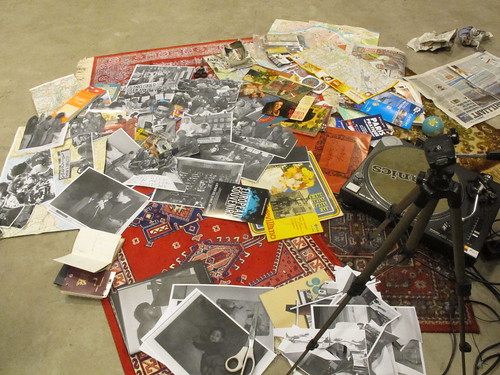
European Souvenirs uses remix techniques: the artists take on the precepts of contemporariety as proposed by Marcel Duchamp and his ready-mades. The copying, manipulation and representation of the real includes images from films, DVDs, video clips and video games. The artists mix their own childhood memories with audiovisual material from leading European institutions that have opened up their archives for this project. Remixing Europe implies to build a sort of Frankenstein made up of different cultural baggages.

For accreditation for the Live preview + Q&A with artists, please RSVP below. The number of places is limited. You will receive a confirmation by e-mail before 4 October 2012.

For all press inquiries about this Live preview, please contact Daniel Bouw: daniel[at]deneuve.nl. 
For other information about European Souveniers, please visit this website.

[contact-form-7 404 "Not Found"]


Call for Dutch Do-It-Yourself film-makers.

Doc Next @ IDFA: Open Screen for Dutch Do-It-Yourself film-makers.

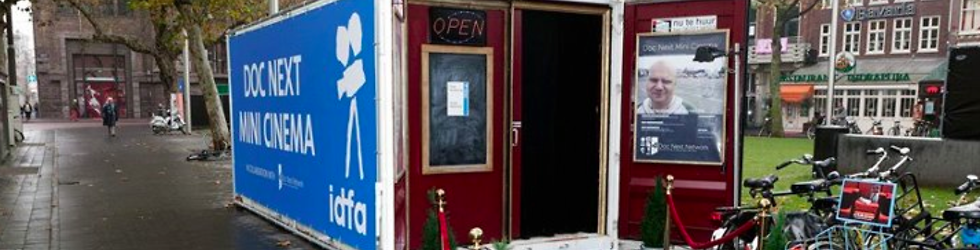
Are you a young Dutch film-maker? Have your your best work screened in the Doc Next Mini CInema, at the International Documentary Film Festival (IDFA) 2012!

Doc Next Network calls for short video documentaries, made by young (< 30 years old) Dutch film-makers, within the theme LOCAL HEROES. Share your work in this group to enter our Dutch Open Screen.
A selection is made by a professional jury and will be screened at IDFA 2012 (15 – 25 November), in the Doc Next Mini Cinema situated in the heart of the festival at the Rembrandtplein, Amsterdam.

This years theme is LOCAL HEROES. We are looking for self-made videos, documentaries and reports about people & symbols that inspire and provoke you.

Doc Next @ IDFA is about an alternative perspective on Europe, do-it-yourself and free culture. The Dutch Open Screen is open to any young film-maker (younger than 30 years old, no need to be officially educated) living in The Netherlands. Upload your film in this group. Add your name, age and a short description. Deadline: 1 November 2012.

-Selections for the MinI Cinema will be made by a jury with members of IDFA, Doc Next Network, Metropolis TV and Holland Doc;
-The selection will be announced on 15 November 2012;
-Films that are NOT in English or Dutch should be subtitled;
-Entries remain property of the maker but can be used in any means of communication by the European Cultural Fondation, Doc Next Network hub partners, Metropolis TV and Holland Doc;
-The Dutch Open Screen @ IDFA is a one-off event. The organizers do not commit themselves to follow-up activities;
-By entering the Dutch Open Screen makers make themselves aware of Doc Next Network and its goals (www.docnextnetwork.org/about);
-Entering the Dutch Open Screen is free of charge. When selected for screening, there is no (financial) compensation;
-The exact date and time of the screenings will be communicated on www.docnextnetwork.org.

We have 2 IDFAcademy accreditations for Dutch DIY documentary makers who enter their work in Dutch Open Screen. From 15 until 18 November 2012, the IDFAcademy offers an intensive four-day training program for emerging filmmakers, producers, and film students. Full programme online here.


Get inspired at www.vimeo.com/groups/docnextnetwork!


Doc Next Network develops method for involving immigrant media-makers.

Doc Next Network initiated a training course “Working with Immigrant Media-makers” in London, taking place on September 12, 13 and 14. The goal of this cross-sectorial training is to develop shared methodologies to involve young D-I-Y creative media-makers with (im)migrant backgrounds in the creation of new remixed media works. The training is part of the ‘Remapping Europe – A Remix’ project.

‘Remapping Europe – a Remix’ is an investigative artistic project that aims to contribute to an inclusive cultural practice and public imagery in and of Europe by connecting young creative media-makers who have (im)migrant perspectives from Spain, Poland, Turkey, and the UK to wider European intergenerational audiences.

The project’s activities stem from one underlying principle: re-mixing of media as a method to re- view, re-investigate and re-consider prevailing imagery of (im)migrants in European societies and to ultimately, ‘re-map’ Europe visually, geographically and mentally.

The activities include transnational, cross-sectorial learning platforms, investigating the immigrant’s perspective in the public debate and imagery; creative remix ateliers in Spain, Poland, Turkey, and the UK, involving 48 young digital storytellers with (im)migrant backgrounds and perspectives; international showcases of their remix works at significant cultural festivals in each of these countries and in an on- line media collection; major remix-performance and installation in Amsterdam and Seville, with a wider participatory, digital component involving European citizens across the continent and a research publication and catalogue documenting the processes and outcomes of the project.

The Goal of this cross-sectorial training is to develop shared methodologies to involve young DIY creative media-makers with (im)migrant backgrounds in the creation of new remixed media works. Cultural experts of the partner organisations (The Doc Next Network ‘hubs’) will bring a community worker of a local immigrant organisation from their country to present and discuss practices on how to reach and include young immigrants in their creative media making ateliers.

What are the challenges and opportunities that can be used for a shared methodology to reach ‘hard-to- get’ target groups? The training is a stepping stone for the inclusion of young immigrants in the remix ateliers.

  • To develop a ‘target group’ to understand who it is we aim to work with;
  • To develop a recruitment methodology for finding participants;
  • To understand existing methods of practice when working with young (im)migrants;
  • To gain an understanding of the tools at our disposal for the Remix Ateliers;
  • To develop local and joint Remix Atelier methodologies;
  • To create a common language with mutual understandings and agreements;
  • To understand how we can avoid stereotyping and pre-assumptions that may hinder the project.

Keep posted about this project , the outcomes of the London training and more Remapping Europe: Like us on Facebook or become a member of our Linkedin group.

Video interviews with European Souvenirs artists.

Delving into audiovisual materials from leading European archives, Doc Next Network brings you European Souvenirs that offer a trip down memory lane. Remixing music, photography and film, the European Souvenirs artistic group re-examines the prevailing imagery of immigrants across European communities and re-maps Europe visually, geographically and conceptually.

These videos are interviews with the artists. Read more about the people behind European Souvenirs.


FARAH RAHMAN (NL) Works as a video artist in audiovisual performances, creates photos, films and site specific art installations. Her work is often related to the Eastern philosophy Wabi Sabi, seeing beauty in imperfection. The re-use of materials, analog techniques and mixing them all together in the digital jungle is typical in her work. It has been described as audiovisual poetry, guerilla style. Next to her work as an artist she translates this style in project based assignments like publicity film/photography, workshop concepts, stop-motion animation.
Farah Rahman studied BA Audiovisual Design at the Willem The Kooning Art Academy In Rotterdam.


NORIKO OKAKU (UK) Noriko Okaku produces work in animated video, drawing, sculpture and audio/visual live performance. Her work in various media often retains a collage art element. She borrows, adopts, copies and recycles existing images to explore the diverse avenues of perception. Her work explores the eclecticism and mystery/strangeness underlying everyday objects and actions. Okaku studied Fine Art (Media) at Chelsea College of Art and Design before attending the MA Animation at Royal College of Art.
Her video work has been included in exhibitions at Hakobaka Gallery Kyoto, Asifakeil Museum Quartier Austria and Garage Center for Contemporary Culture Moscow.


KAROL RAKOWSKI (PL) Multimedia artist and director, producer, musician; philosopher by education. In his works, he deconstructs borders that separate media from artistic expression forms and exceeds limitations of the tools he is using. He is particularly interested in light and its role in the dramaturgy of a performance.
He collaborated with many artists, working in superproductions (like the project with Brian ENO for the Wrocław Fountain), as well as avant-garde projects.
He lives and works in Wrocław (Poland).


MALAVENTURA (ES) Based in Fuengirola (Malaga, Andalucia), Malaventura is the moniker of Fernando García Tamajón (Malaga, 1978) BA in Audiovisual Communications studies by the University of Malaga.
His work range from experimental electronic music, videoart pieces, multi-touch interfaces programming, random experiments with online movie editing or the “Audiovisual Sampler” artifact, a tool that make possible to launch movie clips in live action to create a live cinema show. Since the year 2000 delivering music & video works under open licences


BARIŞ GÜRSEL (TR) Media Artist & Director working on various motion graphics, animation and music video projects. Till 2011 worked as a compositing artist for many animation/vfx projects at Anima Istanbul. In 2012 co-founded his company Bench Studio in Istanbul. He is also working as a freelance compositing and motion graphics artist in Amsterdam.
Studied Interactive Design at Yıldız Technical University in Istanbul, and now receiving his MFA degree in VCD from Bilgi University. Through his own artwork he is attempting to examine the phenomenon of Biophilia (Human-Nature Relations) and Fiction/Fake.