Remapping Europe Atelier in Poland – part 1
Interview: Web Tools for Interactive Storytelling
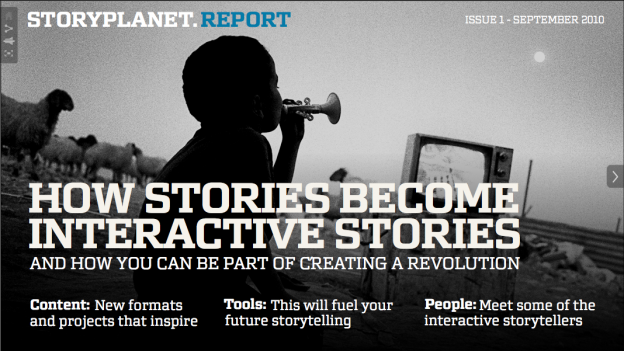
In this week’s blog on the topic of interactive documentaries, guest editor Paulina Tervo decided to look into some of the web tools for documentary makers wishing to create interactive stories.
——–
“As I argued in my previous post, one of the major challenges documentary makers face when creating interactive docs is that there are no sustainable business models yet. The idea that producing a project for the web is cheaper than a traditional documentary is a myth and in many cases it can in fact be the opposite. To make an engaging interactive documentary, you not only need a well crafted story but you also need to develop and design the user experience, and find a coder to put it all together. As the genre is still in its early days, it can be very difficult to find a coder who can understand the filmmaker and vice versa.
Now some companies are tapping into this specific need by offering filmmakers easy-to-use editing and publishing tools that allow them to create interactive and non-linear stories without much knowledge of code or design. What previously would have been a highly expensive and labour-intensive pursuit now gives media makers the freedom and opportunity to experiment without taking huge risks.
In order to understand these new tools and their functions better, I talked to Arnaud Dressen from Klynt (Interactive Producer / CEO at Honky Tonk Films) and Bjarke Myrthu (Founder/CEO) from Storyplanet.

I asked the same questions to both of them. I hope that their answers below will shed some light on what these tools are there for.
Q: What does your tool do and who is it aimed for?
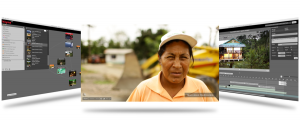
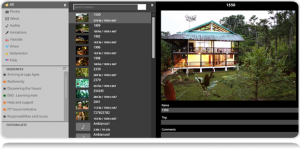
AD: Klynt is an editing and publishing tool that allows filmmakers to create non-linear and interactive stories easily and without the need to use a programmer. It was designed as an affordable and creative solution to explore new narrative formats on the internet. It is primarily aimed at journalists and filmmakers but is also being used by NGOs.
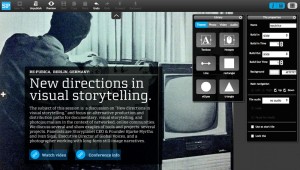
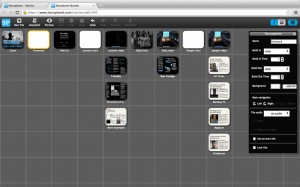
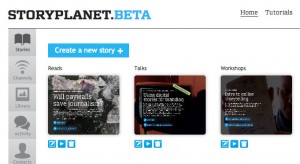
BM: Our online builder tool makes it easy for you to turn images, video and text into beautiful, engaging stories. You can use our free online toolbox to do everything from your next school project or family album to documentaries, timelines, presentations and more. Storyplanet is aimed for a wide audience, including photographers, journalists and filmmakers as well as educational users and NGOs. 3rd party developers can build on it and extend it. The software is currently in BETA.
Q: What kind of stories can you create using your tool?
AD: You can create stories with any subject, length or genre, ranging from investigations to analytical, observational, historical documentaries, games and mind-map stories. You can create any kind of story architecture. With Klynt you can do something quite sophisticated and interactive with little knowledge of design or coding. It is not to say that it cancels the need for a graphic designer and a coder completely. In fact a designer and a coder can help you create more original stories using Klynt. Most of our users create stories using their own content.
BM: Storyplanet has broad storytelling possibilities ranging from e-books, interactive timelines, linear movies with links within it, page-like stories where you decide your own user journey, stories with hyperlinked overlays on the image etc. We are trying to cater for all these different scenarios. We are currently talking to the guys at Mozilla to find out a way to integrate our tool with Popcorn maker.
Q: Will you offer templates?
AD: No, with Klynt we decided not to develop templates as our users were not keen on the idea.
BM: Yes we are developing templates at the moment, we call them ‘themes’. There is a debate on whether templates are necessary and there are two camps. We are developing them so that we can cater for a wider user base.
Q: Can you give me some examples of projects that have been created using your tool?
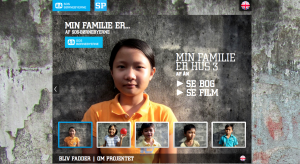
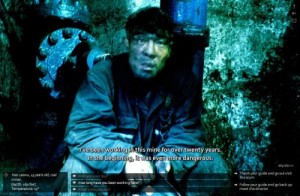
AD: Our production arm, Honky Tonk Films, uses the tool for all its productions. This allows us to push the boundaries of the application, and helps us define the features for future versions. Examples of the productions made with Klynt are “Journey to the End of Coal” and “Manila Moneyla“.
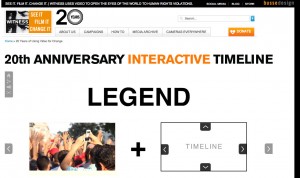
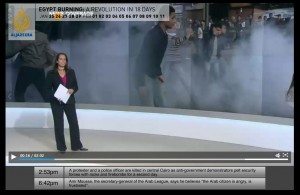
BM: Witness used Storyplanet to create a timeline of 20 years of their work (which can be seen here), and Al Jazeera used it to create a story on 18 days of revolution in Egypt (which can be seen here).
Q: What is your revenue model?
AD: Our revenue comes from 3 main sources, 1/3 from license fees, 1/3 from associated production services and 1/3 from training and consulting. We offer two types of licenses to Klynt, 150 euro for the light version and 500 euro for the pro version.
BM: Storyplanet will be a free tool but premium features will be charged for. These may include extra storage, analytics, own URL etc. We are also building a market place for templates (similar to the app store) in order to boost revenue.
Q: Can you guarantee a sustainable environment for filmmakers? What happens to the content in 5 years time?
AD: This is a growing concern for us all. In order to tackle it we are moving closer to more standard technologies and open source policies to give our users more control and ownership.
BM: We are developing a way for users to download their data in order to store it on their own server. Since we are still in BETA stage this feature is not functional yet but we can do it for users manually for now.
Q: Do you offer any business models for filmmakers using your platform / software?
AD: This is not our primary purpose. Every project we have done so far has been released for free. In the future we may integrate crowd-sourcing or micro financing options.
BM: Yes. We are planning to have a market place for filmmakers and photographers, so that through our platform you could become a pro-producer and charge for the use of your content. We are also hoping to function as a publishing network, and establishing partnerships with big media outlets who could search and buy content from makers on our platform.
To compare and contrast these two tools, here are the features of each tool in a nutshell:
KLYNT:
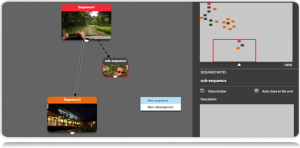
Edit Rich Narratives
* Mixed Media Editing
Texts, images, audios, videos and hyperlinks
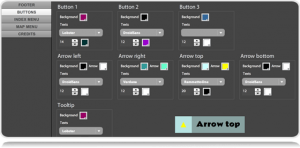
* Customizable layout & design template
Create your own look and feel
* Visual Storyboard
Edit your storyboard like a mind map
Connect Your Story to the Web
* Mash-up Ready
Mix YouTube, Dailymotion, Vimeo videos and Flickr images
* Facebook & Twitter Friendly
Share your favorite sequences on social networks
* Custom Maps
Geolocalize your content
Publish Anywhere
* Quick Publishing
Automatically export your final edit
* Embedable Anywhere
Show your program on any webpage
* Tablet and Mobile Device Compatible
HTML5 player (coming February 2013)
To try Klynt for free sign up on here.
STORYPLANET:
* Flash based – HTML version coming
* Free – planning to make money from premium templates, extra storage and statistics
* Cloud based: No need to download or install software
* Works on Mac, PC and Linux and in all major browsers
* Embed the final story on any kind of website or blog
* Build any kind of story structure by placing tiles in a grid
* Create any kind of layout with video, photos and text
* Add navigation using buttons and hotspots
* Navigate stories going left, right, up and down
* Coming: Embed content from Youtube, Vimeo, Instagram, Flickr, Dropbox etc
* Coming: Collaborate and share media
* Coming: Extend buy building your own plugins and themes
To try Storyplanet please sign up for BETA testing here.
There are many other brilliant and useful web tools for documentary makers, which I did not have the time to delve into. But here is a list of some other tools that you may also want to explore:
Popcorn maker
3WDOC
Zeega
Korsakow
Djehouti”
By Paulina Tervo for Doc Next Network
Aha! This is Remapping Europe!
We all like stories. We create them. We consume them. We distribute them. And we remix them. Today, I have a little story to tell you about Remapping Europe.
A lot of time, the most interesting things that happen around proffesional and cultural projects are the unexpected and unplanned things. Yes, you usually have a budget, meetings, agendas, dates, workplans, teams, tasks, documents, emails and of course, stressful situations.To be very brief, Remapping Europe is an international project run by Doc Next Network, to create and share stories to rethink our european identity. We want to work with migrants to ‘re-map’ Europe visually, geographically and mentally. But as you can see (and feel), this is the official definition. And of course, I can tell you a lot of things from this perspectives (because believe me, in the Doc Next Network, we love to open new documents. We are on the very brink of crashing Google Docs). So, this morning, I experienced something that showed me a personal and unofficial definition of what Remapping Europe is.
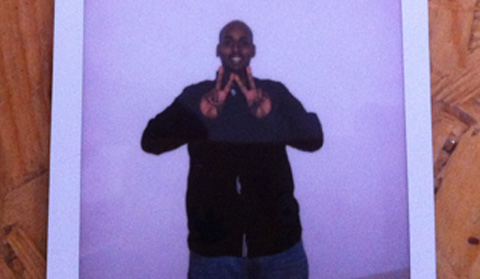
This is Ahmed. He was born in Somalia but he is living in London. His father was very lucky: in Somalia, someone working at the BBC there who could get out people of the country organized a kind of job-offer to get out 3 people from there. There were a lot of people who wanted to leave the country. Ahmed’s father was one of these.
Ahmed studied Filmmaking in London. Now, he is in contact with the Refugee Youth organization, based in London. And now, this organization is collaborating with the British Film Institute (one of the hubs of the Doc Next Network). He will be one of the “Travelling Participants” in Remapping Europe. His responsibility is to travel to every country (Poland, Turkey, Spain) and to be the storyteller of these experiences to the rest of Refugee Youth.
I met him yesterday. It was the first workshop of Remapping Europe in Warsaw. We had to make a game to present ourselves. We were in pairs, and we had 15 minutes to tell our story. Then, we had to present our partner to the others and take a photo of him/her. It was in the moment that Ahmed told us that he has two kids, and in the photo you’re watching he is imitating one of his kids making a “double-sign-of-peace” with his hands.
But it was this morning when I really felt “Ok, this is Remapping Europe”. We were having breakfast. When you are not an anglo-parlant, it’s the worst moment of the day because your english-skills are still sleeping. But then we started a conversation about free culture. And I was myself again, explaining the main core of Free culture, the Creative Commons licences, what the public domain is, etc. And then we connected with the african oral tradition of Ahmed.
And there we were: a Canary guy with French and Andalusian roots (and maybe it’s my intuition, with Phoenician ancestors) talking about free culture with a Somali guy living in London, in the middle of the snow in Warsaw.
I know that maybe it sounds naive, but for me, I realised in this moment that it’s part of my work. But it’s also part of my life. Because we were remapping europe.
—
Abrelatas says: Thankx Matt, for helping me with my English!
Upload Cinema: taking webvideo out of the domestic realm.
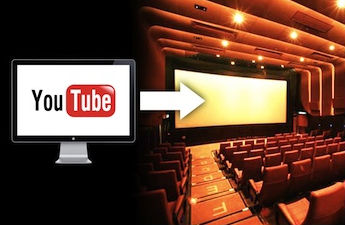
 The web is changing film. Not only the way film content is being distributed, but also the way film is being produced and watched. The whole interactive process of making, mixing, choosing, uploading, commenting, recommending and reacting is what is truly revolutionizing the industry.
Film is becoming more and more a collaborative, social activity. But unfortunately this activity is taking place behind the computer at home or at work. Which is, let’s face it, not the best possible place to enjoy movies. Film is becoming more and more a collaborative, social activity.
Upload Cinema wants to take this exciting new way of making and sharing film out of the domestic realm, away from the internet and the tiny computer screen and into a space that’s designed for a collective experience: the cinema. Upload Cinema brings the best internet videos to the big screen. Every two months they present a fresh, thematic program of captivating web films, linked to a special theme. The audience submits web films; a team of editors picks the best ones and compiles a programme of around 90 minutes from the bunch, which is screened in cinemas and on special locations.
Win 2 tickets for The Best Webvideos (Amsterdam, 29 January) 2012 on Facebook.
Upload Cinema celebrates the new year at the Stadschouwburg in Amsterdam (Tue 29 January). Lean back and enjoy the most shocking, funniest and best online videos of 2012 on the big screen.
Doc Next Network’s partner Metropolis TV is this years guest editor! You can win 2 tickets for the event on our Facebook Page.
Buy your ticket here.
More about Upload Cinema here.

Insights Into the “Interactive Documentary” Realm: An Introduction

I’m Paulina Tervo. I have been invited to write for the blog in the next few weeks around the topic of Interactive Documentary. Firstly, I would like to introduce myself and tell you a bit about my background. I work as a documentary filmmaker and interactive producer at Write This Down Productions. I was based in London until recently but in April 2012 I relocated to Istanbul with my husband and business partner Serdar Ferit (who I co-own Write This Down with). Not long after we arrived, we met Gokce Su Yogurtcuoglu, and got acquainted with MODE Istanbul and with Doc Next Network. Fast-forward 8 months and we are sharing an office and planning many interesting collaborations together. Su asked me to contribute to this blog, knowing that I am very passionate about this subject matter.
I was introduced to interactive documentaries in 2009 while I was a participant on EsoDoc. The idea of combining the power of the internet with documentary storytelling really excited me. I have always been more of a short documentary maker and I find that short stories can be very powerful. I wanted to experiment and see if I could take storytelling a step further and engage the audience in contributing to the story, giving them tools to make their own decisions about how they experience the story as well as build in ways in which they can get involved in making change.
As a result, in 2010 I started to develop a film idea into an interactive documentary (The Awra Amba Experience). Through this project, I have been exposed to a new world and learned a lot of things about gaming, web design, coding, interactivity and social media. Starting an interactive documentary project has been nothing less of enriching both professionally and personally. But more about my project later!
In this post, I want to briefly introduce interactive docs, including what’s currently going, and what some of the challenges are. Next week I will review a few of the web tools that are being developed for filmmakers wishing to make interactive documentaries. In my third and final post, I will go into the project I mention above in more detail.
In preparation for this post, I have been talking to my colleague Matthieu Lietart, from Not So Crazy! Productions in Belgium, whose book ‘Web Docs – A survival guide for online filmmakers’ is essential for anyone wishing to navigate their way around the web doc jungle. Matthieu says: “What is fascinating is that our audience can interact with our content and with one another creating communities or even social movements. The tools are there, so let’s see what we can produce to make social change happen!”
I highly recommend the book both as an entry point for beginners as well as a important reference tool to more seasoned media makers.
The genre of interactive documentary is very young. The first mention of it was in 2002 in France. It has since taken off particularly in France, where public institutions, such as the CNC award grants to interactive documentaries and where broadcasters and publishers including Arte, France 24 and lemonde.fr commission web documentaries.
Canada is another country where many innovative projects take flight. The National Film Board of Canada stands out as an early innovator in the genre, with projects such as Highrise, Waterlife and Bear 71 to their name.
In the UK, some broadcasters like Channel 4 and the BBC have been experimenting with interactive programming for a while, whilst organisations such as Power to the Pixel and Crossover have led the revolution on training and project development. Sheffield Doc Fest and the Pixel Market offer some of the best international pitching opportunities for interactive projects, attracting some of the biggest names in the industry. On the academic side, iDocs has been forging links between academia and practitioners, with their annual symposium in Bristol.
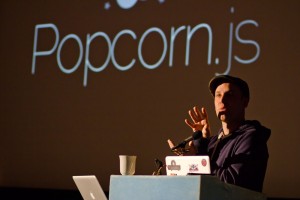
Over in America, technological innovation has emerged through organisations such as the Mozilla Foundation, who have for instance developed an open source web tool ‘Popcorn maker’, which I will review in my next post. On the funding front, Tribeca Film Institute is currently one of the only financiers of international interactive documentary productions (where no broadcast film is needed alongside the web component) through their annual New Media Fund.
On the festival circuit IDFA Doc Lab has been the pioneer of showcasing interactive documentaries ever since 2007. Next year, Tribeca Storyscapes begins a new transmedia program to showcase work that explores new forms of storytelling, highlighting innovation across a variety of platforms.
Workshops, labs and hackathons where filmmakers meet coders, web designers, game designers, app designers etc. are getting increasingly popular around the world. Labs and hackathons are great not only for networking but in fostering a culture of creative collaboration. If you are interested in this, I advise you to check out for example what POV and the Mozilla Foundation are doing: POV Hackathon and Living Docs.
There are many fantastic interactive projects out there and not enough space to mention them all. But here is a small selection of my favourites:
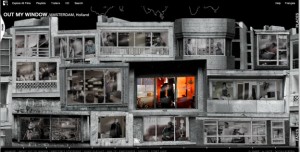
Out My Window by director Kat Cizek, NFB
The Johnny Cash Project by Chris Milk
At Home by the NFB
Gaza Sderot by Upian
We Feel Fine by Jonathan Harris and Sep Kamvar
It is an exciting time to be a media maker. We have access to data and stories like never before. Yet, all of this presents a challenge for us. Suddenly, we are expected to take on a host of new roles. You can no longer just be a director but you have to constantly develop yourself to move with the times. You may also have to become a story architect, a web producer, and a community manager – all of these require a whole set of new skills.
Matthieu talks about another challenge filmmakers face:
“One of the biggest problems for many filmmakers is that there is no clear business model in the webdoc industry. Large experiments have so far only been possible thanks to help from film funds like the CNC in France or NFB in Canada, or broadcasters like Arte, France5 and VPRO. Yet, there are also many smaller webdocs that have been created using very innovative financial strategies. Today’s webdockers have to be open-minded and look for new partners and create new funding strategies. But remember that others made it and there are lessons to be learned from that…”
Some people say that web docs are a passing phase. Whatever the future may be, it is clear that the documentary genre is being reinvented. The internet offers us a chance to take the documentary out of its box and gives us new tools to tell stories. I think it’s time to put our egos aside, and put the user first. It’s time to open our minds to new kinds of collaboration across industries, and across continents. The revolution has started and there is no stopping it.

What to pay attention to when developing projects
1. Cross-over! Talk to and learn from people in other industries. It is important to forge partnerships and build a good team of experts in their respective fields.
2. Story is always the most important, technology should come second.
3. Use what the web has to offer and then you can create a truly interactive project – also think outside the box on how to engage the audience in offline events.
4. Find partnerships for distribution – link your story with existing stories, build relationships with online publishers and brands to get your story out there to a wide audience.
5. Small is beautiful – vast complex projects just confuse the audience. Sometimes it is the simplest projects that are most effective.
6. Put the user first – always think from a user’s perspective; how is their experience and what will they do when they first come to your site? Create different entry points to your story.
7. You will need to be multi-skilled and a great manager – you need to stay on top of the entire project all the time (this is not an easy task!)
8. Have fun! Experiment, try new things, don’t be afraid. Nobody has a formula as to what interactive documentaries are – be part of inventing it!
End of the Road – Gary McQuiggin
This is a cross-post from the BFI’s Media Lab blog of a post created by young media-maker Gary McQuiggin, reflecting on his documentary project to map the A1 road from London to Edinburgh. You can check out accounts for the rest of his journey by heading to his page on the blog. Continue reading
New Doc Next Theme: Interactive Storytelling.
 Introducing a new Doc Next Network featured Theme for December and January: INTERACTIVE STORYTELLING.
At a time when interactivity is redefining the documentary landscape, Doc Next Network, as a movement committed to reimagining the notion of “documentary”, tackles the link between digital interactive technologies and documentary making by zooming in on interactive storytelling practices.
Promoting documentary as tool for communication as well as documentation, and forming a link between traditional media and the constantly developing world of free culture, Doc Next Network investigates interactive storytelling as a new model of exchange between young creators, providing them an alternative space to be inter-active, inter-participatory, and inter-dependent.
Essentially, the interactive multimedia capability of the Internet provides documentarians with a unique medium to create non-linear and multi-linear forms of narrative that combine photography, text, audio, video, animation and infographics. Beyond that, with the development of new authoring tools, with HTML5 and open video possibilities, media makers are getting enabled to create a wider range of experiences and personal ways for the networked audience to tap into the narrative sphere of a documentary, giving them an active role in the negotiation of ‘reality’.
With the Do-it-with-Others (DiwO) approach deeply ingrained in our network, we believe these practices help the new generation of media makers create meaningful, socially engaged stories in a participatory framework by introducing new ways of interaction, conversation and sharing of ideas between and among their different communities, allowing them to compare the realities of different worlds and ultimately to present in novice ways alternative perspectives on contemporary Europe and beyond.
“Social justice through free culture and expanded (media) education.” This is what we seek to promote and accomplish through our work as Doc Next Network. We welcome, investigate and help construct new approaches, methods and tools of storytelling to do just that.
The theme of Interactive Storytelling will run until mid January 2013.
Interview Doc Next maker Hande Zerkin

Documentary director and street photographer Hande Zerkin from Izmir, Turkey, participated the International Documentary Festival of Amsterdam (IDFA) 2012 as one of the invited media makers of Doc Next Network. Hande is one of the directors of the short documentary Just Brewed It, We’re Waiting for It to Settle (Demledik, Çökmesini Bekliyoruz), screened as part of the Doc Next Mini Cinema program during IDFA 2012. The documentary was completed during the Youth MODE Creative Documentary Workshop ‘Local Heroes of Izmir’, organized by Doc Next partner MODE Istanbul in February 2012. Hande also took part in the North Aegean Narratives project, produced by Istanbul Digital Culture and Arts Foundation and facilitated by MODE Istanbul, and completed as a part of the project the short documentary I Missed the Bus.
MODE Istanbul team interviewed Hande Zerkin during IDFA 2012. To read the interview in Turkish please click here.
Doc Next photographer (18) premiers in Warsaw gallery.

 18 year old Karol Komorowski is now premiering his work at the Lookout Gallery in Warsaw, Poland. Karol is a talented photographer representing the youngest generation, standing on the threshold of his caree. His exhibition ‘Debiut’ consists of two projects: In the Dark and Girls.Karol Komorowski is one of this year Polska.doc participants – a programme run within Doc Next Network’s framework.
Read more about Karol Komorowski exhibition at polska.doc.e.org.pl and at the website of Lookout Gallery.
All images on this page are by Karol Komorowski.