European Souvenirs: 3rd workshop

European Souvenirs assembles an artistic collective of 5 young mediamakers researching into found material from different European archives in the course of 4 workshops led by various artistic collaborators, in 4 different European cities, to create a live-cinema performance to be staged for the first time in October 2012 in De Balie (Amsterdam) and will tour afterwards in different countries across Europe and beyond.

http://www.europeansouvenirs.eu/how/

BFI Media Lab Experimental Doc Screening

The BFI Doc Next Media Lab is a six month development scheme for 18 – 25 year olds interested in making a name for themselves in the world of documentary. With funding, mentoring, training and other support the filmmakers will be given a chance to experiment with what can be done within the loose confines of ‘documentary’.

http://bfidocnextlab2012.wordpress.com/

MODE Istanbul: Workshop Digital Storytelling (theme: Immigrant stories)

MODE İstanbul, çeşitli kuruluşlarla ortaklaşa olarak yerel ve uluslararası filmler üretmeye, projeler geliştirmeye, medya atölyeleri, film gösterimleri, sergiler ve toplantılar düzenlemeye yönelik film ve dijital sanatlar girişimdir.

http://modeistanbul.org/

Lemesos International Documentary Festival

The “Lemesos International Documentary Festival”, this year in its seventh edition, promises to be an up to date, refreshing event, looking closely at those moments from human reality that will trigger exiting, groundbreaking and adventurous cinematic journeys. The Festival, co-organised by Brave New Culture and the Cyprus Broadcasting Corporation, will take place between the 1st and 8th August 2012, at its permanent event space, the 2nd Municipal Market (Theatro Ena), in Limassol.

Like every year, a documentary professional event entitled DocsTalk, will be organized. DocsTalk 2012, which is co-organised withMedia Desk Cyprus, will consist of a series of lectures, workshops and individual meetings and is directed to professional directors / producers and to anyone who is interested in learning more about the various aspects of creating a documentary film, such as storytelling and script writing, producing and developing, filming techniques and festival distribution.

Apart from the general activities of the workshop, which will be open to the public, a workshop entitled Doc Checks will be co-organised in collaboration with the organisation ‘Sources 2’ (Germany), specialised in scriptwriting and script development.‘Sources 2’ adviser Ulla Simonen (Finland) will give a keynote on Scriptwriting for Documentaries, and in individual 20-30-minute consultation sessions (following application procedure) she will provide professional feed-back, ideas, suggestions and practical advice on developing the proposed documentary film projects in development. A maximum of 8 projects will be selected.

The meetings are targeted to documentary filmmakers or teams of directors/ producers with a documentary film project in development.

The lecture and meetings will take place between 16:00 and 19:00 on Saturday, August 4th 2012.

Interested applicants can submit an application until the 16th July 2012.

Doc Next @ IDFA

Since 1988, the International Documentary Film Festival Amsterdam (IDFA) is unique for its international film program, the variety of genres, its politically committed program and the many European and world premieres featured each year.

For the 3rd year, Doc Next Network is part of IDFA. Within the IDFA programme, Doc Next Network presents an alternative perspective on contemporary Europe. Doc Next are mostly D-I-Y media-makers, who “go round” the official institutions, the media and cultural policies, thus creating a link between the traditional media and the constantly developing world of free culture.

Doc Next Network @ IDFA 2012 activities:

  • Screening of Doc Next films prior to featured documentaries
  • Mini Cinema @ Rembrandtsplein
  • Talking Dinner #2: Film Festivals
  • Doc Next films for the IDFA Competition for Student Documentary
  • Online Doc Next webisodes

More news and a detailed program soon at docnextetwork.org

Intern wanted for Doc Next Network!

Do you have a background in media, journalism, documentary or film? Want experience in a European cultural organization? Want to get involved with event and festival production? Are you a pro-active all-rounder with an interest in media and young people? You just might be the intern we are looking for!

  • Location:  Amsterdam
  • Duration: 10 – 20 weeks, 0.6 FTE
  • Start date: 17 September 2012
  • Apply before: as soon as possible, urgent!

The European Cultural Foundation (ECF at www.eurocult.org) is an independent organisation which helps the arts contribute to a strong, united and diverse Europe built on shared cultural values. We have a special commitment to the new generation of Europeans and to the European Neighbourhood. Many of our activities are geared towards bringing out the creativity in young people of all backgrounds and towards empowering cultural actors of change.

ECF is both a grant-making and operational foundation.

THE INTERNSHIP

The ECF Youth and Media Programme and its core partnership scheme called Doc Next Network (www.docnextnetwork.org), are looking for an intern to assist at various levels of the programme activities, specifically the following:

  • Assisting in the roll-out of ECF’s collaboration project with the International Documentary Film Festival (IDFA) in Amsterdam, in November 2012 (http://www.idfa.nl/nl.aspx)
  • Assisting with the logistics, production and (online) outreach and touring of a live cinema performance European Souvenirs (part of ECF’s Imagining Europe event at De Balie in Amsterdam)
  • Working on the archival of the Doc Next Media Collection: updating, editing, handling 3rd party request and preparing pitches to potentially interested parties.

The tasks on the internship are flexible but will provide work experience within an international organisation relevant to the candidate’s education.

TASKS

Production & logistics

  • Assist in logistical and production tasks for Doc Next at IDFA (November 2012), a programme with Doc Next documentary screenings and meetings. The programme of the IDFA collaboration is developed in cooperation with the international partners of Doc Next Network. The intern will be pivotal in supporting this.
  • Assisting in communications tasks related to IDFA and to Imagining Europe, an event taking place in October 2012.
  • Cooperating closely with the freelance producer for IDFA and online editor of www.docnextnetwork.org, as well as the Communications department, all under the responsibility of the Youth and Media Team.
  • (Online) research contributing to the address lists for communication purposes

Processes

  • Attending Y&M team meetings and ECF staff meetings.

Research

  • Conduct and present a mapping of organizations (cultural) working with young people (15-30) and media in NL and Europe, with a focus on those organisations that work in documentary (transmedia / video / film / audio / photography).

PROFILE

  • Third year in Media / Journalism / Media-design Studies (the applicant must be a registered student throughout the entire course of the internship);
  • Affinity with culture and arts;
  • Knowledge of new / social and DIY media;
  • Strong interest in European development – understanding and knowledge of the history and geography of the European continent and the implications for young people in Europe (esp. Spain, Turkey, UK, Poland and the Netherlands);
  • Fluent in Dutch and English (any of the other languages Spanish, Polish or Turkish is preferable but not required per se);
  • Hands-on attitude and pro-active approach;
  • Quick with media software, social media (Facebook, LinkedIn, Tumblr, other).

The intern must have a valid work permit for the Netherlands (according to Dutch Labour Law)

The intern will receive a fee/reimbursement of costs amounting to 375 Euros gross per month, based on 3 days (22.5 hours) a week, from which the internship provider will pay the social security premiums, wage tax and national insurance contributions that are due.

The ECF strives to be an equal opportunities employer and to see that the make-up of its staff is diverse and representative of society. The ECF welcomes applicants from a wide variety of backgrounds.

Application in English and via email only must include a motivation letter, detailed CV and a support letter from your Study Programme Coordinator / your College or University. Please send this to Gill Wijnhoven, HR Officer (gwijnhoven@eurocult.org) at your earliest convenience.

NB: living in Amsterdam is very expensive and accommodation can be hard to find. Please consider this when applying from outside The Netherlands.

Istanbul: The Sound of the Muscle.

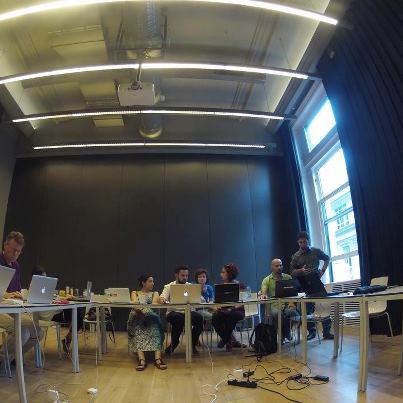
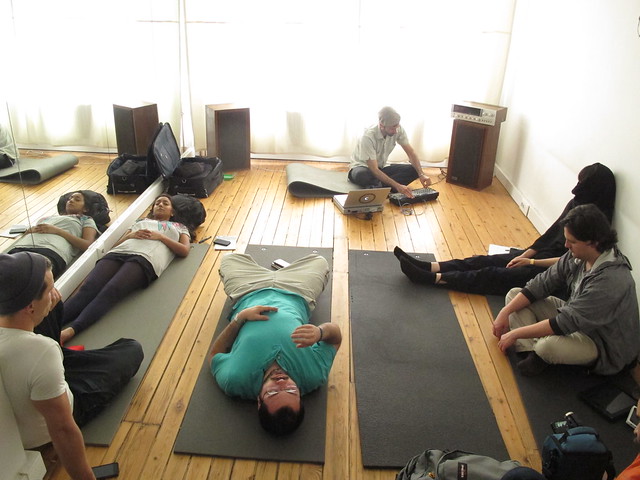
At the beginning, our eyes are closed, listening to the sound of a control at the customs, the city, the calls to pray, the traffic, the trains, the bells… And with this exercise of proactive listening we get started on the work with the audiovisual artist Filastine in Istanbul, inside a room with warm wooden floors within the cozy and inspiring ‘Simotas Binasi’, the base of the European Souvenirs team in its stage at the Old Constantinople.

The prominent sounds of the city emerge, not only when it’s time to look to the Qibla and the muezzins appear to be competing with each other. Istanbul sounds in its cars, its ships, its tourists and inhabitants. Sure that in other cities, sounds are equally powerful and ever-present, but in Istanbul they vibrate around you as well as within you, for whoever wants to listen and loose themselves.

During the days working at Simotas, we would go out recording these sounds and buying percussion instruments. Then, we gathered all this and thought of the soundtrack for our live cinema show. Music was present while working all throughout the comforting jam sessions with the material supplied by the archives. First, with Grey Filastine’s help -who also delighted us with a magnificent showcase of his last album with the awe-inspiring background of Fatih Sultan Mehmet’s bridge, which links Europe and Asia- and later, with the team work, where we started exercising the muscles, the sound, getting them ready to the flow of the live show.
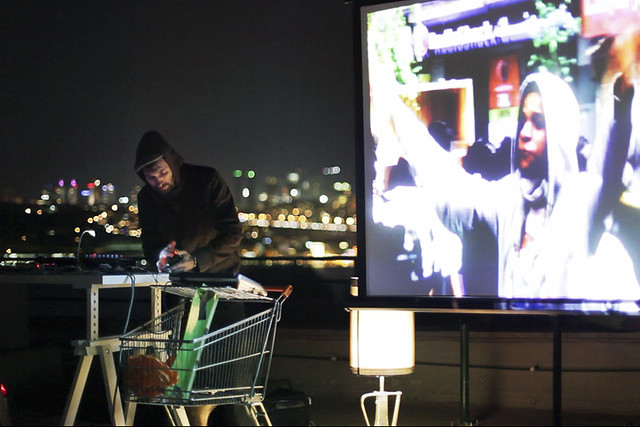
Bones and Muscle: building stories.
We spent the rest of the time at work in Istanbul putting together stories, getting over the first few keywords, all of them actually, in order to equalize the aspects we were more keen to highlight in this research process that is European Souvenirs. It is then when we appreciated the workshops in Seville with Toni Serra as well as with Silvia and Nuria, and invoked the muse ‘Structure’ to pull together the outline of our project.

This task led us to over three days of narrative games, writing the story separately, analysing keywords, using exquisite corpses… And these conversations brought up the main subjects, for now, of our own cosmogony. The basis of a multiple, fragmented, domestic story. These being: Family, Travel, Borders, Utopia vs. Dystopia and Memories.

Ingredients of a multimedia stew which five artists will have to cook together, although coming from different realities, in different places and with different thinking.

So, how to cook it all at once? How to serve it on the table? What about the technique?
The third part of the work in Istanbul was that one we always like to discuss about. How are we appearing on stage? What technical equipment are we using? How do we approach the challenge of having the audience seated? And here is where the collective intelligence and the background of the art team get down to business: video-projections, quadraphonic sound system, gadgets, instruments, buttons, cables… Everything is possible, not every thing is necessary. The tough part is knowing how to adequate the technique to the story, not succumbing to the virtuosity of technology, facing the simplicity (and the toughness) as opposed to being too theatrical or using entropic multilayering.
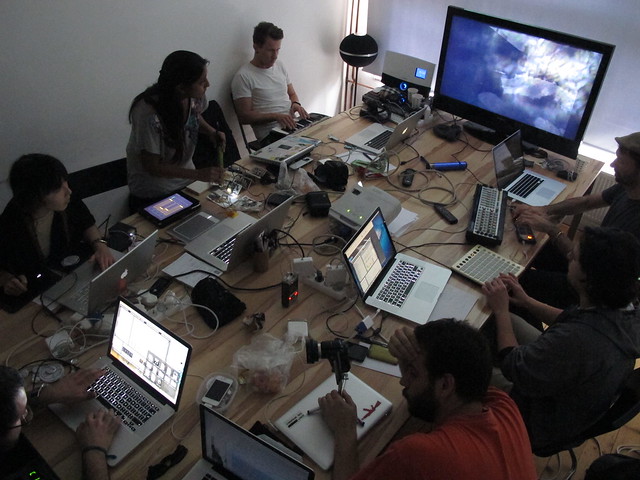
In the middle of this debate, always unfinished but quite advanced, we left Istanbul, satisfied with the good work and looking forward to Warsaw, our next stop. Meanwhile, we will work far away from each other, but still being able, if we close our eyes, to hear the sound of that muscle that joins Europe and Asia… in Istanbul.

Text by Pedro Jiménez & Malaventura. Pics by Benito Jiménez and Cansu Turan.
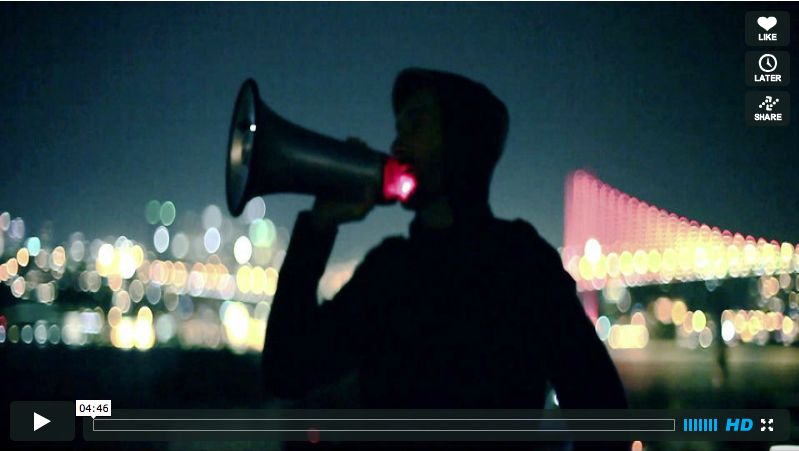
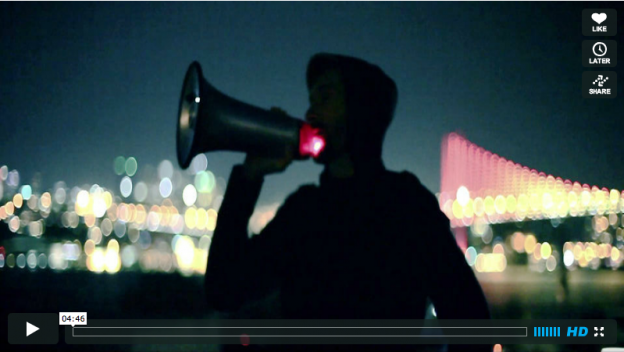
Video report – click to view.
First works from the BFI Media Lab.

Just before June we launched a new phase of our Doc Next partnership – The Doc Next Media Labs. In the past, we’ve run individual bursary schemes with the Doc Next Network, giving young filmmakers a small bursary and professional mentoring to create new documentaries for the Doc Next Network (Follow the link to see these impressive films). However, as the project has progressed, we felt these individual projects weren’t as sustainable as we’d like. It’s good to support young people making new films, but we felt we could do more to nurture their talent and help them become professional filmmakers.

We therefore decided to launch the Doc Next Media Lab. Rather than work with 4 or so individuals at a time on single projects, we are now working with a group of 8 talented young filmmakers, offering them documentary mentoring, technical training and multiple opportunities to create new works with a £1500 total budget.

With mentors Phillip Warnell (Kingston University) and Kwame Lestrade (Franklyn Lane Film) on board, as well as technical assitance from Tea Films, the group will meet regularly over a period of 6 months, creating new work, visiting industry companies and learning about documentary, before having a final showcase in December.

To push our participants in at the deep end, after just 2 weeks Kwame Lestrade ran a 2 day workshop with the Labs participants, going through the life cycle of a documentary in 2 days, from conception to completion. The final films blew us away, and we were impressed by what our young media makers had produced. You can check them out here:

Doctor Loco from BFI Future Film on Vimeo.

Astronauts from BFI Future Film on Vimeo.

To find out about what our Doc Next Labs participants are getting up to now, head over to the Doc Next Media Lab blog and read more!

Video fragment from Astronauts – click to view

Reporting from Sheffield Doc/Fest.

This is an account of Victoria Fioravante’s experiences at the Sheffield Doc/Fest with the Doc Next Network.

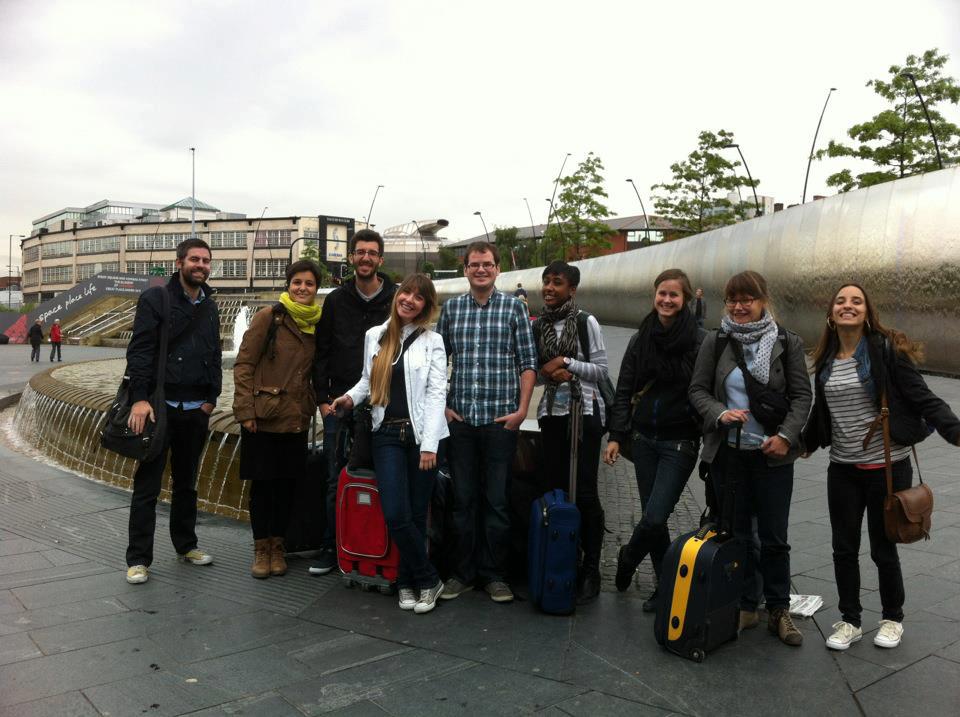
“On a glorious British summer’s day of spitting rain upon coats and scarves, the ‘Doc Next Team’, which consisted of two Spaniards from Zemos98, two Polish ladies from Association of Creative Initiatives “ę”, a Turk from Mode Istanbul and two Londoners, arrived at Sheffield. Among visible signs of a film festival – posters everywhere, people rushing with Sheffield Doc bags, open-air screens and quite a lot of excitement – we entered without any expectations, not knowing what events we’d go to, what we would see, whether we would indeed be able to watch any films at all…

“After a pit-stop in a charming hotel (Thank you Doc Next Network!), it was straight onto the Documentary Workshop ‘Life’s a Pitch’ . After a brief sequence of games and laughs to get to know the talented members of the Second Light scheme, it was onto serious business. Andy Glynne, clinical psychologist turned executive producer of Mosaic Films and member of the Documentary Filmmakers Group, provided an excellent and inspirational speech on the hurdles, difficulties and successes of giving a pitch and what was most important; Narrative, Characterisation, the all-important question “What am I going to see?”, Access, and Demographics. His receptiveness, humour and enthusiasm were exceptional and I thoroughly enjoyed being there – especially when it came to the screenings of the short documentaries ‘Dekay’s Guide to the Estates‘ and ‘I Speak Hinglish‘. Then, after a few team exercises, we were left to our own devices to come up with a pitch that would be presented the next day – one by one, nerve-wrecking stuff. This would be the first time I’d ever presented or even prepared a pitch, so the pressure was most definitely on.

“The 24 hours I had to think of and plan my pitch were reduced to a measly hour in the middle of the night; there were too many great films and events on offer to do my time doing anything else! Our trip wasn’t only about pitching, it also involved a good deal of freedom to explore and investigate the festival. Of course, there were brilliant films – my favourites included ‘Putin’s Kiss‘ (Lisa Berk Pederson, 2011), ‘Planet of Snail‘ (Seungjun Yi, 2011), and ‘Call me Kuchu‘ (Zouhali-Worrall and Fairfax Wright, 2012). Then there were other events and talks, ranging from documentary distribution to filming in the Balkans, from Music Rights to Women in TV, interviews and – best of all – real Pitching competitions. The WorldView / Community Channel Live Pitch moved me the most – Intense pitching in action by six immensely talented applicants competing for a chance to win £10,000 to film a positive story of women in the developing world. After this, the Doc Next pitches would be a walk in the park!

“I was fully aware that there would be three industry experts (Daisy Asquith, documentary film-maker, Emma Hindley, freelance executive producer, and Ravi Amaratunga, head of Creative Diversity at Channel 4) evaluating and assessing our pitches the next day, but what I didn’t know was that there would also be a live audience – and quite a big one. Neither did I expect Matt Cuzner (of BFI fame) frantically waving signs at us with a cheeky yet embarrassed little grin. I guess he wanted to ‘help us’ by increasing the pressure. I was last in line to present, and I was pleased to see that my idea created some controversy among the panel after which a lively debate followed – which was great to see. Since then, I’ve followed up my idea with members of the panel who have encouraged me to film a teaser for my idea and to send it back to them. Then, it was on to networking in many different ways; from new talent drinks and receptions to the all important, leg-breaking Roller Disco!

“Sadly, this was the last night of our intense two-day trip. However, I’ve taken a lot from Sheffield. Andy Glynne’s motivational insights, my first ever experience pitching an idea of mine to a live audience, and most of all the opportunity to meet a group of inspiring and immensely talented group of people from all over Europe with whom I fully plan to work with in the future. And was Sheffield Doc Fest worthwhile? There is no doubt about it. I’ll see you there next year.”

Design your life with passion

Malgorzata Marczewska designed Art Coaching course for 14 animatours and trainers from Doc Next Network partner the Association of Creative Initiatives “ę” (Poland). As a network, Doc Next Network is developing a methodology for empowering young media-makers as they capture their own realities. This is a conversation with Małgorzata Marczewska. By Dorota Borodaj.

Coaching is…

A method of working with people and releasing or activating the maximum of their personal, professional or creative potential (needed for the execution of their goals).

In Poland it is probably confused with psychotherapy?

Most companies start defining coaching with explicit information about what coaching is not. It is not therapy, counselling or consulting, it is neither mentoring nor treatment. However its tools are known and used e.g. in therapy. Most therapists work with the present time and the past. Therapy is supposed to fix certain dysfunctions. It looks for their sources in the patient’s past. Coaching is always directed to the future. It serves for defining goals to be met in the future. A coach supports his/her client in unleashing potential that will help realise those goals. The difference can be seen in the language – not a patient, a client. This imposes partnership and causative relations with the coach.

You have been working in this profession for a dozen years. Yet I have the impression that it is only in the last several years that we hear more about coaching in Poland.

The idea of coaching was born in sport in the 70s, in the USA. It was gradually spread across other spheres of life. Business became a natural receiver very quickly. Later, coaching started to cover other professional, personal, and, finally, artistic cases. This tool reached Poland relatively late, that is when it has already been a common and natural technique of working with people in the United States. Students work with coaches practically in every art school in the States. There are more than 50 kinds of coaching registered in Great Britain. In Poland we still tend to address coaching as such.

What is art-coaching then?

Coaching intensifies diversity and pulls out the potential hidden in a given person. That is the reason for its use in fields that need variety the most, e.g. in the arts. Art-coaching is a phenomenon that does exist in Poland. Only we rarely call it that way. When I tell about coaching I often hear that my interlocutors use the same tools and methods in practice, but they define them differently. Many people working with artists do present an attitude that is key to coachwork – they treat them with respect and openness, they focus on releasing their creativity.

When it comes to artists, creators, this work is conducted on an exceptionally sensitive organism. On the one hand artist are assigned with certain hysteria, on the other – it is often forgotten that they work on their own emotions and, at the same time, function on a tough art market.

Art is always connected with internal, spiritual work, with experiencing. We can interpret this sensitivity as hysteria but it is just a specific way of experiencing life, nothing else. People very sensitive to beauty, emotions and events, feel an urge to stream these feelings through art. On the other hand – they are not taught how to protect this sensitivity, how to influence it without destroying it. This is topped with the fear of “selling oneself”, the fear that professionalisation can be somehow related to commercialisation of ones actions. Many creators declare their contempt for all things connected with marketing in one line with declaring their artistic freedom. Whereas selling can be understood as presenting oneself, presenting something that one considers valuable. I see this as a communication process between people, as presenting things that we want to share with others. The question is, do I want to learn to show it in a way that will be comprehendible to people, so that it would influence them. Next question: do I want to make a living of my creativity. Most artists strongly want to show their art, despite all doubts. This creates an inner conflict – I want the world to hear about me but I am afraid, I don’t want to conform, to be priced. So sometimes I would do nothing that could help others hear about me.

What is the basis of the coach-client relationship?

There are two key fields in coaching. The first one is the coach’s attitude. The coach has to be able to work with him/herself, his/her attitude, with a certain ability to manage his/her inner states. Putting it more clearly – the coach cannot impose his/her feelings and opinions on the clients. This requires strong emotional maturity and an inner balance. The coach does not evaluate or give advice. The coach cannot judge. His/her most basic task is something we call cautious presence. At the same time the coach has another field at hand – a multitude of techniques used for releasing one’s potential. Namely: questions, exercises and homework. All this is conducted in a certain period. Usually the minimum length of cooperation is 6 months. The coach and client meet once a month but the client’s work continues all the time in between the meetings. The first meeting is the time when a contract is accepted. The coach presents a schedule of the whole process. Then both sides have to agree that they want to work together. Though the preliminary rules may sound very soft, coaching is in fact a very accurate activity, defined in time. Its effects have to be measurable and verifiable in a way. The central meaning is again on the client’s side. It is the client, not the coach, who defines what should be done and when. In the future, these assumptions will let the client know that his/her goals have been completed.

What happens during the monthly meetings?

The aim of work is changing dreams into goals. The trick is to plan them in time and to set clear tasks. Their completion will let us know, that a goal had been met. Example: I am a young photographer, a beginner. I want to go professional. My dream is my own exhibition. I am changing this dream into a goal and I set milestones needed to achieve it. The role of the coach is to support this process, to help the client define and extract his/her inner resources, which will make the realisation of the goal possible.

How?

The coach helps define what way of thinking limits the client and what can let him achieve his/her goals. The coach asks questions. The coach ignites the client’s whole knowledge about him/herself that enables him/her to do the best thing in the best possible way. The coach takes care of inner emotions, blockades but does not advise specific actions. He/she picks tasks and exercises with consideration of blockades and the potential of the client. The coach’s ethics is a key element. It has to always accompany all tools used in his/her work with the client. It is absolutely intolerable to make advantage of any knowledge or information received during the work with the client and so is judging the client and his/her decisions or choices.

Talking about coaching we have to approach the stereotype that assigns this type of work to affluent people.

Money is not a key question in coaching. A coach who keeps to the professional ethics in his/her work will approach each client individually – also in the matter of remuneration. Coaching is not reserved for rich businesspeople. It is a universal, open invitation to change. It is often said that a coach is the one to believe in his/her client more than the client does. The coach’s ambition, or better – task, is pulling knowledge that lies within the client out of his/her depths. This is the most important and the most motivating part of coachwork.

ABOUT 

Małgorzata Marczewska is president of the Chamber of Coaching, representative of the International Couching Community Poland. She has conducted coaching, training and individual consultations for 15 years. She manages the training company ITEM, designs and conducts long-term development programmes and coaching, she creates learning organisations. She promotes coaching as a universal tool for supporting ones personal, family and professional plans. She specialises in Innovation Design and coaching of Effective Change Processes for institutions, companies and individuals. Together with Manuela Gretkowska she co-founded the Women’s Party as a learning organisation. She is of the co-founders of the Poland is a Woman foundation. She gives lectures at the Warsaw Film School, runs ArtCoaching and LifeDesign courses. She is the initiator and author of the LifeDesign platform that supports designing ones personal and professional life. She works as coach for businessmen, renowned artists and designers.

This article was originally published on Polska Doc.