Category Archives: Research & Debate

Institutions changing for the better.

This post Innovation and institutional change for the reinvention of democratic practices (Imagining Europe) is written by Juan Freire and was originally posted on nomada.blogs.com.
imagining_europe_jfreire_1I participated recently in the event Imagining Europe organized by the European Cultural Foundation in Amsterdam. Specifically I was part of the roundtable and debate Reclaiming Public Space – Democratic Practices Reinvented? where we tried to put “[d]emocracy in Europe under the microscope” (here a resume of the activities of the day).

Farid Tabarki (founder and director of Studio Zeitgeist in Amsterdam)  was the moderator of the debate involving Peter Vermeersch (lecturer, poet, G1000 Belgium), Tiffany Jenkins (sociologist and cultural commentator, UK) and myself to explore alternative models for democratic practice in Europe. My intervention was focused in “Innovation and institutional change” trying to present ideas about these two questions:

  • How do the alternative models [organizations and processes based in bottom-up and networked dynamics] connect and / or collide with traditional political and cultural expression?
  • How can new initiatives develop sustainable and long-term ways of participation without losing their innovating character?

The following images (the set in Flickr; see credits below) and notes is a mostly visual resume of my ideas, that I prepared after a conversation with Farid Tabarki (that inspired and provided me with clever ideas):
imagining_europe_jfreire_2

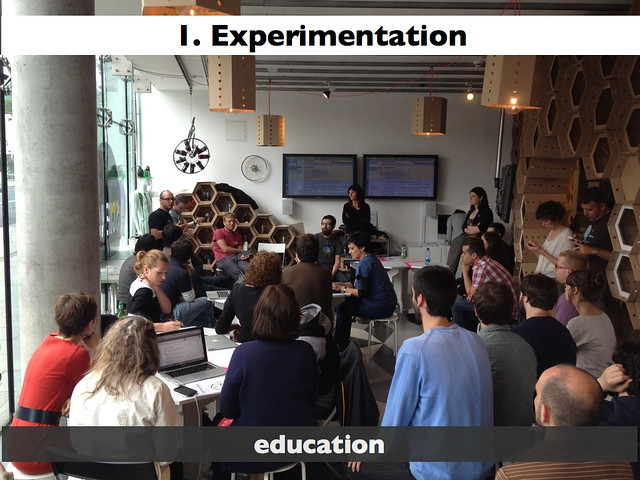
The new models of organizations and processes based in bottom-up and networked dynamics should be consideredexperimental. The only way to innovate and learn how to make effective the new practices and structures is to make them real and explore their possibilities. This means also that we need to allow failures as the only way to get real innovation. From my point of view, we should look especially to experiments occurring in two fields. Traditionaleducation is suffering a long-lasting crisis but many alternative models based in learning by doing and collaboration are emerging. Also, education is overpassing its traditional limits to be part of the agenda of culture, science or business; thelab is the new concept of space for experimentation, prototyping and learning.
imagining_europe_jfreire_3

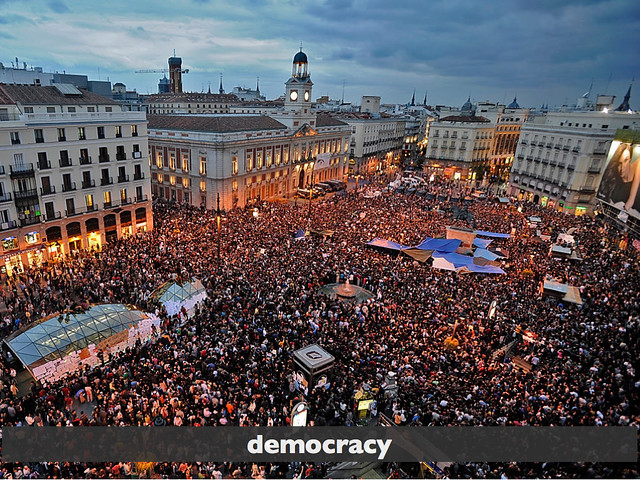
Political activism is other area of intense experimentation. Citizens are using technology and public spaces to organize themselves to discuss and make politics, sometimes in conflict with the traditional politics (represented by institutions and political parties), sometimes opening new opportunities for dialogue. The novelty here is the large scale and diversity of the citizen-driven actions taking place from 2010 worldwide (from Arab revolutions to #15M or the Occupy movements or to activism occurring in Israel or Chile to put only a few examples). These civic movements need spaces for communication, deliberation and collaboration and in this sense are reclaiming the re-appropiation of the public space by citizens.
imagining_europe_jfreire_4

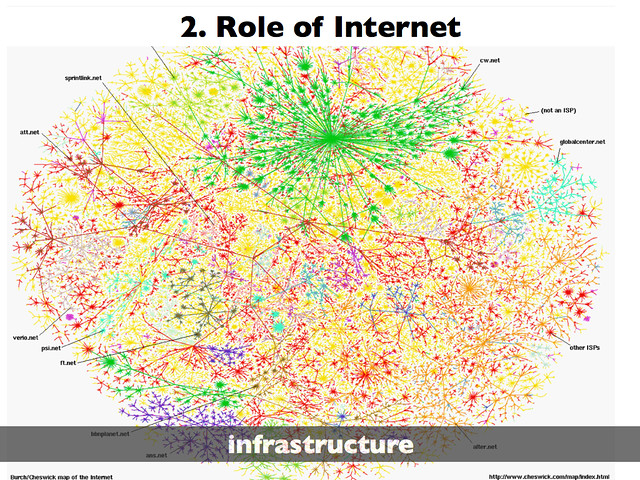
Alternative models could be not understood without the role of the Internet. They are not only digital phenomena; most of them are eminently analogical processes. However the Internet is a key element at least from 3 points of view. First as an infrastructure that allows the new network organizations and processes to be effective at a large scale.
imagining_europe_jfreire_5

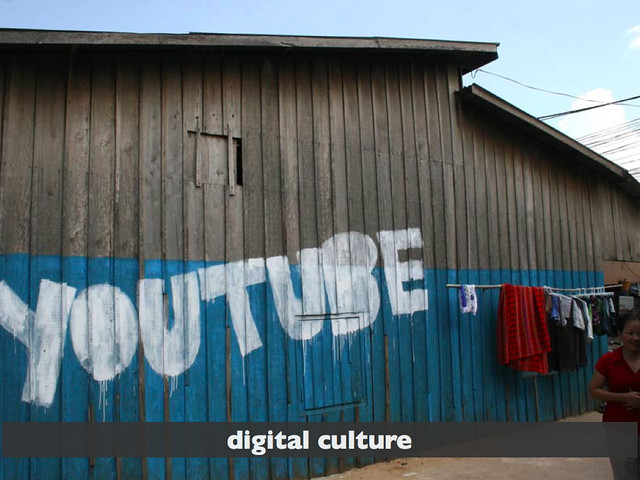
Second, the Internet has been the driver of the re-emergence of new practices and values, a new digital culture based in ideas as openness, peers, commons or collaboration and the rethinking of intellectual property.
imagining_europe_jfreire_6

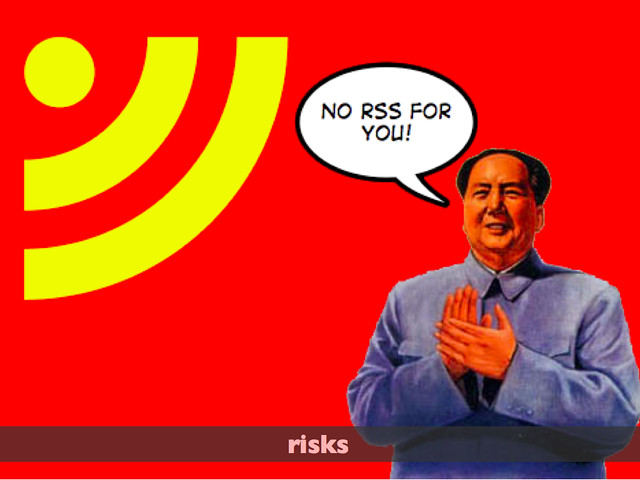
However the Internet is also a risk for these emerging phenomena because it is also a powerful tool for the power to try to control citizens, especially, but not only, in non-democratic countries. This is the other side of the impact of the digital; the balance between the pros and cons is not decided and will depend of the active roles of the different stakeholders.
imagining_europe_jfreire_7

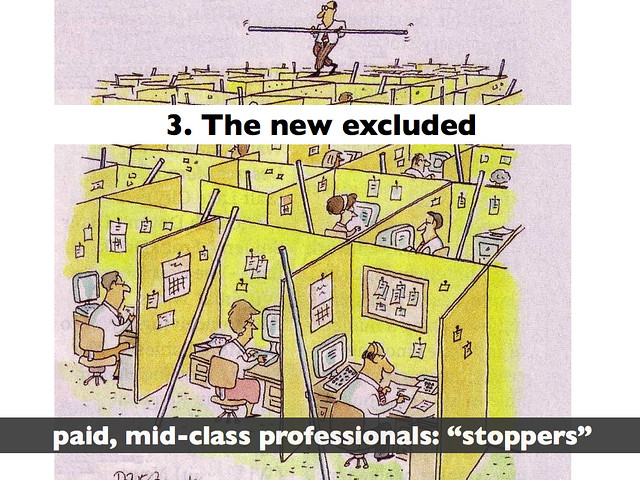
The new scenario changes the roles and outcomes of the different social collectives. In one side, probably a new class of excluded is emerging that it is very different from the traditional ones. The mid-class professionals usually working for big corporations and institutions are in many cases unable to understand and participate in the new models and as a consequence act as “stoppers” trying to keep their world as usual.
imagining_europe_jfreire_8

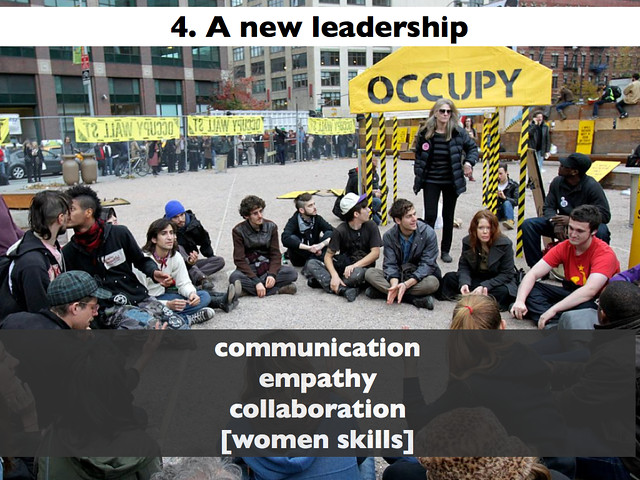
Networked organizations are open and flexible but leadership continues to be necessary. A new kind of leaders emerge with skills different to the leaders of the past. They need to communicate using new media and empowering social networks. They have to develop empathy with the different stakeholders. Finally most of their work is behind the scenes making things happen and, in this sense, promoting collaboration and team work. New leaders are obviously women and men but in many aspects their skills and values are much more close to those that traditionally were assigned to women.
imagining_europe_jfreire_9

New models are working well at the small scale in the sense that we are getting many learnings and insights from these political experiences. However they attained large scale only during short periods as reactions to extreme situations (as dictatorships in the Arab revolutions) or as sophisticated demonstrations in democracies; but they have no transformed the political system. In contrast in the last decades digital processes have been able to attain large scales (i.e. Wikipedia or the free software communities) transforming for example the production and distribution of knowledge. The main question for the future is how to scale up political processes and organizations. We need dialogue between the traditional representative democracy and the new deliberative and participatory politics. Now in most cases they are operating in different channels and the conflicts continue to be manageable because of the scale, but with increasing complexity new consensus, organizations and institutions are needed and they could only emerge as hybrids of the remix of the old and new ones.
imagining_europe_jfreire_10

An agenda for transformation needs to identify why, how and what is changing for the better, and to look for a common ground where the new and old processes and institutions could collaborate.

Credits of the images:

  1. Science Gallery (Dublin), workshop in collaboration with Medialab Prado (June 2012)
  2. http://nosoloilustracion.wordpress.com/2011/10/16/cronica-de-un-cambio-anunciado-15m-15o-spanishrevolution/
  3. http://www.cheswick.com/ches/map/gallery/index.html
  4. http://www.psfk.com/2008/12/digital-culture-snub.html
  5. http://censorshipinamerica.com/2011/10/20/china-defends-internet-censorship-against-us-trade-query/
  6. http://vlb.typepad.com/commentary/2006/03/realtime_produc_1.html
  7. http://cryptome.org/info/ows-19/ows-19.htm
  8. http://flowerwatch.net/2010/02/08/how-natures-complexity-is-simple-and-natures-simplicity-is-complex/
  9. http://www.masshumanists.org/changing-for-the-better.htm

Imagining Europe: Is A New Europe Possible?

Between the dates of October 4-7, 2012, the European Cultural Foundation (ECF) presented Imagining Europe at the renowned cultural space De Balie in Amsterdam. Live performances, debates and encounters to imagine a new Europe were held during the four-day event.

 De Balie in Amsterdam hosted a series of activities under the title Imagining Europe, presented by the ECF, between the dates of October 4-7, 2012. During the events, talks and discussions, participants tried to find out what the contemporary problems in our societies are, and imagined the future of Europe; artists from different countries and backgrounds displayed their live performances. One of the most memorable events was the live cinema performance of European Souvenirs, a Doc Next Network project commissioned by the ECF, curated and designed by Zemos98 (Seville) in collaboration with other Doc Next partners, the British Film Institute-Future Film (London), the Association of the Creative Initiatives “ę” (Warsaw) and MODE Istanbul (Istanbul). All the artists and participants of Imaging Europe tried to find an answer to the question of how to re-imagine and re-map a new Europe.

October 4 – Imagining Europe started with the opening speech of the ECF’s President Princess Laurentien of the Netherlands at De Balie. After the Princess’s speech, Dutch TV presenter Twan Huys introduced internationally known Bengali Indian author, Amitav Ghosh to the audience. Ghohs talked about world economy and politics, and the crisis of climate change during his speech. He gave comparative examples from different regions of the world and the different periods in history, and focused on the problem of growth and consumerism. After the dinner, renowned Syrian clarinetist player and composer Kinan Azmeh and Dutch trumpet player Eric Vloeimans shared the same stage for their exclusive live performance.

October 5 – The second day of Imagining Europe continued with the debate “Reclaiming the Public Space” at De Balie.  As the opening speech, British curator and writer Charles Esche came to the stage and talked about the role of art in Europe’s and the world’s shared future, and the question of reinventing democracy. Then, moderator Farid Tabarki, the founder and director of Studio Zeitgeist in Amsterdam, invited Belgian lecturer and poet Peter Vermeersch, British sociologist Tiffany Jenkins and Spanish innovation manager Juan Freire to talk about the role of the artists and cultural actors in creating new channels for a new political imagination. Participants of the debate discussed about the contemporary problems in Europe as well as in the world, and shared the belief that we need to re-imagine and re-develop new organizational approaches.

After the debate on the Europe’s future, the night continued with the world premiere of “a culinary experience”, Trash Cuisine, by Belarus Free Theatre, at Stadsschouwburg of Amsterdam. Belarus Free Theatre, which is formed by a group of artists who were exiled by dictatorial leadership in their home country, performed an exceptional and emotional play underlying the political pressure and violence in Belarus.

October 6 – The third day of Imagining Europe continued with the “Reflection on the Future of Funding Cities” at the Mirror Salon, De Balie. After the debate, European Souvenirs took the stage. The five European media artists Karol Rakowski (Poland), Barış Gürsel (Turkey), Farah Rahman (Netherlands), Malaventura (Spain) and Noriko Okaku (United Kingdom / Japan) presented an experimental live cinema performance, which is created by remixing materials gathered through extensive research on media archives. While European Souvenirs artists questioned Europe and the world, they showed how borders are crossing (shifting) by reminding the viewers the universal concepts such as family, travel, borders and memoirs.

October 7 – On its fourth day, Imagining Europe ended with a film screening and conversation with the film director and cultural activist John Akomfrah.


Doc Next Network develops method for involving immigrant media-makers.

Doc Next Network initiated a training course “Working with Immigrant Media-makers” in London, taking place on September 12, 13 and 14. The goal of this cross-sectorial training is to develop shared methodologies to involve young D-I-Y creative media-makers with (im)migrant backgrounds in the creation of new remixed media works. The training is part of the ‘Remapping Europe – A Remix’ project.

‘Remapping Europe – a Remix’ is an investigative artistic project that aims to contribute to an inclusive cultural practice and public imagery in and of Europe by connecting young creative media-makers who have (im)migrant perspectives from Spain, Poland, Turkey, and the UK to wider European intergenerational audiences.

The project’s activities stem from one underlying principle: re-mixing of media as a method to re- view, re-investigate and re-consider prevailing imagery of (im)migrants in European societies and to ultimately, ‘re-map’ Europe visually, geographically and mentally.

The activities include transnational, cross-sectorial learning platforms, investigating the immigrant’s perspective in the public debate and imagery; creative remix ateliers in Spain, Poland, Turkey, and the UK, involving 48 young digital storytellers with (im)migrant backgrounds and perspectives; international showcases of their remix works at significant cultural festivals in each of these countries and in an on- line media collection; major remix-performance and installation in Amsterdam and Seville, with a wider participatory, digital component involving European citizens across the continent and a research publication and catalogue documenting the processes and outcomes of the project.

The Goal of this cross-sectorial training is to develop shared methodologies to involve young DIY creative media-makers with (im)migrant backgrounds in the creation of new remixed media works. Cultural experts of the partner organisations (The Doc Next Network ‘hubs’) will bring a community worker of a local immigrant organisation from their country to present and discuss practices on how to reach and include young immigrants in their creative media making ateliers.

What are the challenges and opportunities that can be used for a shared methodology to reach ‘hard-to- get’ target groups? The training is a stepping stone for the inclusion of young immigrants in the remix ateliers.

  • To develop a ‘target group’ to understand who it is we aim to work with;
  • To develop a recruitment methodology for finding participants;
  • To understand existing methods of practice when working with young (im)migrants;
  • To gain an understanding of the tools at our disposal for the Remix Ateliers;
  • To develop local and joint Remix Atelier methodologies;
  • To create a common language with mutual understandings and agreements;
  • To understand how we can avoid stereotyping and pre-assumptions that may hinder the project.

Keep posted about this project , the outcomes of the London training and more Remapping Europe: Like us on Facebook or become a member of our Linkedin group.

Seminar: the use of images in socio-cultural projects

What are the changes to the functions of film/photography and the methods of their use?

How to use visual tools consciously, with criticism and reflection?

How to use images in socio-cultural projects?

Do you use visual media in your educational/animation activities (film, cinema, photography, Internet)? Do you influence the way other people use them? Do you want to share your experience supplemented by theoretic thought? We would like to invite you to take part in the Visual Seminar.

The Visual Seminar is a unique opportunity to meet people who work with pictures, the methods of looking and with the widely understood contemporary culture. It will join practitioners (animators/educators, creators) with theoreticians (anthropologists and sociologists) who work with visual culture.

The meeting will be a platform for exchange of experience, thought and questions as well as a first step to creating a unique book – “Visionaries. Scenarios for the Future”. The concept and content of this on-line book will be created by the participants of the Seminar.

The project is based on partnership – we invite people willing to participate in the creation of the project from early September to the end of November.

The Seminar will take part form the 27th to the 30th September 2012 in Oczyszczalnia (Regowo, near Warsaw).

On-line activities focused on making the book and writing its content will last until the end of November 2012.

We offer:

  • Participation in the 3-day intensive, private (around 15 participants) Seminar (with guests and moderators, accommodation, full board, work space – we do not cover travel costs);
  • Meetings with practitioners operating in a similar field;
  • Meetings with theoreticians and experts from Poland and abroad;
  • The possibility to create an innovative book aimed at a wide audience.

CONTACT

Agnieszka Pajączkowska / aga.pajaczkowska@e.org.pl/ tel: +48 506 09 09 15

The Visual Seminar is organised within the Polska.doc program realised by the Doc Next Network thanks to the support of the European Cultural Foundation.

The Visual Seminar is organized with the financial support of the Polish Film Institute.

Istanbul: The Sound of the Muscle.

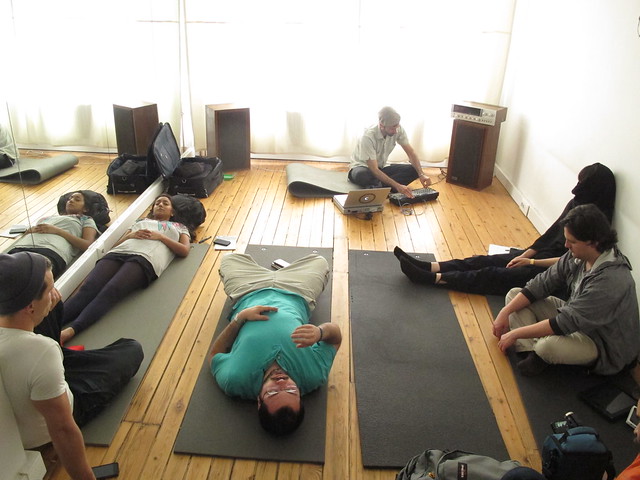
At the beginning, our eyes are closed, listening to the sound of a control at the customs, the city, the calls to pray, the traffic, the trains, the bells… And with this exercise of proactive listening we get started on the work with the audiovisual artist Filastine in Istanbul, inside a room with warm wooden floors within the cozy and inspiring ‘Simotas Binasi’, the base of the European Souvenirs team in its stage at the Old Constantinople.

The prominent sounds of the city emerge, not only when it’s time to look to the Qibla and the muezzins appear to be competing with each other. Istanbul sounds in its cars, its ships, its tourists and inhabitants. Sure that in other cities, sounds are equally powerful and ever-present, but in Istanbul they vibrate around you as well as within you, for whoever wants to listen and loose themselves.

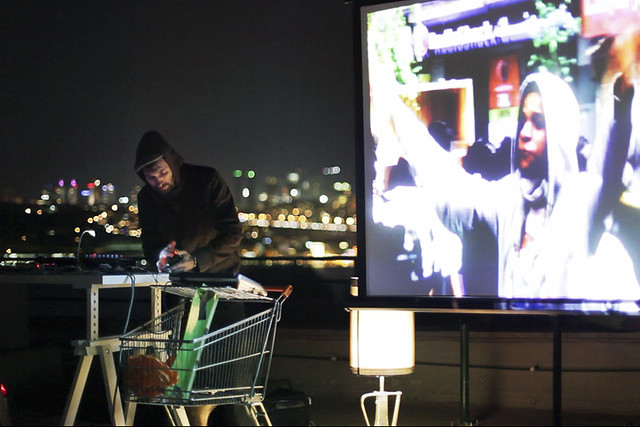
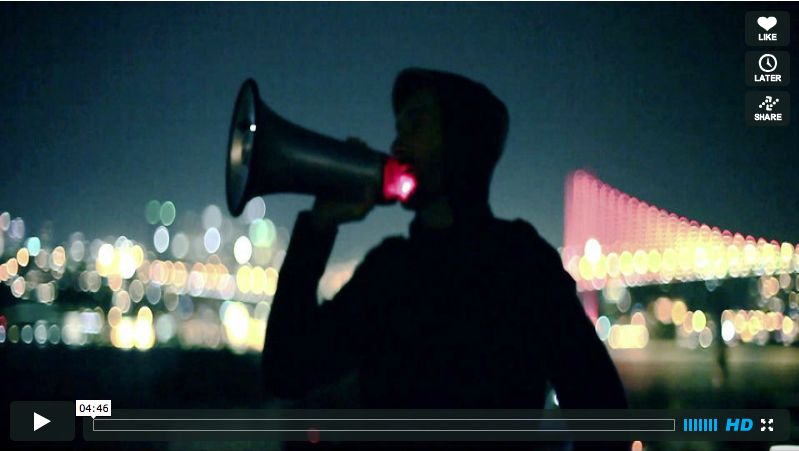
During the days working at Simotas, we would go out recording these sounds and buying percussion instruments. Then, we gathered all this and thought of the soundtrack for our live cinema show. Music was present while working all throughout the comforting jam sessions with the material supplied by the archives. First, with Grey Filastine’s help -who also delighted us with a magnificent showcase of his last album with the awe-inspiring background of Fatih Sultan Mehmet’s bridge, which links Europe and Asia- and later, with the team work, where we started exercising the muscles, the sound, getting them ready to the flow of the live show.

Bones and Muscle: building stories.
We spent the rest of the time at work in Istanbul putting together stories, getting over the first few keywords, all of them actually, in order to equalize the aspects we were more keen to highlight in this research process that is European Souvenirs. It is then when we appreciated the workshops in Seville with Toni Serra as well as with Silvia and Nuria, and invoked the muse ‘Structure’ to pull together the outline of our project.

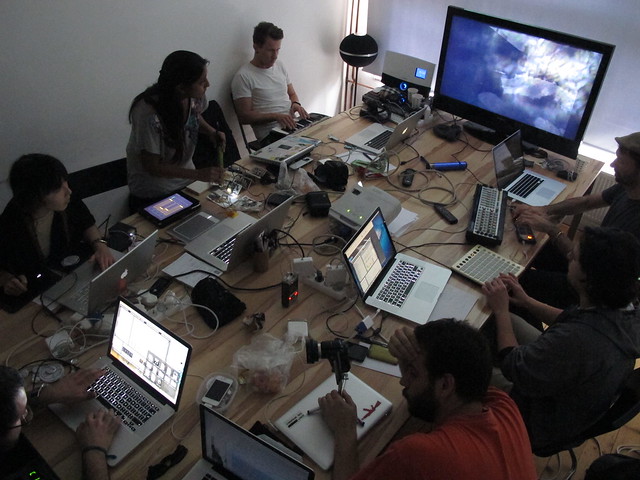
This task led us to over three days of narrative games, writing the story separately, analysing keywords, using exquisite corpses… And these conversations brought up the main subjects, for now, of our own cosmogony. The basis of a multiple, fragmented, domestic story. These being: Family, Travel, Borders, Utopia vs. Dystopia and Memories.

Ingredients of a multimedia stew which five artists will have to cook together, although coming from different realities, in different places and with different thinking.

So, how to cook it all at once? How to serve it on the table? What about the technique?
The third part of the work in Istanbul was that one we always like to discuss about. How are we appearing on stage? What technical equipment are we using? How do we approach the challenge of having the audience seated? And here is where the collective intelligence and the background of the art team get down to business: video-projections, quadraphonic sound system, gadgets, instruments, buttons, cables… Everything is possible, not every thing is necessary. The tough part is knowing how to adequate the technique to the story, not succumbing to the virtuosity of technology, facing the simplicity (and the toughness) as opposed to being too theatrical or using entropic multilayering.

In the middle of this debate, always unfinished but quite advanced, we left Istanbul, satisfied with the good work and looking forward to Warsaw, our next stop. Meanwhile, we will work far away from each other, but still being able, if we close our eyes, to hear the sound of that muscle that joins Europe and Asia… in Istanbul.

Text by Pedro Jiménez & Malaventura. Pics by Benito Jiménez and Cansu Turan.

Video report – click to view.

Design your life with passion

Malgorzata Marczewska designed Art Coaching course for 14 animatours and trainers from Doc Next Network partner the Association of Creative Initiatives “ę” (Poland). As a network, Doc Next Network is developing a methodology for empowering young media-makers as they capture their own realities. This is a conversation with Małgorzata Marczewska. By Dorota Borodaj.

Coaching is…

A method of working with people and releasing or activating the maximum of their personal, professional or creative potential (needed for the execution of their goals).

In Poland it is probably confused with psychotherapy?

Most companies start defining coaching with explicit information about what coaching is not. It is not therapy, counselling or consulting, it is neither mentoring nor treatment. However its tools are known and used e.g. in therapy. Most therapists work with the present time and the past. Therapy is supposed to fix certain dysfunctions. It looks for their sources in the patient’s past. Coaching is always directed to the future. It serves for defining goals to be met in the future. A coach supports his/her client in unleashing potential that will help realise those goals. The difference can be seen in the language – not a patient, a client. This imposes partnership and causative relations with the coach.

You have been working in this profession for a dozen years. Yet I have the impression that it is only in the last several years that we hear more about coaching in Poland.

The idea of coaching was born in sport in the 70s, in the USA. It was gradually spread across other spheres of life. Business became a natural receiver very quickly. Later, coaching started to cover other professional, personal, and, finally, artistic cases. This tool reached Poland relatively late, that is when it has already been a common and natural technique of working with people in the United States. Students work with coaches practically in every art school in the States. There are more than 50 kinds of coaching registered in Great Britain. In Poland we still tend to address coaching as such.

What is art-coaching then?

Coaching intensifies diversity and pulls out the potential hidden in a given person. That is the reason for its use in fields that need variety the most, e.g. in the arts. Art-coaching is a phenomenon that does exist in Poland. Only we rarely call it that way. When I tell about coaching I often hear that my interlocutors use the same tools and methods in practice, but they define them differently. Many people working with artists do present an attitude that is key to coachwork – they treat them with respect and openness, they focus on releasing their creativity.

When it comes to artists, creators, this work is conducted on an exceptionally sensitive organism. On the one hand artist are assigned with certain hysteria, on the other – it is often forgotten that they work on their own emotions and, at the same time, function on a tough art market.

Art is always connected with internal, spiritual work, with experiencing. We can interpret this sensitivity as hysteria but it is just a specific way of experiencing life, nothing else. People very sensitive to beauty, emotions and events, feel an urge to stream these feelings through art. On the other hand – they are not taught how to protect this sensitivity, how to influence it without destroying it. This is topped with the fear of “selling oneself”, the fear that professionalisation can be somehow related to commercialisation of ones actions. Many creators declare their contempt for all things connected with marketing in one line with declaring their artistic freedom. Whereas selling can be understood as presenting oneself, presenting something that one considers valuable. I see this as a communication process between people, as presenting things that we want to share with others. The question is, do I want to learn to show it in a way that will be comprehendible to people, so that it would influence them. Next question: do I want to make a living of my creativity. Most artists strongly want to show their art, despite all doubts. This creates an inner conflict – I want the world to hear about me but I am afraid, I don’t want to conform, to be priced. So sometimes I would do nothing that could help others hear about me.

What is the basis of the coach-client relationship?

There are two key fields in coaching. The first one is the coach’s attitude. The coach has to be able to work with him/herself, his/her attitude, with a certain ability to manage his/her inner states. Putting it more clearly – the coach cannot impose his/her feelings and opinions on the clients. This requires strong emotional maturity and an inner balance. The coach does not evaluate or give advice. The coach cannot judge. His/her most basic task is something we call cautious presence. At the same time the coach has another field at hand – a multitude of techniques used for releasing one’s potential. Namely: questions, exercises and homework. All this is conducted in a certain period. Usually the minimum length of cooperation is 6 months. The coach and client meet once a month but the client’s work continues all the time in between the meetings. The first meeting is the time when a contract is accepted. The coach presents a schedule of the whole process. Then both sides have to agree that they want to work together. Though the preliminary rules may sound very soft, coaching is in fact a very accurate activity, defined in time. Its effects have to be measurable and verifiable in a way. The central meaning is again on the client’s side. It is the client, not the coach, who defines what should be done and when. In the future, these assumptions will let the client know that his/her goals have been completed.

What happens during the monthly meetings?

The aim of work is changing dreams into goals. The trick is to plan them in time and to set clear tasks. Their completion will let us know, that a goal had been met. Example: I am a young photographer, a beginner. I want to go professional. My dream is my own exhibition. I am changing this dream into a goal and I set milestones needed to achieve it. The role of the coach is to support this process, to help the client define and extract his/her inner resources, which will make the realisation of the goal possible.

How?

The coach helps define what way of thinking limits the client and what can let him achieve his/her goals. The coach asks questions. The coach ignites the client’s whole knowledge about him/herself that enables him/her to do the best thing in the best possible way. The coach takes care of inner emotions, blockades but does not advise specific actions. He/she picks tasks and exercises with consideration of blockades and the potential of the client. The coach’s ethics is a key element. It has to always accompany all tools used in his/her work with the client. It is absolutely intolerable to make advantage of any knowledge or information received during the work with the client and so is judging the client and his/her decisions or choices.

Talking about coaching we have to approach the stereotype that assigns this type of work to affluent people.

Money is not a key question in coaching. A coach who keeps to the professional ethics in his/her work will approach each client individually – also in the matter of remuneration. Coaching is not reserved for rich businesspeople. It is a universal, open invitation to change. It is often said that a coach is the one to believe in his/her client more than the client does. The coach’s ambition, or better – task, is pulling knowledge that lies within the client out of his/her depths. This is the most important and the most motivating part of coachwork.

ABOUT 

Małgorzata Marczewska is president of the Chamber of Coaching, representative of the International Couching Community Poland. She has conducted coaching, training and individual consultations for 15 years. She manages the training company ITEM, designs and conducts long-term development programmes and coaching, she creates learning organisations. She promotes coaching as a universal tool for supporting ones personal, family and professional plans. She specialises in Innovation Design and coaching of Effective Change Processes for institutions, companies and individuals. Together with Manuela Gretkowska she co-founded the Women’s Party as a learning organisation. She is of the co-founders of the Poland is a Woman foundation. She gives lectures at the Warsaw Film School, runs ArtCoaching and LifeDesign courses. She is the initiator and author of the LifeDesign platform that supports designing ones personal and professional life. She works as coach for businessmen, renowned artists and designers.

This article was originally published on Polska Doc.

All creative works are derivative

European Souvenirs, a project by Doc Next Network, wants to re-conquer European imaginary. Remix techniques help us not only to understand the past, but also a way of re-writing our past.

Doc Next Network is working on European Souvenirs an independent, process-oriented, investigative, collaborative, innovative and high quality multi-media project that will shake up our minds and our prevailing imagery of the places we live in. The project is commissioned by the European Cultural Foundation in its quest for new European inspiring narratives, and designed by ZEMOS98 (Spain).

[FMP width=”640″ height=”360″]http://dnn.data-ant.com/dnn_wp_html/wp-content/uploads/2012/07/european_souvenirs_teaser_480x270.mp4[/FMP]


WHY DO WE DO IT?

VJs, or any artist who takes on the precepts of contemporariety as proposed by Marcel Duchamp and his ready-mades, uses the material at hand as a source of inspiration. The copying, manipulation and representation of the real includes images from films, DVDs, video clips and video games.

In an interview by ZEMOS98 about his remix of D.W. Griffith’s The Birth of a Nation, the musician and philosopher Paul D. Miller a.k.a. DJ Spooky said: “the profile of the DJ is already established in our minds, which is why the art of the 20th Century has become the inspiration for the art of the 21st century”.

In

Augustine of Hippo identifies three times:

“(…) a present of things past, a present of things present, and a present of things future. (…) The present of things past is memory, the present of things present is sight, and the present of things future is expectation”.

Loop

The greatest video remixer of history of  video art is precisely the father of  video art, its most famous pioneer: Nam June Paik. On the 1st of January 1984, artists from all over the world were invited to participate in a global satellite project called Good Morning Mr. Orwell as a tribute to George Orwell.

Paik’s main concern was to create an international product made up of a mix of synthesized images that he would remix together in real time. This work was the first television zapping experience involving Eastern and Western images, because Paik structured the tape as a collage of images. Paik’s collages –said Jean Paul Fargier – tend to infinity.

“Culture is an endless palimpsest”, according to Roland Barthes: no tradition, no memory, no myth is ultimate: the process of communication is endless indeed. “All creative works are derivative”, Nina Paley explains.

Our media landscape (Antoni Muntadas) is full of texts, audios, videos and pictures: a constant loop that puts together and build a common imaginary, that is, a cultural, symbolic and token dimension of norms, traditions, rituals, values, institutions, laws and symbols that a society has in common, respect and works as a frame for the ways of living together.

European Souvenirs departs from the convention of the traditional audiovisual memoire: the (media) archive. This process-oriented media project researches and translates a combination of media archives from different european institutions to show on the stage the connections between European media landscape and its social imaginaries, dealing with the representation of european identity, experience and tradition.

Inspired by avant-garde art movement philosophy, by its experimental techniques like the collage, influenced by expanded, abstract and live cinema and radically linked to the paradigm of remix culture, European Souvenirs retrieves media documents to implement, reconcile and capture the imagination of Europe.

Re-loop

Remix as a new cultural paradigm: memory, fiction, utopia and archive. Archives become treasures to be discovered, overwhelmed by the information age. European Souvenirs is a unique archive and source of media documents that tell other or important stories (not visible for the mainstream media): it can bring those stories to another stage, remixed in a highly qualitative live cinema performance that will tour in different countries. In a constant process of interaction, found images from the past produce new ideas:

“You don’t have to look for new images that have never been seen, but you have to work on existing images in a way that makes them new. There are various paths. Mine is to look for the buried sense, and to clear away the rubble lying on top of the images.” (Harun Farocki).

Chroma key (a photographic compositing technique based on the separation of colors in the original images)

Remix culture is much more than an artistic antecedent based on the idea of surrealist collage. Remix culture is much more than an audio sampling technique inspired by the origins of phonography and highlighted by Djs since the 80s. Remix is deeply embedded in our culture and influences the intersection of education, communication, culture and politics. European Souvenirs artists will tend to become invisible as the creators of the work.

Once the show begins, the home-videos and other found material from the archives will be suddenly charged with meaning not intended by the original producers. Techniques like sampling, dub, assemblage, collage, remix, chroma key or scratch are applicable to this particular project because of the availability of this ready-made material from the archives we work with.

Fade in (audio or video effect used to begin a sample in total silence or darkness and gradually increase the audio signal or lighten a shot to full brightness)

It makes sense for the European Souvenirs project to become archaeologists of image and sound in order to keep up with our age and to transform old footage in new and meaningful media. The souvenir as «a memento, keepsake or token of remembrance» is the core of the project. Apparently disconnected, a chaos of souvenirs is re-organized through remix techniques to capture completely new and updated visions and ways of imaging the society we live in.

Wipe (one shot replaces another following a 2-dimension pattern)

European Souvenirs champions the idea of a multi-layer reality woven of diverse identities, experiences and traditions. European Souvenirs represents that complex idea by a multimedia, collaborative, work-in-progress project which is characterised by the use of found footage and multi-layered rhythms. Remix techniques help us not only to understand the past, but also a way of re-writing our past.

Scratch (a video editing technique as a variation of moving a vinyl record back and forth on a turntable)

“We need history, but not the way a spoiled loafer in the garden of knowledge needs it.” (Nietzsche, Of the Use and Abuse of History). “New techniques for our past and history, which are themselves our future.” (Walter Benjamin). European Souvenirs wants to re-conquer the destiny of present-day European imagination of itself.

Copy & Paste

“Our markets, our democracy, our science, our traditions of free speech, and our art all depend more heavily on a Public Domain of freely available material than they do on the informational material that is covered by property rights. The Public Domain is not some gummy residue left behind when all the good stuff has been covered by property law. The Public Domain is the place we quarry the building blocks of our culture. It is, in fact, the majority of our culture.” (James Boyle, The Public Domain).

WHEN
European Souvenirs is a live cinema performance that will be staged for the first time at Imagining Europe on Saturday, 6 October 2012 at the renowned cultural space De Balie in Amsterdam, and will tour afterwards in different countries across Europe and beyond.
MORE ABOUT EUROPEAN SOUVENIRS
The artists work with audiovisual material from leading European institutions that have opened up their archives for this project: Eye Film Institute (Amsterdam), Institute for Sound and Image (Amsterdam), OVNI Archives (Barcelona) and Filmoteca de Andalucía (Córdoba), Digital National Archive (Warsaw), SALT (Istanbul) and the British Film Institute (London).

Curated by Spanish artists and remix experts of ZEMOS98, European Souvenirs will be created by an artistic ensemble of five European media-makers that were born during the decades of the 1980’s and later in Spain, Poland, UK, Turkey and the Netherlands. They have different profiles complementing each other as media artists, performers, 3D animators, documentarians, musicians, DJs and VJs.

The audience will enjoy an audiovisual journey through the re-interpretation of home and institutional archives. This performance aims to capture the views of a new generation of media-makers to address key concerns and issues of the Europe we live in for a broad audience in Europe and beyond.

European Souvenirs has its own website with updates about the project, portraits of the artists and more. You can also stay up to date by becoming our friend: Like our Doc Next Network Page on Facebook!
WOULD YOU LIKE A REMIX CULTURE COURSE? GO TO http://blogs.zemos98.org/abrelatas/2012/07/04/remix-culture-course/

European Souvenirs

Five young European media-makers have now started work on European Souvenirs, a unique international remix project. It is commissioned by ECF, in the framework of Doc Next Network.

European Souvenirs artists Karol Rakowski, Barış Gürsel, Farah Rahman, Malaventura and Noriko Okaku © Ricardo Barquín Molero

During the next few months, the artists will be taking up residencies in Seville, Istanbul, Warsaw and Amsterdam, where they will work with audiovisual materials from different European archives, looking into a more inclusive and complete idea of Europe. By re-mixing this media, they will review, re-investigate and re-consider prevailing imagery of (im)migrants in European societies and re-map Europe visually, geographically and mentally.

The artists work with audiovisual material from leading European institutions who have opened up their archives for this project: Eye Film Institute (Amsterdam), OVNI Archives and Filmoteca de Andalucía (Seville), Digital National Archive (Warsaw), SALT (Istanbul) and the British Film Institute (London).

The first residency took place from 17 to 22 April in Seville, with Spanish artist Fernando Malaventura coordinating the process. European Souvenirs will come together in a unique live cinema performance, premiering at ECF’s Imagining Europe event in Amsterdam in October 2012.

To check out what the five artists are doing, go to europeansouvenirs.eu to see their progress and results!

Trailer European Souvenirs - click to view

This work programme has been funded with support from the European Commission. This publication reflects the views only of the author, and the Commission cannot be held responsible for any use which may be made of the information contained therein.

Publications
Here you can find some of the print publications that Doc Next & hub partners have produced or were involved in.


Screen Shot 2013-07-07 at 9.22.55 AMREMAPPING EUROPE: A CASE STUDY IN INTERNATIONAL AND INTER-INSTITUTIONAL COLLABORATION.
Collaboration across Europe benefits from some key ingredients, which need to be at the root of our working processes. We must cross and indeed break-down borders on many physical and metaphysical levels. Collaboration enhances the ‘spaces in-between’, the intersections between, people, organisations and ideas. In our complicated (but very rich) 21st century, the intersections are not of two spheres converging, but of many – layered, interconnected – and made even more complex by the digital opportunities that envelop us.

Article written by Katherine Watson (director of the European Cultural Foundation) and Vivian Paulissen (Programme Manager of the Youth & Media Programme of the European Cultural Foundation). To be published by Ashgate Publishing Ltd as a chapter from “Migrating Heritage: Networks and Collaborations across European Museums, Libraries and Public Cultural Institutions”. Read the full article here.

Click to download

Click to download

EXPANDED EDUCATION – THE ENGLISH VERSION

Somewhere between a fork and a spin-off, the notebook Expanded Education – The English Edition compiles a series of materials that revolve around the notion of expanded education and are related to the book that Spanish Doc Next Network hub partner ZEMOS98 published on the subject.

Education has always been one of the core themes of the ZEMOS98 project. Not just any old education, but the kind of education that is inseparably bound up with communication and that connects to and networks with other concepts such as audio-visuals, art and experimentation. Education as an element of on-going personal growth, that is not limited to one particular stage of life. Education as play, a way of unravelling the media theatre. Education as an open source operating system that turns us into critical citizens. Education as a game played by all individuals, from all eras. Education as a utopia for a culture-sharing society. When we talk about expanded education, we are not talking about a new concept or something that has just popped out of the blue.

‘Expanded Education’ invokes an idea, and every organisation, individual or collective can activate or deactivate it as they see fit. In any case, it will be necessary to make a distinction between those who use it with political and/or critical intent, and those who use it as a marketing strategy to attract ‘new audiences’.

Learning to see - click to download

Learning to see – click to download

LEARNING TO SEE – THE MANUAL

How is the function of film/photography changing  working methods?; How to use visual tools in a conscious, critical and thoughtful manner?; How to follow the technological change wisely for the sake of promoting social change?; How to apply pictures in social and cultural projects?

Questions like the above made Polish Doc Next hub partner Association of Creative Initiatives “ę” organise a Visual Seminar – an opportunity to meet for persons working with pictures, practices of looking and the contemporary culture in the broad sense: practitioners (animators/educators, authors) and theoreticians (anthropologists, sociologists, researchers) operating within the field of visual culture.

One of the objectives of the Visual Seminar was to reach beyond the habits we follow during our everyday work of animators/ educators/ coordinators. We are often so absorbed in implementing the subsequent steps of our projects, we find it difficult to ask oneself questions not included in grant application forms. We decided to provide some time for reflexion and critical reassessment of our work and methods, the meaning of which is rarely called in question. Learning to see is a report, and at the same time a manual for future seminars.

Doc Next information booklet - click te read on ISSUU

Doc Next information booklet – click te read on ISSUU

ABOUT DOC NEXT NETWORK BOOKLET

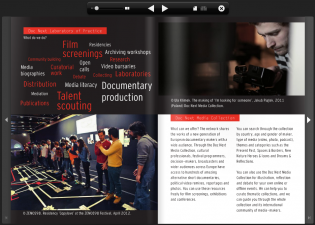
Doc Next Network’s methodology explained, including descriptions of partners and activities.


Doc Next @ IDFA - click to read on ISSUU

Doc Next @ IDFA – click to read on ISSUU

DOC NEXT @ IDFA

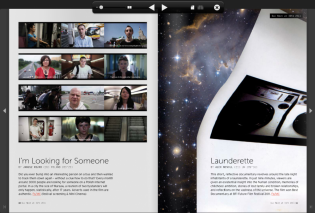
The partnership of IDFA and ECF is based on a mutual concern for the inclusion of young D-I-Y media talent in public opinion. At IDFA 2012, Doc Next screened personal reflections that portray another Europe. What crisis means to young Greeks, late nightlife in a London launderette, a Turkish girl immigration story and the neighbour who knows everything about everyone in Warsaw… How do they deal with daily life? Which images of Europe do they reveal? The IDFA guide gives credit, shows background and introduces 10 young media makers.


Youth Media Trend Report - click to read on ISSUU

Youth Media Trend Report – click to read on ISSUU

EUROPEAN YOUTH MEDIA TREND REPORT

Young people are attached to their mobile phones… But do they still use landlines? Is online television as popular as ‘regular’ television? What is the most popular games console among today’s young people across Europe? And what are the biggest differences between European countries in terms of how they use media today? The answers to these questions – and more – can be found in the first European-wide Youth Media Trend Report (2011-2011), which was commissioned by the Youth & Media Programme of the European Cultural Foundation (ECF). The extensive research was carried out by the Belgian research centre Trendwolves, which looked at media use among young people aged between 15 and 25 in five European countries: Norway, the Netherlands, Spain, the United Kingdom and Croatia.

Video Republic - click to read on ISSUU

Video Republic – click to read on ISSUU

VIDEO REPUBLIC

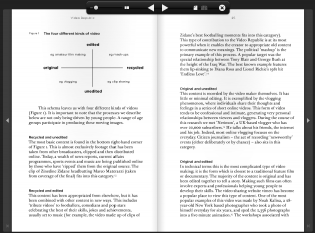
It is a messy, alternative realm of video creation and exchange that extends across the internet, television, festivals and campaigns. This report charts the rise of the ‘Video Republic’ across Europe, a new space for debate and expression dominated by young people.

Drawing on extensive research with experts and young people in the UK, Turkey, Germany, Romania and Finland, it argues that the stakes are high, both for the contributors to this realm and for the democracies they live in. Confusion about regulation, copyright and privacy means that young people are plunging headlong into an uncertain set of new relationships online. And around Europe, new types of expressive inequality are emerging as many are held back from participating by poor access and a lack of resources.

As young people experience greater freedoms online, many are choosing to ‘route around’ political and cultural institutions rather than take them on directly. This poses a profound challenge to decision-makers, but it also creates new opportunities. For democracies starved of legitimacy, it offers hope for a new sphere of democratic expression and participation. With a range of recommendations for government, media and the private sector, this report outlines how we can channel the creativity locked inside the Video Republic.