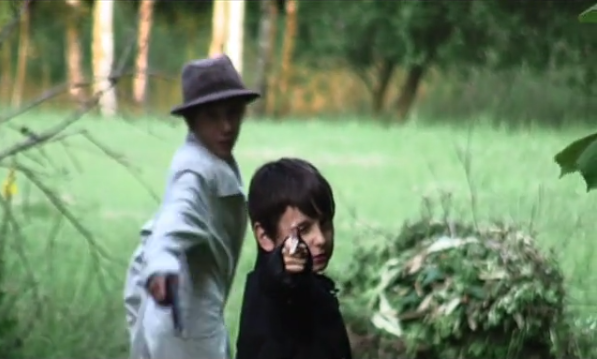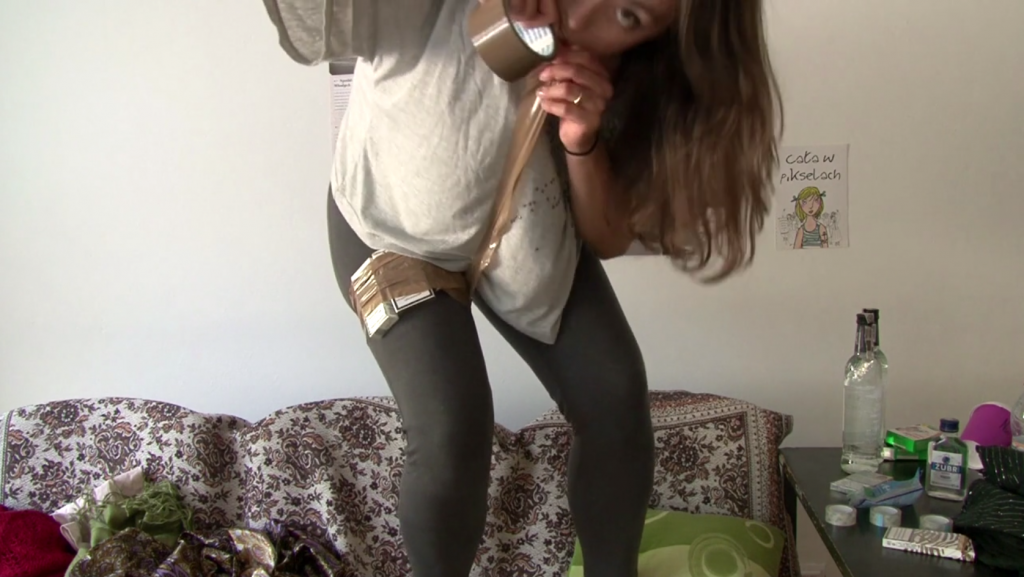

European Souvenirs, a project by Doc Next Network, wants to re-conquer European imaginary. Remix techniques help us not only to understand the past, but also a way of re-writing our past.
Doc Next Network is working on European Souvenirs an independent, process-oriented, investigative, collaborative, innovative and high quality multi-media project that will shake up our minds and our prevailing imagery of the places we live in. The project is commissioned by the European Cultural Foundation in its quest for new European inspiring narratives, and designed by ZEMOS98 (Spain).
[FMP width=”640″ height=”360″]http://dnn.data-ant.com/dnn_wp_html/wp-content/uploads/2012/07/european_souvenirs_teaser_480x270.mp4[/FMP]
WHY DO WE DO IT?
VJs, or any artist who takes on the precepts of contemporariety as proposed by Marcel Duchamp and his ready-mades, uses the material at hand as a source of inspiration. The copying, manipulation and representation of the real includes images from films, DVDs, video clips and video games.
In an interview by ZEMOS98 about his remix of D.W. Griffith’s The Birth of a Nation, the musician and philosopher Paul D. Miller a.k.a. DJ Spooky said: “the profile of the DJ is already established in our minds, which is why the art of the 20th Century has become the inspiration for the art of the 21st century”.
In
Augustine of Hippo identifies three times:
“(…) a present of things past, a present of things present, and a present of things future. (…) The present of things past is memory, the present of things present is sight, and the present of things future is expectation”.
Loop
The greatest video remixer of history of video art is precisely the father of video art, its most famous pioneer: Nam June Paik. On the 1st of January 1984, artists from all over the world were invited to participate in a global satellite project called Good Morning Mr. Orwell as a tribute to George Orwell.
Paik’s main concern was to create an international product made up of a mix of synthesized images that he would remix together in real time. This work was the first television zapping experience involving Eastern and Western images, because Paik structured the tape as a collage of images. Paik’s collages –said Jean Paul Fargier – tend to infinity.
“Culture is an endless palimpsest”, according to Roland Barthes: no tradition, no memory, no myth is ultimate: the process of communication is endless indeed. “All creative works are derivative”, Nina Paley explains.
Our media landscape (Antoni Muntadas) is full of texts, audios, videos and pictures: a constant loop that puts together and build a common imaginary, that is, a cultural, symbolic and token dimension of norms, traditions, rituals, values, institutions, laws and symbols that a society has in common, respect and works as a frame for the ways of living together.
European Souvenirs departs from the convention of the traditional audiovisual memoire: the (media) archive. This process-oriented media project researches and translates a combination of media archives from different european institutions to show on the stage the connections between European media landscape and its social imaginaries, dealing with the representation of european identity, experience and tradition.
Inspired by avant-garde art movement philosophy, by its experimental techniques like the collage, influenced by expanded, abstract and live cinema and radically linked to the paradigm of remix culture, European Souvenirs retrieves media documents to implement, reconcile and capture the imagination of Europe.
Re-loop
Remix as a new cultural paradigm: memory, fiction, utopia and archive. Archives become treasures to be discovered, overwhelmed by the information age. European Souvenirs is a unique archive and source of media documents that tell other or important stories (not visible for the mainstream media): it can bring those stories to another stage, remixed in a highly qualitative live cinema performance that will tour in different countries. In a constant process of interaction, found images from the past produce new ideas:
“You don’t have to look for new images that have never been seen, but you have to work on existing images in a way that makes them new. There are various paths. Mine is to look for the buried sense, and to clear away the rubble lying on top of the images.” (Harun Farocki).
Chroma key (a photographic compositing technique based on the separation of colors in the original images)
Remix culture is much more than an artistic antecedent based on the idea of surrealist collage. Remix culture is much more than an audio sampling technique inspired by the origins of phonography and highlighted by Djs since the 80s. Remix is deeply embedded in our culture and influences the intersection of education, communication, culture and politics. European Souvenirs artists will tend to become invisible as the creators of the work.
Once the show begins, the home-videos and other found material from the archives will be suddenly charged with meaning not intended by the original producers. Techniques like sampling, dub, assemblage, collage, remix, chroma key or scratch are applicable to this particular project because of the availability of this ready-made material from the archives we work with.
Fade in (audio or video effect used to begin a sample in total silence or darkness and gradually increase the audio signal or lighten a shot to full brightness)
It makes sense for the European Souvenirs project to become archaeologists of image and sound in order to keep up with our age and to transform old footage in new and meaningful media. The souvenir as «a memento, keepsake or token of remembrance» is the core of the project. Apparently disconnected, a chaos of souvenirs is re-organized through remix techniques to capture completely new and updated visions and ways of imaging the society we live in.
Wipe (one shot replaces another following a 2-dimension pattern)
European Souvenirs champions the idea of a multi-layer reality woven of diverse identities, experiences and traditions. European Souvenirs represents that complex idea by a multimedia, collaborative, work-in-progress project which is characterised by the use of found footage and multi-layered rhythms. Remix techniques help us not only to understand the past, but also a way of re-writing our past.
Scratch (a video editing technique as a variation of moving a vinyl record back and forth on a turntable)
“We need history, but not the way a spoiled loafer in the garden of knowledge needs it.” (Nietzsche, Of the Use and Abuse of History). “New techniques for our past and history, which are themselves our future.” (Walter Benjamin). European Souvenirs wants to re-conquer the destiny of present-day European imagination of itself.
Copy & Paste
“Our markets, our democracy, our science, our traditions of free speech, and our art all depend more heavily on a Public Domain of freely available material than they do on the informational material that is covered by property rights. The Public Domain is not some gummy residue left behind when all the good stuff has been covered by property law. The Public Domain is the place we quarry the building blocks of our culture. It is, in fact, the majority of our culture.” (James Boyle, The Public Domain).
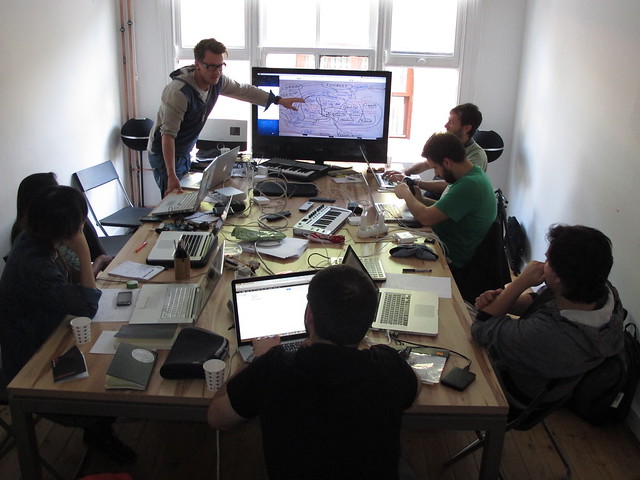
Curated by Spanish artists and remix experts of ZEMOS98, European Souvenirs will be created by an artistic ensemble of five European media-makers that were born during the decades of the 1980’s and later in Spain, Poland, UK, Turkey and the Netherlands. They have different profiles complementing each other as media artists, performers, 3D animators, documentarians, musicians, DJs and VJs.
The audience will enjoy an audiovisual journey through the re-interpretation of home and institutional archives. This performance aims to capture the views of a new generation of media-makers to address key concerns and issues of the Europe we live in for a broad audience in Europe and beyond.
WOULD YOU LIKE A REMIX CULTURE COURSE? GO TO http://blogs.zemos98.org/abrelatas/2012/07/04/remix-culture-course/
 Follow