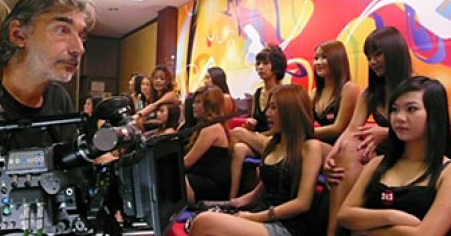
 The 9th PLANETE+ DOC FILM FESTIVAL will be held between May 11-20, 2012 in Warsaw and between May 14-20 in Wrocław, which will feature screenings of 40 films from this year’s program. In keeping with the tradition, during the first weekend of PLANETE+ DOC FILM FESTIVAL (May 11-13), the festival will be present in 20 Polish cities (as part of Digital PLANETE+ DOC Weekend)
Category Archives: Network Activities
 Follow
Contact
For more information, and contact details of the Doc Next Network hub partners and/or the European Cultural Foundation:
Menno Weijs (secretary Doc Next Network)
European Cultural Foundation (ECF)
Jan van Goyenkade 5
1075 HN Amsterdam
Tel.: +31 (0)20 573 38 68
Fax: +31 (0)20 675 22 31
website (Youth & Media Programme)
For all feedback on this blog, please contact our online producer Puck de Klerk.
Click here to meet the people behind Doc Next Network.
ASSOCIATION ę: art coaching sesion vol.3
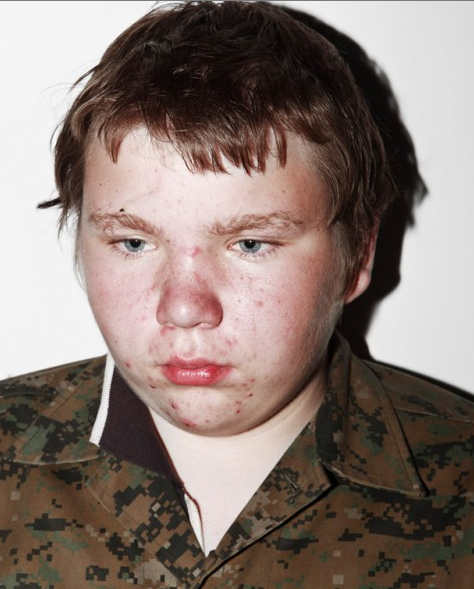
ASSOCIATION ę: Polska.doc workshops vol.2
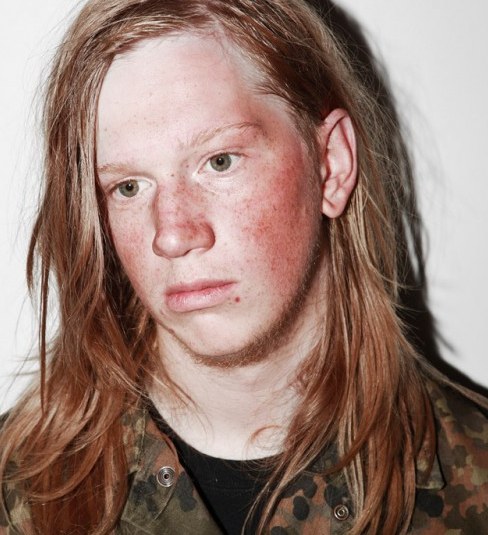
European Souvenirs: Workshop meeting Point
Prelude for European Souvenirs. European Souvenirs is a major live-cinema performance that will be staged for the first time in October 2012 in de Balie (Amsterdam) and will tour afterwards in different countries across Europe and beyond.
 Commissioned by the European Cultural Foundation in its quest for new European inspiring narratives, ZEMOS98 (Spain) has designed with its partners in the Doc Next Network an independant, process-oriented, investigative, collaborative, innovative and high quality multi-media project that will shake up our minds and our prevailing imagery of the places we live in.
For more information: http://www.europeansouvenirs.eu/
Publications
Here you can find some of the print publications that Doc Next & hub partners have produced or were involved in.
 REMAPPING EUROPE: A CASE STUDY IN INTERNATIONAL AND INTER-INSTITUTIONAL COLLABORATION.
Collaboration across Europe benefits from some key ingredients, which need to be at the root of our working processes. We must cross and indeed break-down borders on many physical and metaphysical levels. Collaboration enhances the ‘spaces in-between’, the intersections between, people, organisations and ideas. In our complicated (but very rich) 21st century, the intersections are not of two spheres converging, but of many – layered, interconnected – and made even more complex by the digital opportunities that envelop us.
Article written by Katherine Watson (director of the European Cultural Foundation) and Vivian Paulissen (Programme Manager of the Youth & Media Programme of the European Cultural Foundation). To be published by Ashgate Publishing Ltd as a chapter from “Migrating Heritage: Networks and Collaborations across European Museums, Libraries and Public Cultural Institutions”. Read the full article here.
Click to download
EXPANDED EDUCATION – THE ENGLISH VERSION
Somewhere between a fork and a spin-off, the notebook Expanded Education – The English Edition compiles a series of materials that revolve around the notion of expanded education and are related to the book that Spanish Doc Next Network hub partner ZEMOS98 published on the subject.
Education has always been one of the core themes of the ZEMOS98 project. Not just any old education, but the kind of education that is inseparably bound up with communication and that connects to and networks with other concepts such as audio-visuals, art and experimentation. Education as an element of on-going personal growth, that is not limited to one particular stage of life. Education as play, a way of unravelling the media theatre. Education as an open source operating system that turns us into critical citizens. Education as a game played by all individuals, from all eras. Education as a utopia for a culture-sharing society. When we talk about expanded education, we are not talking about a new concept or something that has just popped out of the blue.
‘Expanded Education’ invokes an idea, and every organisation, individual or collective can activate or deactivate it as they see fit. In any case, it will be necessary to make a distinction between those who use it with political and/or critical intent, and those who use it as a marketing strategy to attract ‘new audiences’.
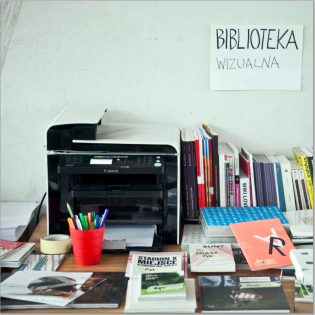
Learning to see – click to download
LEARNING TO SEE – THE MANUAL
How is the function of film/photography changing working methods?; How to use visual tools in a conscious, critical and thoughtful manner?; How to follow the technological change wisely for the sake of promoting social change?; How to apply pictures in social and cultural projects?
Questions like the above made Polish Doc Next hub partner Association of Creative Initiatives “ę” organise a Visual Seminar – an opportunity to meet for persons working with pictures, practices of looking and the contemporary culture in the broad sense: practitioners (animators/educators, authors) and theoreticians (anthropologists, sociologists, researchers) operating within the field of visual culture.
One of the objectives of the Visual Seminar was to reach beyond the habits we follow during our everyday work of animators/ educators/ coordinators. We are often so absorbed in implementing the subsequent steps of our projects, we find it difficult to ask oneself questions not included in grant application forms. We decided to provide some time for reflexion and critical reassessment of our work and methods, the meaning of which is rarely called in question. Learning to see is a report, and at the same time a manual for future seminars.
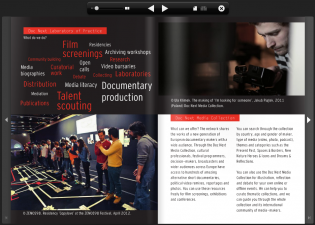
Doc Next information booklet – click te read on ISSUU
ABOUT DOC NEXT NETWORK BOOKLET
Doc Next Network’s methodology explained, including descriptions of partners and activities.
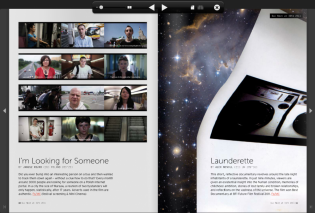
Doc Next @ IDFA – click to read on ISSUU
DOC NEXT @ IDFA
The partnership of IDFA and ECF is based on a mutual concern for the inclusion of young D-I-Y media talent in public opinion. At IDFA 2012, Doc Next screened personal reflections that portray another Europe. What crisis means to young Greeks, late nightlife in a London launderette, a Turkish girl immigration story and the neighbour who knows everything about everyone in Warsaw… How do they deal with daily life? Which images of Europe do they reveal? The IDFA guide gives credit, shows background and introduces 10 young media makers.
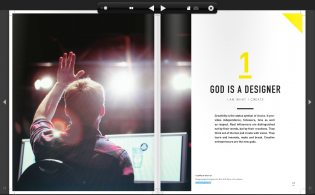
Youth Media Trend Report – click to read on ISSUU
EUROPEAN YOUTH MEDIA TREND REPORT
Young people are attached to their mobile phones… But do they still use landlines? Is online television as popular as ‘regular’ television? What is the most popular games console among today’s young people across Europe? And what are the biggest differences between European countries in terms of how they use media today? The answers to these questions – and more – can be found in the first European-wide Youth Media Trend Report (2011-2011), which was commissioned by the Youth & Media Programme of the European Cultural Foundation (ECF). The extensive research was carried out by the Belgian research centre Trendwolves, which looked at media use among young people aged between 15 and 25 in five European countries: Norway, the Netherlands, Spain, the United Kingdom and Croatia.
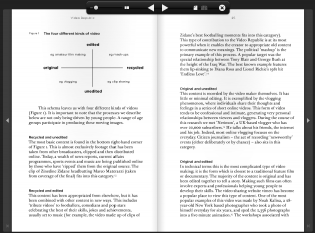
Video Republic – click to read on ISSUU
VIDEO REPUBLIC
It is a messy, alternative realm of video creation and exchange that extends across the internet, television, festivals and campaigns. This report charts the rise of the ‘Video Republic’ across Europe, a new space for debate and expression dominated by young people.
Drawing on extensive research with experts and young people in the UK, Turkey, Germany, Romania and Finland, it argues that the stakes are high, both for the contributors to this realm and for the democracies they live in. Confusion about regulation, copyright and privacy means that young people are plunging headlong into an uncertain set of new relationships online. And around Europe, new types of expressive inequality are emerging as many are held back from participating by poor access and a lack of resources.
As young people experience greater freedoms online, many are choosing to ‘route around’ political and cultural institutions rather than take them on directly. This poses a profound challenge to decision-makers, but it also creates new opportunities. For democracies starved of legitimacy, it offers hope for a new sphere of democratic expression and participation. With a range of recommendations for government, media and the private sector, this report outlines how we can channel the creativity locked inside the Video Republic.
ZEMOS98 Festival: Copylove
From 11 to 15, April, the 14th edition of ZEMOS98 Festival will be celebrated in Seville. This year’s leitmotif is COPYLOVE which seeks to bring the focus on those communities where the economy of care, reciprocity and trust are essential elements for the management of the commons. The 14th annual ZEMOS98 Festival titles “Copylove: Commons, Love and Remix” has been built collectively through some encounters in which different cultural agents discussed ideas about place of the commons and love within the community, a place in which to deepen, crystallize and put into action the close relationship of both terms. This has created a local team composed of different communities and diverse people with whom to define and articulate the concept of COPYLOVE.
“COPYLOVE: commons, love and remix” is intended to be an open and collective journey in which to propose reflections on the role of taking affects and management of common resources within communities.
All the programme is available in Spanish here.
Some activities will be available online via streaming.
Why we do it?
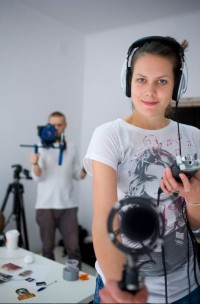
The key of our thinking about modern media education is parallel activity for the professionalisation of cultural workers and investing in young artists who can combine their artistic potential with social mission, who can share their skills with younger generations. Film and photography are currently two of the most popular media used by young people to learn and describe the world. Cell phones are used as photographic cameras, and cameras provide video and voice recording functions. The recorded images can be published right away on Vimeo, YouTube or on social networking platforms and thus shared with millions of viewers.
Every year organisations, community centres and common rooms invite us to conduct workshops. Each of our film and photography projects has several hundred applications a year. The application and evaluation forms show us that young people need and look for modern media education. In the 9 years of our work we have observed that this kind of education is created and realised by community centres, common rooms, libraries or independent artists and animators. At the same time our experience shows that Poland still lacks animators and educators who consciously work with film and photography.
That is why we have created the Polska.doc programme in which young DIY artists get the opportunity to develop their skills trained by professionals. They go through the project process (form the idea to the finished project) and realise their own (often their first) documentary projects (film, photocasts, photographic series) with the support of experienced tutors. The first year of the programme gave us 13 finished productions. All are accessible on our website (www.polska.doc.e.org.pl). They can also be seen during shows and events initiated by the international Doc Next Network in which we partner.
Within Polska.doc we have also conducted a very important educational path called „Animate on your own!”. Our participants could not only master their talent and make their imagination roam freely but also try to work as a cultural animator. With theoretical and practical knowledge they went to places all around Poland to voluntarily assist experienced tutors and co-conduct multimedia workshops for less experienced friends. Good practices gathered throughout the project are presented on our website in the Inspiration section.
We believe that visual media prove useful in unravelling history and the local identity, in engaging young people in actions for the local community or in integrating neighbours. We want the world to be described by grassroots initiatives, by the members of local communities and with the assumption that the artists want to dig into reality, not slide on its surface.
Association “ę”
Beyond remixing the contraries
As a result of the Political Remix Video call that both EMBED and Doc Next Network started last December, the following selection of remixing works will be screened during the next ZEMOS98 Festival (14th April):
 “Glued” by Benoit Detalle (Belgium) – 5’42″
“Rock the Caucuses” by Smearballs (Canada) – 3’22″
“Now, Listen!” by Dominik Dušek (Czech Republic) – 3’
“Subasta II” by Smalouli (Marrocco) – 2’51″
“The Manufacture Of Consent” by Enrico Argento (Portugal) – 2’22″
“WakeUpArtists! (Dedicated to Malish)” by SpriteHat (Italy) – 4’
“Mutantes” by Duplex Corporeition (Spain) – 4’24″
“A mi tío” by Lacasinegra (Spain) – 1’33″
“Our Dangerous Demands” by Malaventura (Spain) – 2’
“Live Free or Die Hard (Project 12, 8/12)” by Diran Lyons (USA) – 1’12″
“Abra la boca (Open Your Mouth)” by Montserrat Santalla Gasco (Spain) – 3’31″
“Rap News X: #Occupy2012 (feat. Noam Chomsky & Anonymous)” by Hugo Farrant and Giordano Nanni (Australia) – 7’48″
Apart from this programme, two works produced by ZEMOS98 in the framework of Doc Next Network remix workshops will be premiered the same day:
“Cuentos ilustrados” by Pablo Domínguez (Spain) – 12’07″
“Esperanza Umbridge y la Marea Verde” by El Ejército de Dumbledore (Spain)- 2’48″
This Political Remix Video international call has received 124 audiovisual works in a month time. The selection committee has been formed by Felipe G. Gil and Pedro Jiménez de ZEMOS98, Joan Carles Martorell (Yerblues.net) y Alberto Tognazzi (Movil Film Fest).
This committee highlights the fact that all these works go beyond the simple technique of «remixing the contraries». They (together with Jonathan McIntosh at PoliticalRemixVideo.com) understand political remix videos as an audiovisual genre which puts into practice the «situationist detournement», using the media to criticize power structures, to deconstruct social myths and defy the mass-media via «re-cutting» and «re-framing». This remix is done from media fragments mixed with pop culture. Could this way of understanding audiovisual remix be a new kind of documentary? How are we going to access the collective memory if it’s already remixed? Aren’t the media using remix techniques as a sort of aesthetic of social reality? Let’s carry on researching into this path and learn from our community.
More than four hours a day on the internet
Young people are attached to their mobile phones… But do they still use landlines? Is online television as popular as ‘regular’ television? What is the most popular games console among today’s young people across Europe? And what are the biggest differences between European countries in terms of how they use media today?
The answers to these questions – and more – can be found in the first European-wide Youth Media Trend Report (2011-2011), which was commissioned by the Youth & Media Programme of the European Cultural Foundation (ECF).
The extensive research was carried out by the Belgian research centre Trendwolves, which looked at media use among young people aged between 15 and 25 in five European countries: Norway, the Netherlands, Spain, the United Kingdom and Croatia.
Researchers mapped how young people use media in each of these five countries, focusing specifically on social networks, internet, telephone, television, radio, newspapers, magazines and games.
The first Youth Media Trend Report of its kind identifies different media landscapes across Europe and represents an important step in measuring, observing and revealing changes in the way young people use their media.
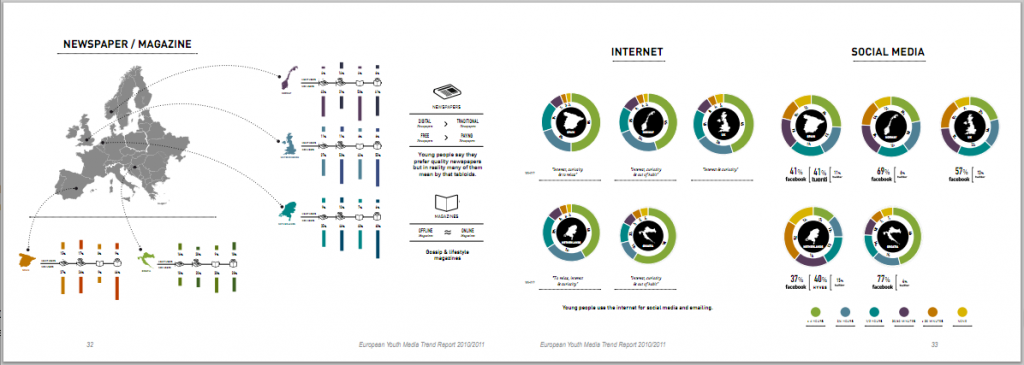
Page from: European-wide Youth Media Trend Report (2011-2011)
With this research, ECF aims to provide broad access to exclusive data to cultural, political and media organisations and professionals working on youth and media policies and programmes. The research is designed to fill a gap for the cultural sector, which is often deprived from mere facts and figures, unlike the business sector, in which such research data are used for designing successful marketing strategies and forecasting trends.
Interested in finding out more? Download the report in infographics here.
For inquiries on how to access the full report, please contact mweijs@eurocult.org