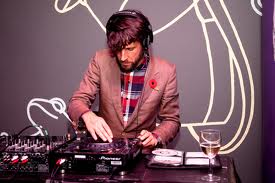
Matthew Cuzner graduated in Drama, Applied Theatre and Education at the Central School of Speech and Drama in London, the United Kingdom. Originating from a predominantly theatre-based background, Cuzner has performed and facilitated many workshops for young people. Currently, Cuzner specifically works on the Doc Next Network activities on behalf of the BFI (British Film Institute).
ROLE: facilitator.
Matthew Cuzner graduated in Drama, Applied Theatre and Education at the Central School of Speech and Drama in London, the United Kingdom. Originating from a predominantly theatre-based background, Cuzner has performed and facilitated many workshops for young people. Currently, Cuzner specifically works on the Doc Next Network activities on behalf of the BFI (British Film Institute).
ROLE: facilitator.
Poland.doc is a series of crossmedia seminars for young artists and budding culture animateurs (18-30 years old) interested in film and photography.
Throughout a set of intensive workshops the participants will develop their film and photography skills and work on an author’s film or photographic project (documentary etude, photocast, series of stills) under the guidance of professional creators. 20 most promising projects will gain a chance to be produced.
Poland.doc is about sharing experience and tested work methods with young creators, students of multimedia and cultural animation courses. The projects encourages cultural and educational actions, which utilise film and photography. It crates an opportunity for hands-on testing of the skills acquired.
Poland.doc guest professionals included: Jacek Bławut, Marcel Łoziński, Krzysztof Wierzbicki, Tadeusz Sobolewski, Paweł Łoziński, Piotr Stasik, Rafał Milach, Łukasz Trzciński, Adam Mazur, Janusz Byszewski, Maja Parczewska ,Marta Białek-Graczyk.
Organiser: Society of Creative Initiatives „ę”
Funding:
The project is realised as a part of the Youth & Media Progrmme thanks to the financial support of the European Cultural Foundation (ECF).
The project also benefits from the financial support of Polish Ministry of Culture and National Heritage.
European Souvenirs assembles an artistic collective of 5 young mediamakers researching into found material from different European archives in the course of 4 workshops led by various artistic collaborators, in 4 different European cities, to create a live-cinema performance to be staged for the first time in October 2012 in De Balie (Amsterdam) and will tour afterwards in different countries across Europe and beyond.
The BFI Doc Next Media Lab is a six month development scheme for 18 – 25 year olds interested in making a name for themselves in the world of documentary. With funding, mentoring, training and other support the filmmakers will be given a chance to experiment with what can be done within the loose confines of ‘documentary’.
MODE İstanbul, çeşitli kuruluşlarla ortaklaşa olarak yerel ve uluslararası filmler üretmeye, projeler geliştirmeye, medya atölyeleri, film gösterimleri, sergiler ve toplantılar düzenlemeye yönelik film ve dijital sanatlar girişimdir.
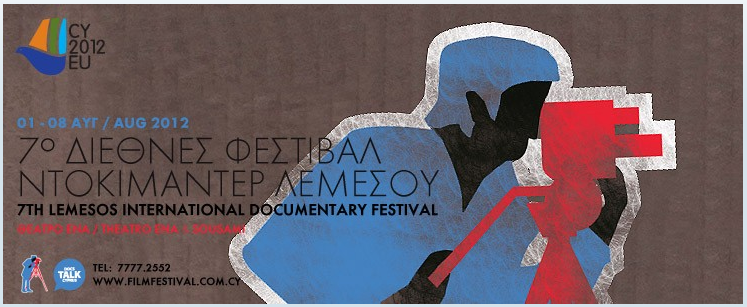
The “Lemesos International Documentary Festival”, this year in its seventh edition, promises to be an up to date, refreshing event, looking closely at those moments from human reality that will trigger exiting, groundbreaking and adventurous cinematic journeys. The Festival, co-organised by Brave New Culture and the Cyprus Broadcasting Corporation, will take place between the 1st and 8th August 2012, at its permanent event space, the 2nd Municipal Market (Theatro Ena), in Limassol.
Like every year, a documentary professional event entitled DocsTalk, will be organized. DocsTalk 2012, which is co-organised withMedia Desk Cyprus, will consist of a series of lectures, workshops and individual meetings and is directed to professional directors / producers and to anyone who is interested in learning more about the various aspects of creating a documentary film, such as storytelling and script writing, producing and developing, filming techniques and festival distribution.
Apart from the general activities of the workshop, which will be open to the public, a workshop entitled Doc Checks will be co-organised in collaboration with the organisation ‘Sources 2’ (Germany), specialised in scriptwriting and script development.‘Sources 2’ adviser Ulla Simonen (Finland) will give a keynote on Scriptwriting for Documentaries, and in individual 20-30-minute consultation sessions (following application procedure) she will provide professional feed-back, ideas, suggestions and practical advice on developing the proposed documentary film projects in development. A maximum of 8 projects will be selected.
The meetings are targeted to documentary filmmakers or teams of directors/ producers with a documentary film project in development.
The lecture and meetings will take place between 16:00 and 19:00 on Saturday, August 4th 2012.
Interested applicants can submit an application until the 16th July 2012.
Since 1988, the International Documentary Film Festival Amsterdam (IDFA) is unique for its international film program, the variety of genres, its politically committed program and the many European and world premieres featured each year.
For the 3rd year, Doc Next Network is part of IDFA. Within the IDFA programme, Doc Next Network presents an alternative perspective on contemporary Europe. Doc Next are mostly D-I-Y media-makers, who “go round” the official institutions, the media and cultural policies, thus creating a link between the traditional media and the constantly developing world of free culture.
Doc Next Network @ IDFA 2012 activities:
Screening of Doc Next films prior to featured documentaries
Mini Cinema @ Rembrandtsplein
Talking Dinner #2: Film Festivals
Doc Next films for the IDFA Competition for Student Documentary
Online Doc Next webisodes
More news and a detailed program soon at docnextetwork.org
Do you have a background in media, journalism, documentary or film? Want experience in a European cultural organization? Want to get involved with event and festival production? Are you a pro-active all-rounder with an interest in media and young people? You just might be the intern we are looking for!
Location: Amsterdam
Duration: 10 – 20 weeks, 0.6 FTE
Start date: 17 September 2012
Apply before: as soon as possible, urgent!
The European Cultural Foundation (ECF at www.eurocult.org) is an independent organisation which helps the arts contribute to a strong, united and diverse Europe built on shared cultural values. We have a special commitment to the new generation of Europeans and to the European Neighbourhood. Many of our activities are geared towards bringing out the creativity in young people of all backgrounds and towards empowering cultural actors of change.
ECF is both a grant-making and operational foundation.
THE INTERNSHIP
The ECF Youth and Media Programme and its core partnership scheme called Doc Next Network (www.docnextnetwork.org), are looking for an intern to assist at various levels of the programme activities, specifically the following:
Assisting in the roll-out of ECF’s collaboration project with the International Documentary Film Festival (IDFA) in Amsterdam, in November 2012 (http://www.idfa.nl/nl.aspx)
Assisting with the logistics, production and (online) outreach and touring of a live cinema performance European Souvenirs (part of ECF’s Imagining Europe event at De Balie in Amsterdam)
Working on the archival of the Doc Next Media Collection: updating, editing, handling 3rd party request and preparing pitches to potentially interested parties.
The tasks on the internship are flexible but will provide work experience within an international organisation relevant to the candidate’s education.
TASKS
Production & logistics
Assist in logistical and production tasks for Doc Next at IDFA (November 2012), a programme with Doc Next documentary screenings and meetings. The programme of the IDFA collaboration is developed in cooperation with the international partners of Doc Next Network. The intern will be pivotal in supporting this.
Assisting in communications tasks related to IDFA and to Imagining Europe, an event taking place in October 2012.
Cooperating closely with the freelance producer for IDFA and online editor of www.docnextnetwork.org, as well as the Communications department, all under the responsibility of the Youth and Media Team.
(Online) research contributing to the address lists for communication purposes
Processes
Attending Y&M team meetings and ECF staff meetings.
Research
Conduct and present a mapping of organizations (cultural) working with young people (15-30) and media in NL and Europe, with a focus on those organisations that work in documentary (transmedia / video / film / audio / photography).
PROFILE
Third year in Media / Journalism / Media-design Studies (the applicant must be a registered student throughout the entire course of the internship);
Affinity with culture and arts;
Knowledge of new / social and DIY media;
Strong interest in European development – understanding and knowledge of the history and geography of the European continent and the implications for young people in Europe (esp. Spain, Turkey, UK, Poland and the Netherlands);
Fluent in Dutch and English (any of the other languages Spanish, Polish or Turkish is preferable but not required per se);
Hands-on attitude and pro-active approach;
Quick with media software, social media (Facebook, LinkedIn, Tumblr, other).
The intern must have a valid work permit for the Netherlands (according to Dutch Labour Law)
The intern will receive a fee/reimbursement of costs amounting to 375 Euros gross per month, based on 3 days (22.5 hours) a week, from which the internship provider will pay the social security premiums, wage tax and national insurance contributions that are due.
The ECF strives to be an equal opportunities employer and to see that the make-up of its staff is diverse and representative of society. The ECF welcomes applicants from a wide variety of backgrounds.
Application in English and via email only must include a motivation letter, detailed CV and a support letter from your Study Programme Coordinator / your College or University. Please send this to Gill Wijnhoven, HR Officer (gwijnhoven@eurocult.org) at your earliest convenience.
NB: living in Amsterdam is very expensive and accommodation can be hard to find. Please consider this when applying from outside The Netherlands.
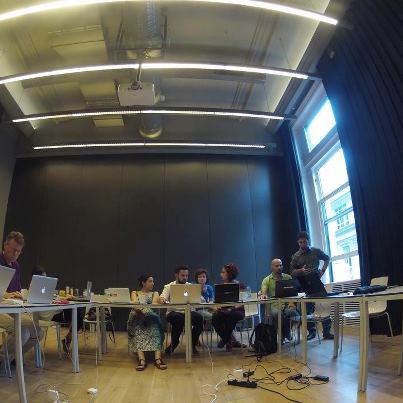
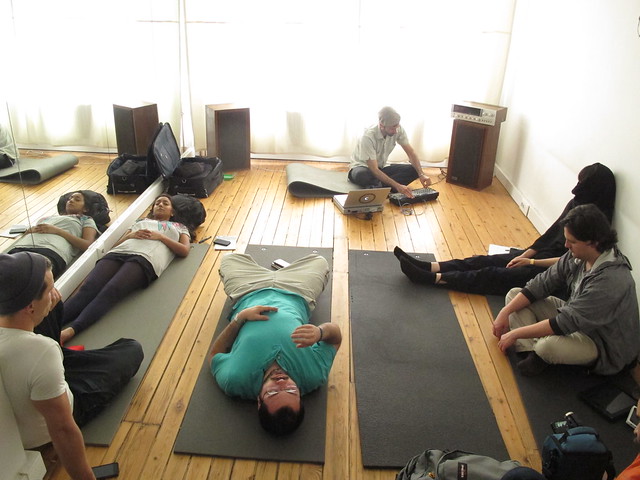
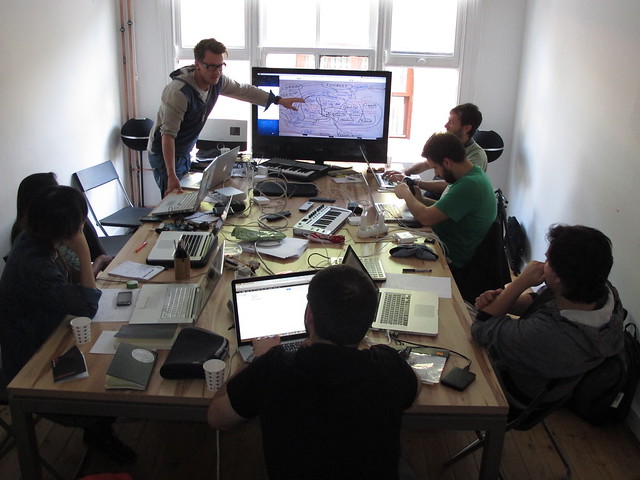
At the beginning, our eyes are closed, listening to the sound of a control at the customs, the city, the calls to pray, the traffic, the trains, the bells… And with this exercise of proactive listening we get started on the work with the audiovisual artist Filastine in Istanbul, inside a room with warm wooden floors within the cozy and inspiring ‘Simotas Binasi’, the base of the European Souvenirs team in its stage at the Old Constantinople.
The prominent sounds of the city emerge, not only when it’s time to look to the Qibla and the muezzins appear to be competing with each other. Istanbul sounds in its cars, its ships, its tourists and inhabitants. Sure that in other cities, sounds are equally powerful and ever-present, but in Istanbul they vibrate around you as well as within you, for whoever wants to listen and loose themselves.
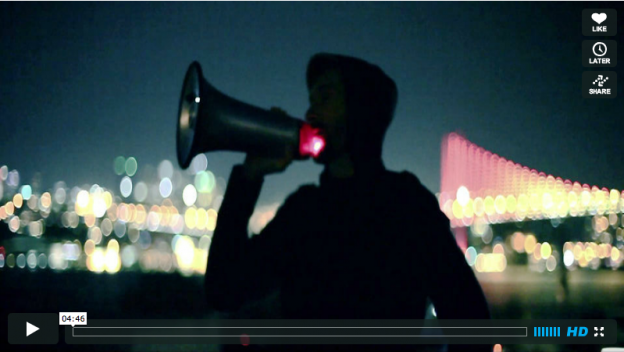
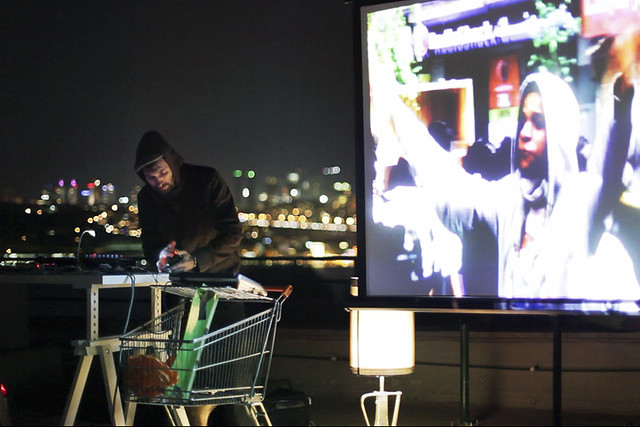
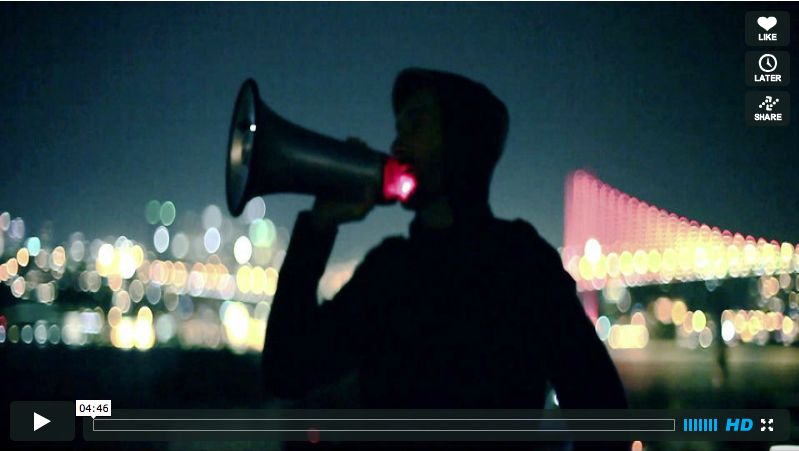
During the days working at Simotas, we would go out recording these sounds and buying percussion instruments. Then, we gathered all this and thought of the soundtrack for our live cinema show. Music was present while working all throughout the comforting jam sessions with the material supplied by the archives. First, with Grey Filastine’s help -who also delighted us with a magnificent showcase of his last album with the awe-inspiring background of Fatih Sultan Mehmet’s bridge, which links Europe and Asia- and later, with the team work, where we started exercising the muscles, the sound, getting them ready to the flow of the live show.
Bones and Muscle: building stories.
We spent the rest of the time at work in Istanbul putting together stories, getting over the first few keywords, all of them actually, in order to equalize the aspects we were more keen to highlight in this research process that is European Souvenirs. It is then when we appreciated the workshops in Seville with Toni Serra as well as with Silvia and Nuria, and invoked the muse ‘Structure’ to pull together the outline of our project.
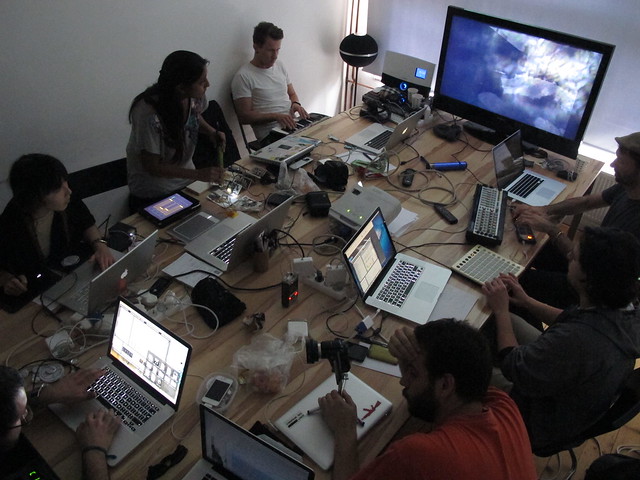
This task led us to over three days of narrative games, writing the story separately, analysing keywords, using exquisite corpses… And these conversations brought up the main subjects, for now, of our own cosmogony. The basis of a multiple, fragmented, domestic story. These being: Family, Travel, Borders, Utopia vs. Dystopia and Memories.
Ingredients of a multimedia stew which five artists will have to cook together, although coming from different realities, in different places and with different thinking.
So, how to cook it all at once? How to serve it on the table? What about the technique?
The third part of the work in Istanbul was that one we always like to discuss about. How are we appearing on stage? What technical equipment are we using? How do we approach the challenge of having the audience seated? And here is where the collective intelligence and the background of the art team get down to business: video-projections, quadraphonic sound system, gadgets, instruments, buttons, cables… Everything is possible, not every thing is necessary. The tough part is knowing how to adequate the technique to the story, not succumbing to the virtuosity of technology, facing the simplicity (and the toughness) as opposed to being too theatrical or using entropic multilayering.
In the middle of this debate, always unfinished but quite advanced, we left Istanbul, satisfied with the good work and looking forward to Warsaw, our next stop. Meanwhile, we will work far away from each other, but still being able, if we close our eyes, to hear the sound of that muscle that joins Europe and Asia… in Istanbul.
Text by Pedro Jiménez & Malaventura. Pics by Benito Jiménez and Cansu Turan.
European Souvenirs, a project by Doc Next Network, wants to re-conquer European imaginary. Remix techniques help us not only to understand the past, but also a way of re-writing our past.
Doc Next Network is working on European Souvenirs an independent, process-oriented, investigative, collaborative, innovative and high quality multi-media project that will shake up our minds and our prevailing imagery of the places we live in. The project is commissioned by the European Cultural Foundation in its quest for new European inspiring narratives, and designed by ZEMOS98 (Spain).
VJs, or any artist who takes on the precepts of contemporariety as proposed by Marcel Duchamp and his ready-mades, uses the material at hand as a source of inspiration. The copying, manipulation and representation of the real includes images from films, DVDs, video clips and video games.
In an interview by ZEMOS98 about his remix of D.W. Griffith’s The Birth of a Nation, the musician and philosopher Paul D. Miller a.k.a. DJ Spooky said: “the profile of the DJ is already established in our minds, which is why the art of the 20th Century has become the inspiration for the art of the 21st century”.
In
Augustine of Hippo identifies three times:
“(…) a present of things past, a present of things present, and a present of things future. (…) The present of things past is memory, the present of things present is sight, and the present of things future is expectation”.
Loop
The greatest video remixer of history of video art is precisely the father of video art, its most famous pioneer: Nam June Paik. On the 1st of January 1984, artists from all over the world were invited to participate in a global satellite project called Good Morning Mr. Orwell as a tribute to George Orwell.
Paik’s main concern was to create an international product made up of a mix of synthesized images that he would remix together in real time. This work was the first television zapping experience involving Eastern and Western images, because Paik structured the tape as a collage of images. Paik’s collages –said Jean Paul Fargier – tend to infinity.
“Culture is an endless palimpsest”, according to Roland Barthes: no tradition, no memory, no myth is ultimate: the process of communication is endless indeed. “All creative works are derivative”, Nina Paley explains.
Our media landscape (Antoni Muntadas) is full of texts, audios, videos and pictures: a constant loop that puts together and build a common imaginary, that is, a cultural, symbolic and token dimension of norms, traditions, rituals, values, institutions, laws and symbols that a society has in common, respect and works as a frame for the ways of living together.
European Souvenirs departs from the convention of the traditional audiovisual memoire: the (media) archive. This process-oriented media project researches and translates a combination of media archives from different european institutions to show on the stage the connections between European media landscape and its social imaginaries, dealing with the representation of european identity, experience and tradition.
Inspired by avant-garde art movement philosophy, by its experimental techniques like the collage, influenced by expanded, abstract and live cinema and radically linked to the paradigm of remix culture, European Souvenirs retrieves media documents to implement, reconcile and capture the imagination of Europe.
Re-loop
Remix as a new cultural paradigm: memory, fiction, utopia and archive. Archives become treasures to be discovered, overwhelmed by the information age. European Souvenirs is a unique archive and source of media documents that tell other or important stories (not visible for the mainstream media): it can bring those stories to another stage, remixed in a highly qualitative live cinema performance that will tour in different countries. In a constant process of interaction, found images from the past produce new ideas:
“You don’t have to look for new images that have never been seen, but you have to work on existing images in a way that makes them new. There are various paths. Mine is to look for the buried sense, and to clear away the rubble lying on top of the images.” (Harun Farocki).
Chroma key(a photographic compositing technique based on the separation of colors in the original images)
Remix culture is much more than an artistic antecedent based on the idea of surrealist collage. Remix culture is much more than an audio sampling technique inspired by the origins of phonography and highlighted by Djs since the 80s. Remix is deeply embedded in our culture and influences the intersection of education, communication, culture and politics. European Souvenirs artists will tend to become invisible as the creators of the work.
Once the show begins, the home-videos and other found material from the archives will be suddenly charged with meaning not intended by the original producers. Techniques like sampling, dub, assemblage, collage, remix, chroma key or scratch are applicable to this particular project because of the availability of this ready-made material from the archives we work with.
Fade in (audio or video effect used to begin a sample in total silence or darkness and gradually increase the audio signal or lighten a shot to full brightness)
It makes sense for the European Souvenirs project to become archaeologists of image and sound in order to keep up with our age and to transform old footage in new and meaningful media. The souvenir as «a memento, keepsake or token of remembrance» is the core of the project. Apparently disconnected, a chaos of souvenirs is re-organized through remix techniques to capture completely new and updated visions and ways of imaging the society we live in.
Wipe(one shot replaces another following a 2-dimension pattern)
European Souvenirs champions the idea of a multi-layer reality woven of diverse identities, experiences and traditions. European Souvenirs represents that complex idea by a multimedia, collaborative, work-in-progress project which is characterised by the use of found footage and multi-layered rhythms. Remix techniques help us not only to understand the past, but also a way of re-writing our past.
Scratch(a video editing technique as a variation of moving a vinyl record back and forth on a turntable)
“We need history, but not the way a spoiled loafer in the garden of knowledge needs it.” (Nietzsche, Of the Use and Abuse of History). “New techniques for our past and history, which are themselves our future.” (Walter Benjamin). European Souvenirs wants to re-conquer the destiny of present-day European imagination of itself.
Copy & Paste
“Our markets, our democracy, our science, our traditions of free speech, and our art all depend more heavily on a Public Domain of freely available material than they do on the informational material that is covered by property rights. The Public Domain is not some gummy residue left behind when all the good stuff has been covered by property law. The Public Domain is the place we quarry the building blocks of our culture. It is, in fact, the majority of our culture.” (James Boyle, The Public Domain).
WHEN
European Souvenirs is a live cinema performance that will be staged for the first time at Imagining Europe on Saturday, 6 October 2012 at the renowned cultural space De Balie in Amsterdam, and will tour afterwards in different countries across Europe and beyond.
MORE ABOUT EUROPEAN SOUVENIRS
The artists work with audiovisual material from leading European institutions that have opened up their archives for this project: Eye Film Institute (Amsterdam), Institute for Sound and Image (Amsterdam), OVNI Archives (Barcelona) and Filmoteca de Andalucía (Córdoba), Digital National Archive (Warsaw), SALT (Istanbul) and the British Film Institute (London).
Curated by Spanish artists and remix experts of ZEMOS98, European Souvenirs will be created by an artistic ensemble of five European media-makers that were born during the decades of the 1980’s and later in Spain, Poland, UK, Turkey and the Netherlands. They have different profiles complementing each other as media artists, performers, 3D animators, documentarians, musicians, DJs and VJs.
The audience will enjoy an audiovisual journey through the re-interpretation of home and institutional archives. This performance aims to capture the views of a new generation of media-makers to address key concerns and issues of the Europe we live in for a broad audience in Europe and beyond.
8 Doc Next Network media-makers, selected by our hubs from the UK, Turkey, Spain and Poland will visit Sheffield Doc /Fest this year. Sheffield Doc/Fest brings the international documentary family together to celebrate the art and business of documentary making for five intense days in June. Doc/Fest is a film festival, industry session programme and market place, offering pitching opportunities, controversial discussion panels and in-depth filmmaker masterclasses, as well as a wealth of inspirational documentary films from across the globe.
Participants receive basic training in how to pitch documentary ideas, as well as getting expert feedback on their techniques, building confidence and media literacy skills;
Participants get the opportunity to experience one of the worlds largest and most important documentary festivals and get ideas of future career paths;
Participants network with other young filmmakers from Doc Next Network Hubs, as well as young filmmakers from the Second Light programme Life’s a Pitch, working together in the workshop, and then also spending time together outside of the workshop, promoting international networking and knowledge exchange;
Participants get to watch range of documentary films and attend masterclasses and activities on Documentary making, increasing their Media Literacy and giving them the opportunity to discuss and debate some of the documentaries screened.
Life’s a Pitch
Life’s a Pitch is a lively pitching panel event for young people on talent and skills development schemes, Second Light (supported by The Grierson Trust) and the Doc Next Network. Come along to hear fresh, diverse voices and new ideas from different perspectives.
Second Light Doc Lab participants will be demonstrating their skills of persuasion in front of an industry panel, with Doc Next attendees pitching ideas that capture the views of young European media-makers today.
On the first day the participants will be trained in pitching techniques, and helped to develop ideas for a pitch, then on the second day they will pitch these ideas to a panel of industry professionals and live audience that can give them feedback on both their ideas and their pitching technique.
It’s similar to the Winning Pitch event held at the Future Film Festival, but spread over 2 days instead of 1.5 hours, so they will be given much more support and time to develop their ideas. This also won’t be a competition, and there will be no prize, unlike our event, with all participants getting detailed and constructive feedback on their work.
Doc Next at Industry area
A selection of Doc Next Network films are screened in the video booth in the industry arena.

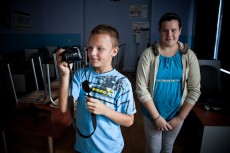 Poland.doc is about sharing experience and tested work methods with young creators, students of multimedia and cultural animation courses. The projects encourages cultural and educational actions, which utilise film and photography. It crates an opportunity for hands-on testing of the skills acquired.
 Follow